Detailed Explanation of Sweet Corn Seedling Raising Methods and Technical Points
How to raise sweet corn seedlings? Please introduce. Shrunken, unfilled sweet corn seeds are small, shriveled, and plump; the nutrients stored inside the seed for use during the seedling stage are few, making germination and emergence more difficult than ordinary corn seeds. If seed treatment is not carried out, it often manifests during the seed germination stage and the 1-3 leaf stage growth period as a low emergence rate...
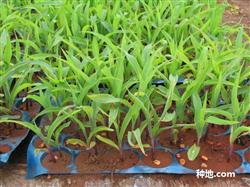
How to raise sweet corn seedlings? Please introduce.
Shrunken, unfilled sweet corn seeds are small, shriveled, and plump; the nutrients stored inside the seed for use during the seedling stage are few, making germination and emergence more difficult than ordinary corn seeds. If seed treatment is not carried out, it often manifests during the seed germination stage and the 1-3 leaf stage growth period as a low emergence rate, slow emergence, thin seedlings, weak seedlings, and non-vigorous seedlings, leading to strong differentiation between large and small seedlings. Sweet corn seeds are expensive; if direct seeding is adopted, it will increase the amount of seed used per mu and increase production cost input. In order to improve the planting benefits of sweet corn, adopting the seedling transplanting method for cultivation works very well.
6.1 Preparation of Nutrient Soil
According to the ratio of soil: fertilizer = 2:1, mix the nutrient soil evenly, put it into nutrient pots or nutrient bags, filling them 70-80% full.
6.2 Seed Treatment
One week before sowing, choose sunny and warm weather, dry the sweet corn seeds in the sun for 1-2 days, then divide them into three grades: large, medium, and small, and sow them separately at sowing time, striving for uniform emergence. After the seeds are graded and sun-dried, in order to make the seedlings emerge uniformly and quickly, warm water soaking can be used. There are two specific methods: first, soak the seeds in a 0.2-0.4% potassium dihydrogen phosphate solution for 4-5 hours; second, soak the seeds in a 0.02-0.05% zinc sulfate solution for 4-5 hours. After soaking, remove them, rinse twice, then place the seeds in clean water and soak for 4-5 hours, remove them, drain the water, and place them in a place with a temperature of 25-30°C to begin germination. Sow when 70-80% of the seeds have sprouted.
6.3 Sowing
Before sowing, water the nutrient pots thoroughly once. Sow one seed per pot, and prepare 4500 nutrient pots per 667?O for sowing. After sowing is finished, cover with soil 0.5-1?M to cover the seeds, then cover the nutrient pots with a layer of plastic film. In this way, the seed usage per 667?O is 0.6-0.8?K.
About 3 days after sowing, when the seedlings just push through the soil, be sure to remove the covering in time to prevent excessive growth and cause thin, weak seedlings.
6.4 Seedling Stage Management
After emergence, appropriately control seedling growth. When the seedlings have 1 leaf and 1 heart or 2 leaves and 1 heart, spray a 500-fold dilution of potassium dihydrogen phosphate solution once.
Seven days before transplanting, carry out ventilation and hardening of the seedlings to make the seedlings vigorous and facilitate survival after transplanting.
One day before or on the day of transplanting, water thoroughly once to prevent the small seedlings from dehydrating, facilitate survival, and promote early growth.
6.5 Transplanting Time
The best time for sweet corn seedling transplanting is from sowing to 15-20 days, when sweet corn has 2 leaves and 1 heart or 3 leaves and 1 heart. Transplanting at this time means the inherent nutrients of the sweet corn seed have not yet been used up, so it has little effect on seedling recovery. If the seedlings are too small or too large, both affect seedling development. Based on this, the timing for early spring, spring sowing, summer sowing, and autumn sowing sweet corn can be calculated according to the local climate and the length of the frost-free period.
Click to get more corn planting techniques
Click to get more grain crop planting techniques