-
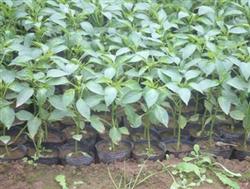
How to raise seedlings for spring-planted peppers? Key technical points explained
(1) Preparing the cold frame Select a plot with fertile soil, sheltered from the wind and facing the sun, where eggplants and tomatoes have not previously been grown, and build a cold frame. For each mu to be planted, raise seedlings using 150 grams of seed, and the cold frame should be more than 10 sq m. Apply plenty of base fertilizer, water heavily to build up soil moisture, and use a small amount of urea, phosphate fertilizer and active potassium fertilizer. Because the cold frame is sealed...
-
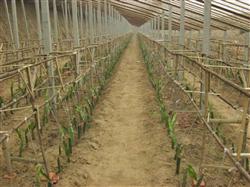
Key Technical Points for Greenhouse Cultivation and Management of Dragon Fruit
Dragon fruit is also known as red dragon fruit, green dragon fruit, fairy honey fruit, etc. Currently cultivated varieties mainly include white dragon fruit, red dragon fruit, and yellow dragon fruit. Dragon fruit is very rich in nutrients, mainly containing vitamins, cellulose, glucose, carotene, fat, amino acids, and minerals needed by the human body such as phosphorus and iron. It has detoxifying...
-
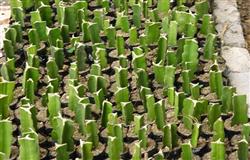
Detailed Explanation of Dragon Fruit Propagation Methods and Key Technical Points
1. Cuttings are best taken in spring and summer. Select plump, well-grown stem segments about 15 cm long as cuttings. After the wound has air-dried, insert them into a sand bed; roots will form in about 15-30 days, and once the roots reach 3-4 cm, they can be transplanted to the seedling bed. 2. For grafted seedlings, select healthy, pest-free, vigorously growing "Liangtianchi" (a wild cactus genus plant) with plump stems as rootstock...
-
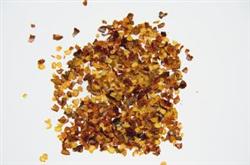
Pepper Seed Treatment by Chemical Soaking: Methods and Key Technical Points
Chemical soaking of seeds. To control pepper anthracnose and bacterial spot disease, pre-soak the seeds in clean water for 5-6 hours, then place them in a 1% copper sulfate solution (that is, 1 gram of copper sulfate mixed with 99 parts clean water) and soak for 5 minutes, then remove them, rinse with clean water, and proceed to sprouting; formalin (40% formaldehyde) at a 150-fold dilution can also be used to soak the seeds for 15 min...
-
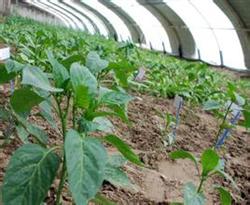
Detailed Explanation of Pepper Seedling Transplanting Methods, Master All Key Technical Points
1. Transplanting and irrigation. Transplanting can be done after the disastrous weather in early April, generally from April 15 to 25. When transplanting, pepper seedlings are required to be 16-17 cm tall, with 8 true leaves, and a seedling age of 50-60 days. Two plants per hole, irrigate promptly after planting to ensure the survival rate of planted seedlings. One week after transplanting, replenish water promptly according to soil moisture conditions. 2. Intertillage...
-
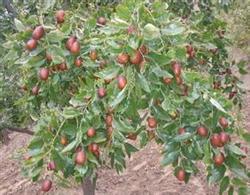
What are the key technical points for skillful fertilization of jujube trees to promote high yields?
Only through scientific and rational fertilization can jujube trees be strengthened, their resistance to pests and diseases improved, quality enhanced, and yields increased. Fertilization of jujube trees is divided into base fertilizer and topdressing. The scientifically appropriate time for applying base fertilizer is from the jujube fruit ripening stage until the soil thaws the following year, while topdressing is carried out in three applications: before bud break, at the early full-bloom stage, and during the rapid fruit swelling stage...
-
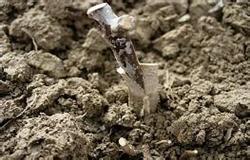
Jujube Tree Grafting Propagation Methods and Technical Key Points
1. Cultivation of rootstock. In production, the commonly used rootstock is wild jujube seedlings, which can be obtained either by direct sowing or by transferring them from other places. Before sowing wild jujube, the nursery should select fertile sandy loam soil, then open furrows and make beds; after fertilizing and watering, sow the seeds, mostly by drilling, with a sowing width of 10cm and a furrow depth of 3cm, then press the soil after sowing. After sowing...
-
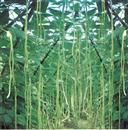
Greenhouse Bean Disease Prevention and Control Methods and Key Technical Points
I. Symptoms of bean rust: It mainly affects the leaves, and in severe cases also affects the petioles and pods. In the early stage of the disease, small pale yellow spots appear on the underside of the leaves, later turning rusty brown, raised and forming small pustule-like blisters, then expanding into uredinia, and after the epidermis ruptures, reddish-brown powder is released. This is the urediniospore. II. Bean powdery mildew...
-
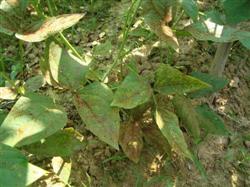
How to cultivate green beans in a greenhouse? Detailed explanation of the key technical points
It mainly harms the leaves, and in severe cases also harms the petioles and pods. In the early stage of the disease, small pale yellow spots appear on the back of the leaves, later turning rusty brown, raised in the form of small pustules, and then expanding into uredinia; after the epidermis ruptures, reddish-brown powder is released. These are the urediniospores.
-
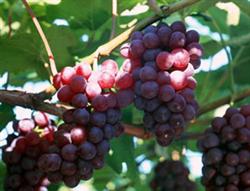
Key Technical Points for Grape Disease Control During the Plum Rain Season
Using B9 and paclobutrazol on Kyoho grapes to improve fruit set easily causes side effects such as shorter flower clusters and smaller berries. Therefore, a method that allows Kyoho to set fruit well without making the fruit stalks hard or the berries small has long been desired. After years of trials, we adopted forchlorfenuron produced by Lanyue Technology Company of the Sichuan Academy of Agricultural Sciences to improve fruit set...
条件筛选