-
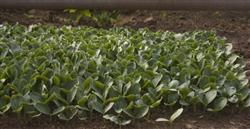
Key Technical Points for Raising Seedlings of Pumpkin in Solar Greenhouses with Vertical Trellis Cultivation for the Winter-Spring Crop
①Determining the sowing date The sowing date is mainly determined by the heat retention of the solar greenhouse. A solar greenhouse with good light transmission and good heat retention can be sown and raised as seedlings in late November. The melons are harvested in mid-March of the following year. Otherwise, the sowing date can be postponed to January of the following year. With the above-mentioned solar greenhouse, sowing and seedling raising are generally carried out from late December to early January of the following year...
-
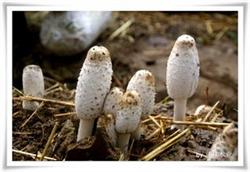
Detailed Explanation of Key Technical Points for Fruiting Management of the Shaggy Mane Mushroom
The relative air humidity inside the shed should be maintained at 85-90%; if too high, the fruiting bodies are prone to discoloration or brown blotches. If too low, the fruiting bodies are prone to curling back their scales prematurely; the temperature inside the shed should be kept at 16-24 degrees to favor the highest fruiting body formation and the highest yield; ventilate 1-2 times per day, for 30-40 minutes each time; after harvesting the mushrooms, fill the mushroom pits level, and the harvesting standard...
-
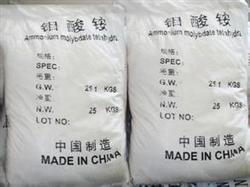
Key Technical Points and Methods for Applying Molybdenum Fertilizer to Soybeans
Molybdenum is a trace element essential for nitrogen metabolism in crops, and especially essential for the process by which nitrogen-fixing bacteria fix atmospheric nitrogen, so the effect of applying molybdenum fertilizer to legume crops is consistent. Xiao County has about 300,000 mu of soybeans planted year-round, and according to tests by the Suzhou City Soil and Fertilizer Station, 95% of the soil in Xiao County is deficient in molybdenum. In response to this situation, the Xiao County Soil and Fertilizer Station...
-

Methods and Key Technical Points for Pest and Disease Control in Oil Beans
Main symptoms: Beans can be infected by pathogens throughout the entire growth period, but resistance weakens and susceptibility increases from the beginning of flowering to the fruiting stage. The disease mainly attacks leaves. In the early stage of the disease, chlorotic yellowish-white spots appear on the leaves, and the spots gradually increase until they densely cover the entire leaf. Plants are stunted, pods are few and small, and the growth period is shortened...
-
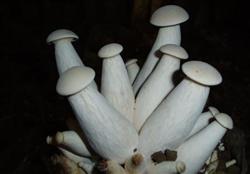
Technical Key Points for Cultivating Coprinus comatus (Shaggy Mane Mushroom) with Biogas Residue
1. Substrate formula: 300 kg biogas residue, 200 kg corncobs, 10 kg superphosphate, 1.5 kg urea, 20 kg lime powder, 5 kg gypsum powder, 5 bags of Mushroom Disease Eliminator, and 240 g of the three-dimensional edible mushroom nutrient essence. 2. Substrate composting: Except for the three-dimensional nutrient essence, mix the corncobs directly with fresh biogas residue and auxiliary materials...
-
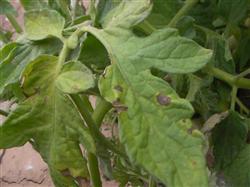
Control Methods and Technical Key Points for Early Blight in Cherry Tomatoes
Early blight is a major disease of cherry tomatoes, widely distributed and commonly occurring, mainly in open fields in autumn, and also occurring occasionally in protected cultivation. Generally 30%-50% of plants are diseased, and in severe cases 100% become diseased, with some branches and leaves necrotizing due to the disease, significantly affecting cherry tomato production. This disease mainly damages leaves, and in severe cases also infects...
-
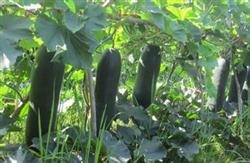
Key Technical Points for High-Yield Cultivation of Winter Melon in Greenhouses in Early Spring
Trellised cultivation of winter melon in greenhouses not only brings it to market early, but also gives higher early and total yields. 1. Varieties: generally use Guangdong Province green-skinned winter melon, Yichuanling No. 4, etc. 2. Raising seedlings: raise seedlings with heating in early January, using 8×8 cm plastic seedling pots. 1-2 days before sowing, the seeds must be sun-dried; after soaking and disinfecting the seeds...
-
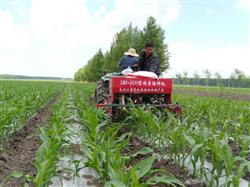
Key Technical Points and Operation Methods for Conservation Tillage of Spring Maize
Maize is a high-yield crop with a relatively large fertilizer requirement and is also very sensitive to medium and trace element fertilizers. Rational fertilization is essential to meet the nutrient needs of maize throughout its entire growth period. According to experiments, producing 100 kg of maize grain requires 2.5 kg of nitrogen, 1 kg of phosphorus, and 2.1 kg of potassium. If the yield is 500 kg of maize per mu, then 3... kg of urea is needed per mu.
-
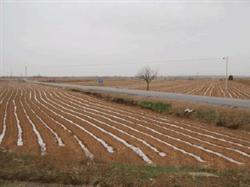
A Complete Analysis of the Key Technical Points for Soil Testing and Formula Fertilization in Spring Corn
1. Choose suitable varieties. Select suitable and superior varieties according to local conditions; based on heat resources and actual production conditions, choose medium-to-late maturing varieties with a growth period of 120-130 days. Among spring corn varieties with relatively outstanding comprehensive traits, the main one is Nongda 108, etc. 2. Fine land preparation. Spring corn requires deep plowing, and the earlier the autumn plowing...
-
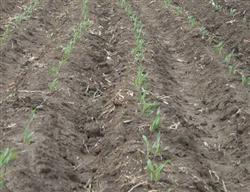
Key Technical Points for High-Ridge, Sparse-Planting, High-Yield Cultivation of Spring Corn
Many excellent spring corn varieties now require high ridges and sparse planting, but farmers generally adopt low ridges and dense planting, so the superior traits of corn cannot be fully expressed, seriously affecting farmers' income growth. This is especially true for excellent varieties such as Dongdan 60, Sanbei No. 6, Dongdan 13, and Zunyan No. 1, whose planting density per mu must not exceed 3000 plants, while...
条件筛选