What are the technical key points for thinning male flowers and removing tendrils in loofah?
Reasonable thinning of male flowers and removal of tendrils in loofah can reduce unnecessary consumption of nutrients in the soil and within the plant, allowing nutrients to be concentrated for fruit growth and development, thereby increasing yield per unit area. Trials have shown that under otherwise identical cultivation and management conditions, compared with loofah without male flower thinning and tendril removal, loofah with male flower thinning and tendril removal increased the fruit-setting rate per plant by...
Reasonable thinning of male flowers and removal of tendrils in loofah can reduce unnecessary consumption of nutrients in the soil and within the plant, allowing nutrients to be concentrated for fruit growth and development, thereby increasing yield per unit area. Trials have shown that under otherwise identical cultivation and management conditions, compared with loofah without male flower thinning and tendril removal, loofah with male flower thinning and tendril removal increased the fruit-setting rate per plant by 17.9%, increased single fruit weight by 15.9%, and increased yield per unit area by about 36.8%. The methods for thinning male flowers and removing tendrils are described below:
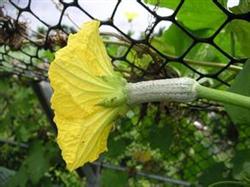
I. Thinning male flowers. Loofah is a cross-pollinated crop. Each female flower produces one fruit, and it takes about 15 days from flower bud appearance to fruit harvest. Male flowers are indeterminate racemes, and each raceme can open 20-35 flowers. The total number of male inflorescences per plant exceeds the number of female inflorescences, and pollination capacity greatly exceeds the needs of female flowers. Because male inflorescences have a longer flowering period of about 30-40 days, equivalent to 3-4 times the fruiting period of female flowers, they consume a large amount of nutrients during this period. Therefore, thinning out excess male inflorescences as early as possible can save nutrients and supply the needs of female flowers for fruit production.
Method of thinning male flowers: Starting from the appearance of female flower buds, remove 80% of the male inflorescences on each loofah plant, retaining 20% for pollination.
II. Removing tendrils. Tendrils play a role in climbing and securing branches and vines in vining crops. Loofah tendrils take a relatively long time from emergence to withering and death, consume more nutrients, and are not conducive to producing many fruits and good fruits. Removing tendrils and using artificial tying instead of their climbing function is beneficial to the plant's photosynthesis, nutrient production and accumulation, and pest and disease control, enabling loofah to pollinate and set fruit well and achieve a bountiful harvest.
Method of removing tendrils: In the early stage of loofah plant growth, remove tendrils while tying the vines to guide them onto the trellis; after the branches and vines are evenly distributed and fixed on the trellis, simply remove the tendrils at any time as the vines are trained.