-

Six key technical points for spring tea management
Weeding and loosening the soil: After 4-5 months of rain and snow, the tea garden soil has become compacted, and some weeds have already grown. At this time, the soil temperature is relatively low. Therefore, weeding and loosening the soil before the spring tea harvest helps to loosen the soil, raise the soil temperature, eliminate weeds, and reduce the consumption of water and nutrients, which promotes earlier sprouting of spring tea. Weeding and loosening the soil is generally carried out from the end of February to early March, with a depth of 10-15 cm. Applying bud-promoting fertilizer: The bud-promoting fertilizer should be applied early rather than late, with a trench opened 15-20 cm from the tea plant roots
-
What are the key technical points for greenhouse tea cultivation and management?
1. Site selection: Choose level ground or gently sloping land with fertile soil, abundant water, and good soil permeability to establish the tea garden. It is best to choose terrain with mountains to the north and open land to the south, to help block the cold winter winds and avoid wind gaps. For flatland tea gardens, a windbreak forest should be set up on the north side of the tea garden. 2. Tree age: Give priority to mature tea gardens, which have strong tree vigor, robust growth, and high tea yields, with a tea garden coverage of over 85%. 3. Greenhouse model: Mainly winter-warm greenhouses, generally about 13 m wide, with a length not
-
Key Technical Points for Planting and Field Management of Shiyan Tea
Shiyan Tea, scientific name Adinandra nitida, of the genus Adinandra, is a tree. It gets its name because it grows on cliffs. Its buds and leaves are thick and fleshy, and the tea made from them has a bright liquor color. The taste is pure with a good sweet aftertaste, and it withstands repeated brewing. According to testing by relevant departments, because Shiyan Tea contains no caffeine, drinking it does not affect sleep, and it is rich in flavonoids with good health benefits, so it is deeply loved by consumers. Because Shiyan Tea resources are limited, the prospect of promoting artificial cultivation is enormous. 1. Selection of Shiyan Tea Garden The conditions that should be selected for the construction of a Shiyan Tea garden are: good soil environment; region
-
Current key technical points for spring tea production management
Early picking and early marketing of spring tea, thereby increasing spring tea yield and output value, is the key to improving tea industry efficiency and increasing tea farmers' income. Combined with the actual tea production situation in Fuyang City, before spring tea picking, the main tasks are tea garden fertilization, tea tree pruning, freeze damage prevention, and tea factory and tea machine maintenance. 1. Shallow tillage and fertilization. Through shallow tillage, the soil can be loosened, the soil temperature raised, and early sprouting of spring tea promoted. Shallow tillage is generally carried out from late February to early March. When shallow tilling, combine with applying spring tea bud-promoting fertilizer. For tea gardens where base fertilizer was not applied in the previous autumn and winter, apply the spring tea bud-promoting fertilizer and base fertilizer at the same time. The amount of fertilizer applied depends on tea yield.
-
Key technical points for autumn and winter management of mulberry trees, tea trees and fruit trees
I. Winter management of mulberry fields Doing a good job of winter management of mulberry fields lays a solid foundation for the growth of mulberry trees in the coming year and is also an important measure for increasing the yield and quality of mulberry fields. 1. Clearing the field: After the mulberry leaves fall, collect all the residual leaves and weeds in the mulberry field to make compost or burn them, so as to eliminate pathogenic bacteria and overwintering pests hidden in the mulberry leaves and weeds. 2. Bundling: Before winter plowing, use rice straw to bundle the mulberry branches together, which not only facilitates winter plowing and fertilization, but also lures pests to hide in the bundled straw to overwinter, making it easier to capture and kill them. 3. Winter plowing: Control the plowing depth at
-
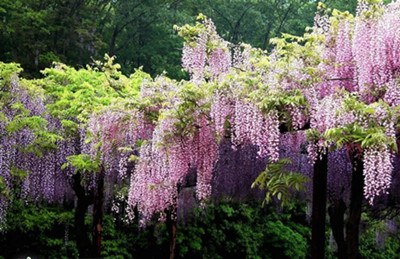
Detailed Explanation of the Key Technical Points for Wisteria Cultivation and Management
Wisteria, also known as tengluo, zhuteng, and huanghuan, Latin name: wisteria sinensis, belongs to the Fabaceae family, Wisteria genus, a deciduous climbing vine. The stem twines counterclockwise, the branches are relatively thick and sturdy, young branches are covered with white soft hairs, later becoming smooth; winter buds are oval. It is a deciduous climbing and twining large vine with dark gray bark that does not split.
-
-
-
-
条件筛选