-
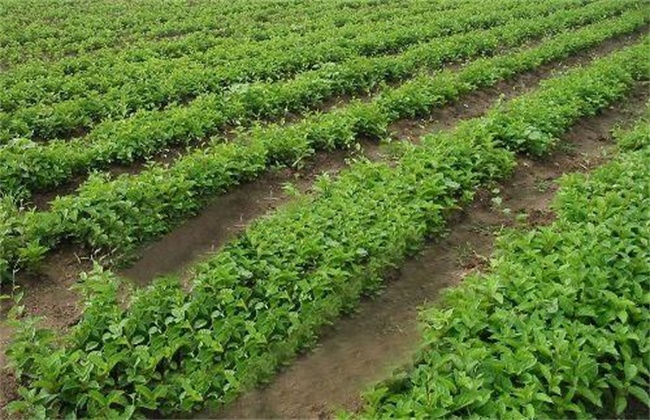
Detailed Explanation of the Key Technical Points for Schisandra Seedling Management
Schisandra Seedling Management Techniques
-
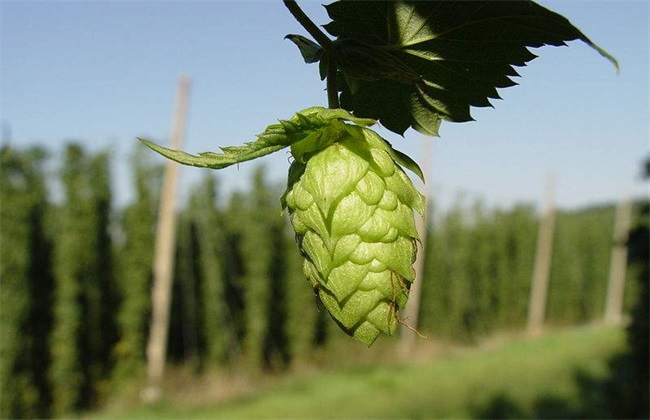
Detailed Explanation of the Key Technical Points of Hop Field Management
Field Management Techniques for Hops
-
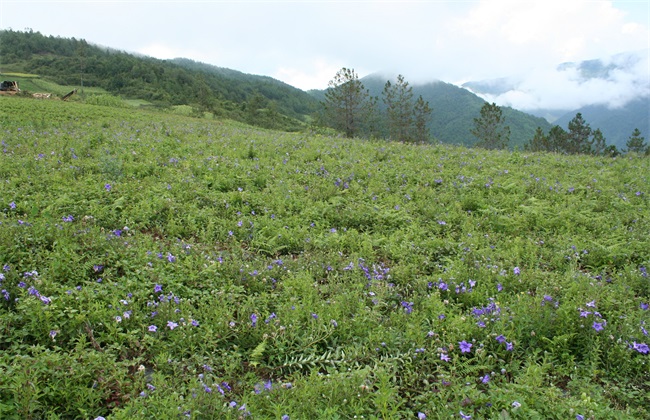
Detailed Explanation of the Key Technical Points for Field Management of Balloon Flower
Field Management Techniques for Balloon Flower
-

A Complete Analysis of the Key Technical Points for Alfalfa Planting and Management
Key Technical Points for Alfalfa Planting and Management
-

Key Technical Points for Summer and Autumn Cultivation and Management of Gastrodia elata
Summer and autumn are the periods when Gastrodia elata enters vigorous growth and maturity, and they are also the critical periods for its production management. If neglected or managed improperly, the yield and quality of Gastrodia elata will be seriously affected. 1. Drainage ditches for moisture removal. When Gastrodia elata enters the vigorous growth period, it is time to start checking whether the drainage ditches at the cultivation site are waterlogged and unobstructed. Soil moisture content can be kept at 60-65%. The three months of July, August and September are the period when Gastrodia elata needs the most water. During this time, the drainage ditches must be checked and cleared in a timely manner to avoid waterlogging. 2. Technical measures for mulching to retain moisture and lower temperature
-
Key Technical Points and Methods for Gastrodia elata Management in Winter and Spring
After November, as temperatures gradually drop, the new Gastrodia elata tubers stop growing, their size becomes fixed, and they enter dormancy directly, so low-temperature freezing damage should be prevented. In particular, the arrow tubers (Jianma) are easily damaged by freezing during overwintering. It is best to use arrow tubers for medicinal purposes when harvesting Gastrodia elata in winter, and to sow or store the small tubers (Mima) and white tubers (Baima) in time for spring planting. If they are not harvested in winter, cold-protection measures must be taken before freezing, such as covering with tree leaves to keep warm and prevent freezing, and removing them the following spring to facilitate growth. The temperature should be maintained at 1-5°C, and the humidity should be maintained at 30%.
-
Key Technical Points for Summer Management of Gastrodia elata in Northern Shaanxi
Gastrodia elata prefers to grow in warm, moist sandy (or leaf-mold) soil and has relatively strict requirements for temperature and humidity. However, the area along the Great Wall in northern Shaanxi lies in the mid-temperate zone, where summers are hot and dry with little rain, which is unfavorable for the growth and development of Gastrodia elata. To achieve a good harvest of Gastrodia elata, the measures that should be taken in summer management are: (1) Build a shed for shade. In summer, especially at noon during the hot dog days, due to direct sunlight, the ground temperature at 20 cm below the surface (already close to the Gastrodia elata layer) reaches as high as 30-37°C. To keep the ground temperature at 20-28°C
-
Detailed Explanation of the Key Technical Points for Cultivation and Management of Japanese Honeysuckle (Lonicera japonica)
1. Intertillage, weeding and earthing up. After the seedling or vegetatively propagated plants of Japanese honeysuckle are planted out, intertillage and weeding should be carried out in a timely manner during the growing season each year. When planting in cold winter regions, before the soil freezes in early winter, soil should be earthed up around the root zone along with loosening the soil, to prevent the root system from freeze damage. 2. Fertilization, drainage and irrigation. In early spring or late autumn, decomposed barnyard manure and superphosphate, etc. are applied in combination. When fertilizing, the ring fertilization method can be used: that is, open a ring-shaped trench around the plant, apply the fertilizer, then cover with soil and level it. In addition, when flower bud differentiation is seen before flowering, foliar supplementary spraying of monoammonium phosphate
-
Detailed Explanation of the Key Technical Points for Honeysuckle Cultivation and Management
Varieties The main cultivated varieties of honeysuckle are "Jizhua" (Chicken Claw) and "Damao" (Big Hairy). "Jizhua" produces many branches, has thick leaves, slightly smaller corollas, many flowers, an early flowering period, and a long bud stage, making it easy to pick by hand and giving high yields. "Damao" has plump flower buds, more branches that tend to tangle with each other, a later flowering period, and high yields. Land preparation and base fertilizer application: In early to mid-April, choose fertile sandy loam soil, apply 50 loads of compost per mu, and after plowing and leveling, sow in drills. Propagation by cuttings is divided into two direct cutting methods. Raising seedlings by cuttings is easier to manage, and this method is introduced here.
-
Key Technical Points for Cultivation and Management of Honeysuckle
Honeysuckle (Lonicera japonica) is a semi-evergreen twining shrub of the Caprifoliaceae family. It opens flowers white as silver and yellow as gold on the same vine. After harvesting, the yellow and white flowers can be mixed together, as their medicinal efficacy is the same, hence it is also known as "Erhua" (two flowers), "Shuanghua" (double flowers) and "Shuangbaohua" (double treasure flowers). Its vines and leaves can also be used medicinally. Honeysuckle has strong adaptability, tolerating moisture, drought and cold, and can be planted in front of and behind houses and on hillsides. Honeysuckle can be propagated by cuttings, layering, division and seeds, but the cutting method is the simplest and easiest, with a high survival rate and early flowering. For honeysuckle cuttings, the spring rainy
条件筛选