-

Tamarisk planting methods and care points: how to grow tamarisk
A detailed introduction to tamarisk planting methods and care techniques, including how to grow tamarisk, soil mix, light and watering, propagation methods, fertilizing and pruning, pest and disease control, and other practical content.
-
What are the cultivation methods and precautions for tamarisk bonsai?
Tamarisk is a shrub flower whose blooms resemble those of knotweed, with very high ornamental value, and its flowering period is also very long. In addition, tamarisk's economic value is very high as well; it can be made into many items, can be used as excellent livestock feed
-
Is the red-flowered tamarisk a deciduous tree or an evergreen tree?
The red-flowered tamarisk is a deciduous tree or shrub, with an open crown that gives excellent wind-blocking. Its root system is well developed, making it suitable as a protective plant against soil erosion in sandy areas. The plant is rich in tannins and has insect resistance. 1. Growth habits of tamarisk. It prefers to grow on river alluvial
-
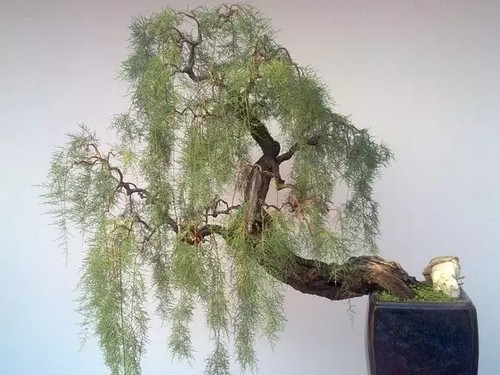
Detailed Explanation of Tamarisk Bonsai Shaping Methods and Techniques
In tamarisk shaping, the trunk is valued for its twists, the branches for their sparseness, the flowers and leaves for their density, and the roots for being exposed. The tamarisk trunk should be aged, twisted and cracked. Tamarisk has extremely strong sprouting ability, so through pruning, sprouts on the trunk must be promptly removed so that scars accumulate and form a mottled, varied effect. Tamarisk branches are soft and drooping, and through pruning and wiring
-
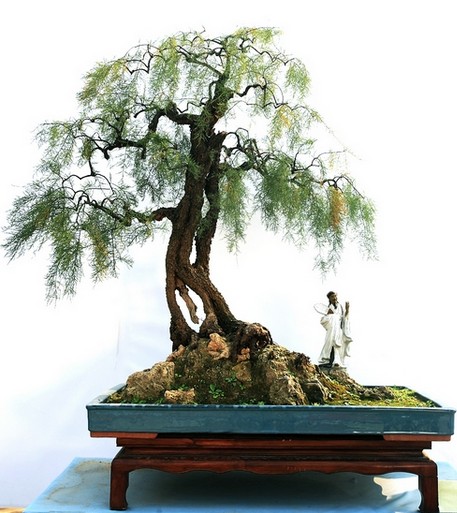
How are tamarisk trunk-on-rock bonsai made and collected?
The making of tamarisk trunk-on-rock bonsai is basically the same as that of other trunk-on-rock bonsai. Tang Qing'an, a provincial Zhongzhou bonsai art master and provincial bonsai art master, says that in making tamarisk trunk-on-rock bonsai, attention should be paid to aspects such as choosing the stone, choosing the pot, choosing the seedling and styling. In choosing the stone, you should choose stones with a hard texture
-
A Detailed Guide to Sourcing Methods and Cultivation Techniques for Tamarisk Bonsai
Tamarisk, also known as Sanchun willow, red willow, or sand willow, is a shrub or small tree of the genus Tamarix in the family Tamaricaceae. It is one of the main representative tree species of Zhongzhou bonsai. It grows well under almost any conditions, has exceptionally strong sprouting ability, roots as soon as it is planted, and takes shape quickly. Its leaf form is novel, its flowers are beautiful, and its flowering period is long; it has the reputation of flowers that do not fall.
-
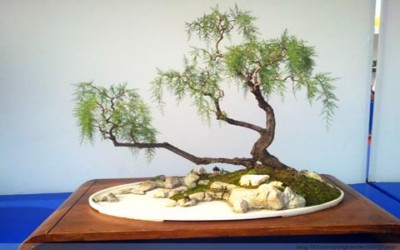
How to grow a tamarisk bonsai? Master these care methods
Tamarisk, also known as weeping tamarisk, West River willow, West Lake willow, red willow, shade willow; of the family Asclepiadaceae (milkweed family), tamarisk is a deciduous small tree. The young branches and leaves of tamarisk are used in Chinese herbal medicine. It is produced throughout China. Used fresh or dried. The tamarisk's branches are slender and soft, with a graceful, swaying form, and its flowers resemble those of the red knotweed, making it quite beautiful. It is often planted as an ornamental garden plant
-
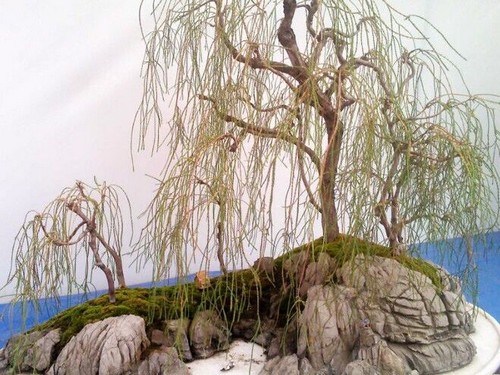
How to Make a Weeping Willow-Style Bonsai from Tamarisk
Tamarisk, also known as Guanyin willow, also known as Xihe willow. Its trunk is not very large, with reddish stems and slender branches, and leaves as fine as silk threads, graceful and lovely. It flowers three times a year, with flower spikes 2 to 3 cun (about 6.7-10 cm) long, pink in color and shaped like smartweed flowers, hence it is also called three-spring willow. Its flowers open whenever it rains, and it is suitable for planting by water and beside ponds. If rain is coming, the tamarisk rises first to respond to it, so it is also called the rain master.
-
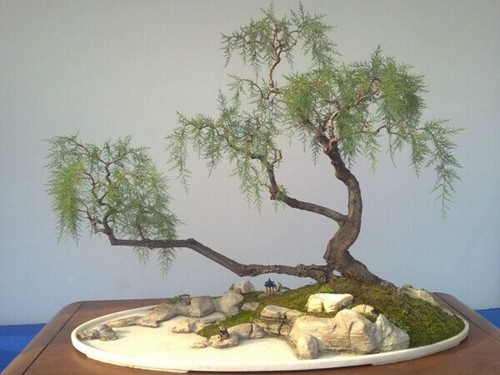
Detailed Explanation of the Methods and Steps for Making a Tamarisk Bonsai
Tamarisk has fine branches and small leaves, with drooping branches that are graceful and charming, resembling a weeping willow; its trunk is like iron, ancient and peculiar, possessing the quality of pine and cypress; it blooms three times a year with a long flowering period, and the pink flowers cover the branches, making it even more enchanting; its roots are like roaming dragons, with wonderful forms, whether viewing roots, trunks, leaves, or enjoying flowers
-
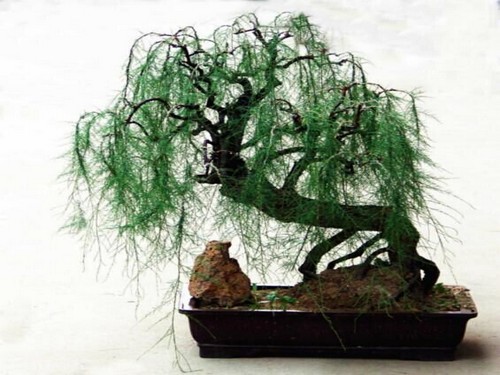
How to create a pine-style bonsai design with tamarisk
It is known that tamarisk is an excellent material for creating "weeping willow style" bonsai, and the soft, graceful charm it expresses is especially beloved. I had originally intended to learn from Master Wang Xuanmin and also create a weeping willow style bonsai with tamarisk, but the tamarisk material now in hand is of the tall-trunk, upright type, particularly stiff and strong. How could it express the graceful, lithe softness! What to do?
条件筛选