-
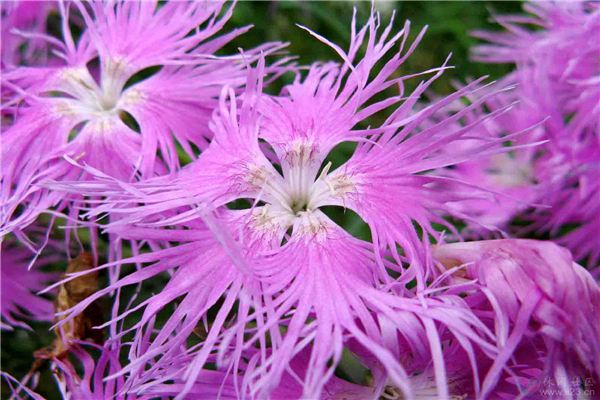
What are the cultivation methods and precautions for Dianthus superbus
The value of Dianthus superbus should not be underestimated; it can be said to serve both nutrition and treatment. Having said that, with something so valuable, everyone must be curious about its cultivation methods. Next, we will specifically introduce the cultivation methods and particular precautions for Dianthus superbus. As for the characteristics of Dianthus superbus, it is still the same saying: understand it
-
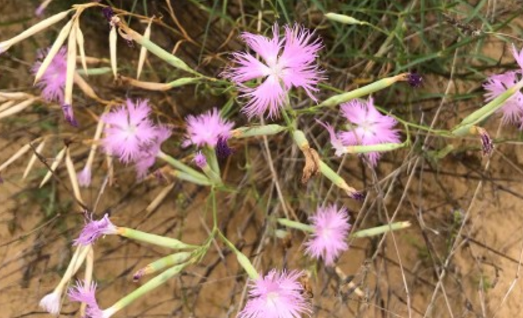
Dianthus superbus (fringed pink) of the Caryophyllaceae family: cultivation methods, precautions, propagation methods and uses
Dianthus superbus is also known as wild wheat, stone pillar flower, ten-pattern flower, bamboo-joint grass flower, mountain Dianthus, and so on. So what are the cultivation methods and precautions for Dianthus superbus? How do you propagate it? What is it used for? According to the information, Dianthus superbus is a fairly easy plant to grow; propagation is mainly by seed sowing, and division propagation can also be done.
-
How to grow spider plants in water? A super-detailed planting method is here
Follow the Yanghua Daquan WeChat official account, and you will know how to grow any flower! WeChat ID: yanghua98 (long-press to copy) Spider plants are a very popular indoor decorative plant...
-
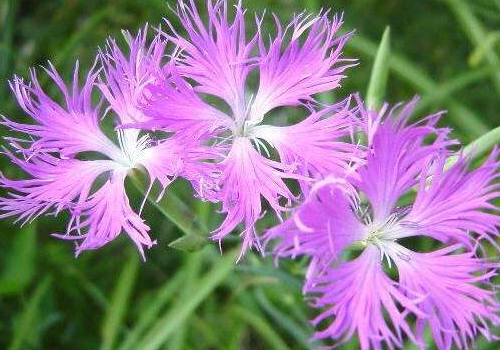
What is the sowing time and flower meaning of Dianthus superbus
Dianthus superbus, this is also a kind of plant, many people know it, and it can be seen in many places, so when should this Dianthus superbus be sown? What is its flower meaning: For seed collection, it is best to choose single plants that grow robustly and are free of pests and diseases. At the end of August, when the seeds turn dark brown, cut them off together with the stems and leaves.
-

Weeds in sesame fields can be controlled with the herbicide WhiPSuper
[Trade name]WhiPSuper (WhiPSuper) [Common name]fenoxaprop-p-ethyl (fenoxaprop-p-ethyl) [Formulation]6.9% emulsifiable concentrate, 8.05% emulsifiable oil [Dosage]To control barnyardgrass, foxtail, green foxtail, crabgrass and other annual grass weeds, use 750-900 ml of 6.9% WhiPSuper per hectare or 600-750 ml of 8.05% WhiPSuper. To control wild oat, use 900-1050 ml of 6.9% WhiPSuper per hectare
-
What about Xidou 3, a superior soybean variety for both grain and vegetable use?
I. Yield Performance In 1997, the Chongqing Soil and Fertilizer Station conducted a variety comparison trial in Yubei District, Banan District and Jiangjin City, where the average yield across the 3 trial sites was 146.4 kg/667 sq m, ranking first in the trial. In 1998, the Tongnan County Soil and Fertilizer Station conducted a large-plot comparative trial of Xidou 3 and Yudou No. 1, and the results showed that Xidou 3 had an actual yield of 236 kg per 667 sq m, a 14.6% increase over Yudou No. 1. Through years of multi-site trials, demonstrations, and promotion practices in various places, Xidou 3 has shown that it is currently a new ideal soybean variety for both grain and vegetable use in the southwest region, with high yield potential,
-
8 Precautions for Selecting Superior Soybean Seeds
1. Pay attention to the seed purity and germination rate. 2. Pay attention to whether free consultation and technical guidance are promised. 3. Pay attention to whether sales outlets have been set up indiscriminately. 4. When mail-ordering seeds, pay attention to sending money via the local post office (branch); do not enclose cash in the letter. Clearly write your detailed address and name, and note the variety and quantity purchased in the remarks column. 5. Pay attention to clearly identifying the trademark and packaging marks. 6. Pay attention to agreeing on the seed price. 7. Pay attention to whether seed quality is guaranteed. 8. Pay attention to contacting by phone or letter before introducing a variety, and you may also consult the relevant units.
-
Introduction to the superior soybean variety Guixia No. 2
Variety approval number: Gui Shen Dou 2004003. Breeding unit: Maize Research Institute of Guangxi Zhuang Autonomous Region. Variety source: Developed through sexual hybridization using the Guangxi farmer variety "Fusui Huangdou" as the female parent and "Gui 190" (Pingguo Dou × Qingrenniao) as the male parent. Registration unit: Maize Research Institute of Guangxi Zhuang Autonomous Region. Characteristics: This variety is an early-maturing summer soybean variety with a growth period of about 96 days. It has a determinate pod-setting habit, purple flowers, brown pubescence, and relatively large, ovate leaves. Plant height is 55-65 cm, with 13-
-
Early-maturing soybean Chaofeng No. 3: an excellent variety with super-high yield, high resistance and high efficiency
Chaofeng No. 3 soybean is an early-maturing variety with super-high yield, multiple resistance and high efficiency, bred over 8 years by researchers at the Research Institute of Jilin Province Northern Seed Industry Company. This variety overcomes the prominent problems of the past, when large-scale production applications were not high-yielding, had poor internal quality, failed to meet national quality standards, and were prone to pod shattering in dry years, resulting in high but unstable yields and high yields without high returns. In March 2007, it successfully passed provincial certification. Chaofeng No. 3 has a growth period of 110 days, and from sowing to harvest requires an active accumulated temperature of 2300°C
-
Introduction to Superior Clonal Tea Varieties (Part One)
The application and promotion of superior tea varieties in tea production is one of the most effective ways to achieve high quality, high yield and high benefit. This is especially true of superior clonal tea varieties, which not only have such fine traits as strong stress resistance, excellent quality and good yielding ability, but also have stable characteristics, uniform sprouting and distinct flushing rounds, which favor the promotion of mechanized picking and the regulation of peak picking and processing periods. Of the more than 100,000 mu of tea gardens now existing in our city, the vast majority are Huzhou local population varieties and Jiukeng population varieties developed before the 1980s. The varietal traits of these tea gardens are mixed, and a considerable portion of them are aged tea gardens and
条件筛选