-
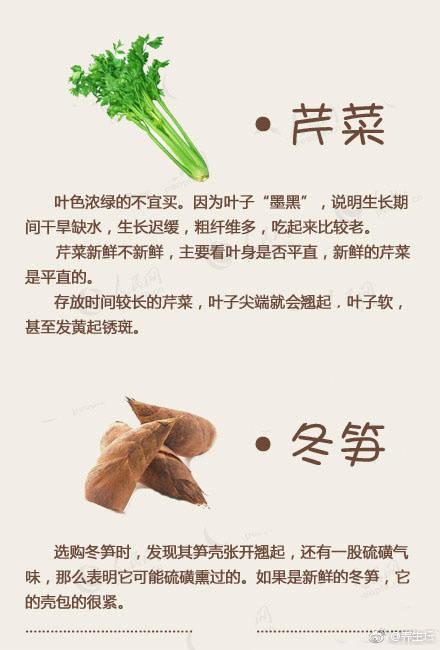
How do you pick vegetables at the supermarket? Master these tips and easily prepare the New Year's Eve dinner
#Healthy New Year Celebration# The festive atmosphere is getting stronger, and many homemakers have already started preparing the New Year's Eve dinner. The New Year's Eve dinner is the most important meal of the year, symbolizing beauty...
-

Detailed Explanation of the Key Points of the "Three Supers" Rice Cultivation Technique
I. Select suitable varieties. Adapt to local conditions and choose high-quality varieties that can mature normally and safely in the local area, with moderate tillering, relatively large panicles, relatively high grain weight, strong stress resistance and disease resistance, upright leaves, a compact plant type, and outstanding high-yield performance. II. Sow early at the right time and sow sparsely to cultivate strong seedlings. (1) Seedling raising preparation. 1. Seedbed preparation. ① Seedbed selection: choose a pollution-free, flat and loose, fertile soil, good water-holding, wind-sheltered and sunny plot as a dedicated seedling field. ② Land preparation and arching: in order to achieve ultra-early sowing, prepare the seedbed soil and set up the frame the previous year, cover with plastic film in early to mid-March to promote thawing and raise soil temperature, shallowly plow the seedbed land 10 cm, and rake it level and fine. Make the bed 10 days before sowing, and dig a 13 cm deep ditch around the seedbed.
-
Virus-free Technology and Industrial Development of Superior Potato Varieties
Aiming at the main problems currently existing in potato production, this study seized the favorable opportunity of planting-structure adjustment and extensively introduced superior potato varieties from home and abroad. Through trials and market-demand surveys, "Luyin No. 1" was selected as the main cultivar for Qingdao, with Kexin No. 3, Kexin No. 4 and Huayuan 525 as companion cultivars. Through systematic research on virus-free technology, rapid propagation technology and the acclimatization and transplanting technology of virus-free test-tube plantlets, the optimal virus-free protocol for potato was determined: taking 0.1-0.2
-
Detailed Explanation of Super-High-Yield Cultivation Techniques for Shengtai No. 1 Rice
Shengtai No. 1 is a super-high-yield, disease-resistant new variety bred by the Rice Research Institute of the Guangdong Academy of Agricultural Sciences. It passed crop variety approval in Guangdong Province and Shaanxi Province, and received the first-ever subsidy from the Ministry of Agriculture of the People's Republic of China for high-quality and special-purpose new varieties of major crops. When cultivated in Jieyang City, its full growth period is about 132 days for the early crop and about 122 days for the late crop, belonging to the medium-late maturity type suitable for both early and late seasons. Its stem and leaf morphology is coordinated and rational, with a well-developed deep root system, medium-strong tillering ability, good fertilizer tolerance and lodging resistance, suitable for planting in areas with medium or higher fertility, with obvious yield-increasing effects. The panicles are large and long, with dense grain setting, and the panicle-grain structure
-
Introduction to Superior Potato Varieties
1. Zaodabai: Zaodabai has three outstanding characteristics: First, it is extremely early-maturing. It can be marketed 60-65 days after plastic film mulching. The yield per mu is around 2000 kg. Second, the tubers are concentrated, and the tubers are large and uniform. Third, it has white skin and white flesh, smooth skin, flat-round tubers, and good palatability. 2. Youjin: Youjin tubers are oval-shaped, large and uniform, with yellow skin and yellow flesh, smooth skin, shallow and flat eyes, and plump at both ends. It has good marketability, and the color and taste of fried chips are excellent, making it suitable for fresh potato export and deep processing. It matures 70-75 days after plastic film mulching. The yield per mu is 200
-
Detailed Explanation of the Principles and Key Technologies of the Three-Super Cultivation of Rice in Cold Regions
The Three-Super cultivation technology for rice in cold regions addresses the growth-limiting factors currently present in high-yield rice cultivation in cold regions, such as a short growth period, excessive basic seedlings, excessive consumption of growth, poor light-receiving posture of the plant type, and decline of late-stage growth. Taking the "ridge-edge rice cultivation effect" as a model, it takes creating the largest super-high-yield population with the fewest basic seedlings as its basic approach, and takes "extending and expanding the nutritional time and space, releasing production potential, and strengthening the dual canopy (plant canopy and root canopy) performance" as its basic principle. It adopts standard high-quality super rice, uses single (double) seed positioning with ultra-early, ultra-low-rate sowing
-
Jigeng 88 super rice passes national certification
Aimed at using science and technology to resolve the contradiction between China's future grain supply and demand, the "Jigeng 88" super rice of the "China Super Rice Research" project, which is included in the Premier's Fund, has achieved a major research breakthrough at the Jilin Academy of Agricultural Sciences and passed national and provincial variety certification. Jigeng 88 is the result of nearly 10 years of dedicated efforts by experts at the Jilin Academy of Agricultural Sciences. It has high yield, good quality, multiple resistance and wide adaptability, with an average yield of 750 kg-800 kg per mu, and its rice quality reaches the national first-grade high-quality rice standard, officially bidding farewell to the northern rice planting problems of low yield and
-
Garlic is a superior green feed additive
Garlic is a feed additive for mold prevention in summer and for producing hygienic and safe green food, and is the preferred plant for controlling drug residues as a green feed additive with wide sources and low price. Its characteristics are introduced as follows: 1. Biological characteristics of garlic: 1.1 Garlic (ALLiumsativum), also known as hu garlic, single-clove garlic, according to the color of the outer skin membrane, the solid bulb is crescent-shaped, is a natural perennial herbaceous cultivated vegetable, with a strong garlic odor and medicinal value similar to antibiotics, but without
-
New Mini Sweet Potato Variety Hits Supermarkets: Professor Promotes It on Site
Around noon today, the food section of the Vanguard supermarket in Pujia Xincun was filled with drifting aromas, drawing many customers to stop and look. It turned out that more than 60 fragrant, piping-hot roasted sweet potatoes had just come out of the oven. Serving everyone at the counter was an elegant middle-aged woman who, while helping people choose sweet potatoes, also introduced their nutritional value and cooking tips, making everyone nod in agreement. This woman selling sweet potatoes was none other than the developer of this mini sweet potato - Ji Zhixian, a professor at the Provincial Academy of Agricultural Sciences. Teach
-
Detailed Explanation of Key Techniques for Super-High-Yield Cultivation of Double-Season Rice in South China
(1) Sow at the right time and cultivate strong seedlings. For early rice, use dry-raised seedlings, with a seeding rate generally of 90 g/m2 and a sowing period in mid-to-late March; for late rice, use sparse sowing for strong seedlings or two-stage seedling raising, with a seed rate of about 1.0 kg per mu. (2) Ridge and bed cultivation. Bed width 3-4 m, ditch width 0.2-0.25 m, and open surrounding ditches well to facilitate water management and field operation management. (3) Wide-row close planting. The planting density is 30-40 hills/sq m, with a row spacing of about 25 cm. Generally, early rice has 3-4 seedlings per hill, and late rice is transplanted as single seedlings or double seedlings, ensuring
条件筛选