Dianthus superbus (fringed pink) of the Caryophyllaceae family: cultivation methods, precautions, propagation methods and uses
Dianthus superbus is also known as wild wheat, stone pillar flower, ten-pattern flower, bamboo-joint grass flower, mountain Dianthus, and so on. So what are the cultivation methods and precautions for Dianthus superbus? How do you propagate it? What is it used for? According to the information, Dianthus superbus is a fairly easy plant to grow; propagation is mainly by seed sowing, and division propagation can also be done. Dianthus superbus has low soil requirements; generally, well-drained sandy soil is the best choice. Water is very important for the growth of Dianthus superbus, and care must be taken that it is neither too dry nor waterlogged; just ensure the moisture level is suitable. As for fertilizing, generally topdressing 3 times a year is enough.
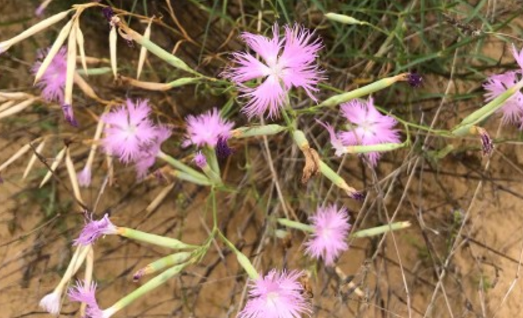
I. What are the cultivation methods and precautions for Dianthus superbus?
1. Characteristics of Dianthus superbus
As the saying goes, only by understanding it can you better master it and better grow it. Dianthus superbus mostly grows in mountainous and hilly areas, and it is also very common beside streams and river valleys. Dianthus superbus has very low soil requirements, but when actually planting it, slightly fertile soil is still better. In addition, Dianthus superbus has very high water requirements; the soil may not matter much, but when growing it you must give Dianthus superbus enough water, so that its internal nutrients can be brought out, allowing Dianthus superbus to realize its value.
2. Fertilizer requirements for growing Dianthus superbus
Dianthus superbus does not have very high soil requirements, so generally its fertilizer requirements are not very high either. At the beginning, you only need to topdress 3 times a year. Apply fertilizer once after sowing in autumn; at this time, Dianthus superbus has just been sown and its root system is not yet fully developed, so it cannot absorb enough nutrients from the outside, which is why fertilizer needs to be applied once. Apply fertilizer once again when it overwinters in winter; on the one hand, fertilizing in winter can ensure the supply of Dianthus superbus's own nutrients through the cold winter, and on the other hand it can also play a certain role in protecting against the cold. When spring arrives, apply fertilizer one last time.
3. Drainage and irrigation for growing Dianthus superbus
When growing Dianthus superbus, whether too much water or too little water, both are unfavorable to its normal growth. Therefore, special attention should be paid to drainage and irrigation when growing Dianthus superbus. After sowing, while ensuring the soil is moist, there must not be too much standing water.
4. Precautions for growing Dianthus superbus
The thing to pay most attention to when growing Dianthus superbus is the issue of drainage and irrigation. Dianthus superbus has very high water requirements; standing water may cause root rot, while too little water is not conducive to its normal growth. So the best condition is soil that is moist without standing water.
II. How do you propagate it?
1. Seed propagation of Dianthus superbus
As the name suggests, seed propagation means picking mature seeds and sowing them directly, then forming plants through careful care. Below, let us look at the details and the points that need attention. First, we need to know that the seeds of Dianthus superbus need to be sun-dried. Therefore, when selecting individual plants, it is best to choose robust plants free of pests and diseases; if the individual plants are poor, the seeds obtained by drying will also be unfavorable to the growth of Dianthus superbus. Generally, in August, cut down Dianthus superbus and dry it to take out the seeds, then sow them in autumn. Choose a piece of fertile land, loosen the soil, sow the Dianthus superbus seeds, and finally water them thoroughly; the next year you can get a large patch of mature Dianthus superbus plants.
2. Division propagation of Dianthus superbus
This is the same as division propagation of other plants, but you need to pay attention to the timing of division for Dianthus superbus. Generally, it is between March and April. Choose a relatively cool day, dig up the Dianthus superbus, then divide it into several clumps of roughly similar size, plant them randomly in moist soil, and just care for them carefully.
III. What is it used for?
1. Medicinal value of Dianthus superbus
Actually, personally I think this value needs no elaboration. Everyone knows that Dianthus superbus has the effect of clearing heat and detoxifying. Here, let me add a few points: affected by its growing environment, Dianthus superbus contains a large amount of mineral elements, protein, and some vitamin A and other substances. In addition, Dianthus superbus also contains a large amount of mineral alkali, so besides clearing heat and cooling blood, it can also treat conditions such as difficult urination and edema. Having said this, do you have a deeper understanding of Dianthus superbus? Don't panic, we are not finished yet. There are also some other effects when Dianthus superbus is combined with other things. For example, when Dianthus superbus is combined with substances such as peach kernel and safflower, it can also have a certain regulating effect on the menstruation of human females. Therefore, if some women have irregular periods, this method can be used to regulate them. Having said this, do you feel a sense of reverence for Dianthus superbus? To be honest, even I am a bit surprised.
2. Nutritional value of Dianthus superbus
The nutritional value in Dianthus superbus can be said to surpass that of all other plants, or rather, the value in one Dianthus superbus plant covers the nutritional value of several other plants. Besides the above-mentioned vitamin A, protein and other substances, Dianthus superbus also contains anethole; these are all rare and valuable good things. In addition, research shows that Dianthus superbus can excite the uterus. For some animals, Dianthus superbus can prevent early pregnancy, but for other animals, Dianthus superbus can excite the uterus. This phenomenon brings new hope for people's future treatment of infertility. Seen this way, Dianthus superbus really is a good thing.