-

How to choose sweet potato varieties? Provincial Crop Institute experts recommend varieties for spring, summer and autumn planting
Sweet potatoes can be planted in spring, summer and autumn. Spring planting is generally done in March to April, summer planting is generally done in May, and autumn planting is done within one week after the Start of Autumn. Below are several sweet potato varieties suitable for planting in our province. Jinye: a new stem-tip vegetable sweet potato variety. This variety has tender stem tips, low crude fiber content, and good palatability after cooking, making it suitable for use as a vegetable. With open-field cultivation, the stem tips can be picked about 10 times over the whole growing period, with 250 kg of stem tips picked per 667 sq m each time, and a picking interval of 15 days. Per 667 sq m, it can yield
-
Key Techniques for Raising Sweet Pepper and Chili Pepper Seedlings in Summer and Autumn
I. Variety selection. Sweet (hot) pepper varieties such as Zhongjiao No. 6, Zhongjiao No. 13, Zhongjiao No. 16, and Zhongjiao No. 12. II. Seedbed preparation. (1) Nutrient soil mixing: The nutrient soil should have complete nutrients, moderate acidity and alkalinity, be loose and permeable, have strong water-holding capacity, and be free of pathogens, insect eggs, and weed seeds. The mixing ratio is 5 parts field soil to 5 parts decomposed organic fertilizer, and 1-1.5 kg of compound fertilizer can be added per cubic meter of nutrient soil. (2) Soil disinfection: For liquid chemical disinfection, use zineb or carbendazim at 200-400 times dilution. Apply 10 g of the chemical per square meter of bed surface
-
Xingguang Fuqiu Eggplant is an eggplant variety suitable for cultivation in summer and autumn
Xingguang Fuqiu Eggplant was developed by the Jiangsu Nanjing Xingguang Vegetable Research Institute. It is a mid-early maturing variety with long, thick club-shaped fruit and ink-black skin, generally about 30 cm long and about 8 cm thick, with a single fruit weight reaching up to more than 500 g. It has good market quality, strong disease resistance and adaptability, and is especially tolerant of heat, moisture, aging, and storage and transport. Because its benefits are extremely notable during the off-season for summer and autumn vegetable supply, it was named Xingguang Fuqiu Eggplant. Sow at the proper time and stagger the harvest for market. In the Yangtze River basin region, Xingguang Fuqiu Eggplant can be sown from mid-to-late September of the previous year to July of the current year
-
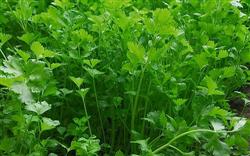
High-Yield Cultivation Techniques for Cilantro with Shade Net Covering in Summer and Autumn
Cilantro prefers a cool climate and cannot tolerate high temperatures; it stops growing when the temperature exceeds 30°C. How can cilantro be grown well in summer? Summers are hot, so when growing cilantro, the first step is to choose good varieties, and heat-tolerant varieties that bolt late and grow quickly should be selected as much as possible, such as Beijing cilantro and North China Large Leaf. When planting, you also need to...
-
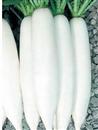
Recommended new radish varieties: these two are suitable for summer and autumn cultivation
1. Xiachangbai No. 2. This variety was introduced from Thailand and is a hybrid with exceptionally strong heat tolerance. Under high temperature conditions it resists pithiness and black heart; the leaves are upright and green; the fleshy root is long and cylindrical, 30 cm long, about 6 cm in diameter, with 1/2 buried in the soil; the skin and flesh are white, smooth and glossy, with excellent quality and fast growth, harvested about 40 days after sowing...
-
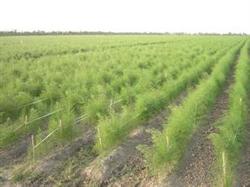
Detailed Explanation of Key Asparagus Management Techniques for Summer and Autumn
Asparagus is one of the high-efficiency cash crops, and a single planting can be harvested for more than 10 years. The annual yield per mu generally reaches 2,300 kg, and the output value per mu reaches 10,000 yuan. The key to its high-yield cultivation and management lies in the following aspects: 1. Cultivating strong seedlings. To achieve high yield of asparagus, in addition to selecting excellent varieties, it is also necessary to establish a nursery plot for...
-
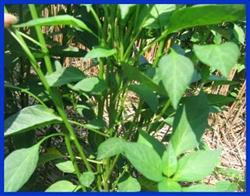
High-Yield Cultivation Techniques for Greenhouse Peppers Across Spring, Summer, and Autumn
At present, the main problem in production is that early spring cropping dominates, while after the greenhouse film is removed in summer, autumn delayed production is relatively limited. After summer, as open-field vegetables reach the market, management is relaxed, and late-season pepper yields are relatively low. To maximize the production role of greenhouse facilities, the author guided farmers to carry out a single large cropping cycle of greenhouse peppers across spring, summer, and autumn...
-
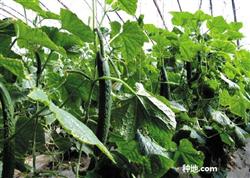
How to grow cucumbers in summer and autumn so they thrive
How can summer and autumn cucumbers be grown well? Please advise. In some places, spring cucumbers generally go out of season from late June to early-to-mid July, while summer and autumn cucumber cultivation exactly fills the market cucumber supply gap from mid-to-late July to early-to-mid December, so they are very popular with city residents, and vegetable growers also get relatively good economic returns. To grow summer and autumn cucumbers well,...
-
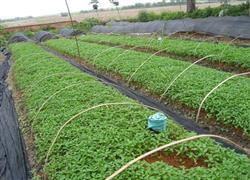
What should be noted when raising pepper seedlings in summer and autumn?
What should be noted when raising pepper seedlings in summer and autumn? Please explain summer and autumn pepper seedling raising. When raising pepper seedlings, they are easily affected by weather factors such as high temperature, heavy rain and drought, resulting in poor-quality seedlings. To cultivate high-quality strong seedlings in the hot summer, experienced vegetable growers have put forward the following suggestions: 1. Prevent high temperature...
-
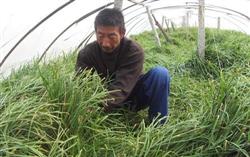
How to prevent Chinese chives from lodging in greenhouse sheds in summer and autumn?
How to prevent Chinese chives from lodging when grown in greenhouse sheds in summer and autumn? Please explain the methods. Chinese chives grown in greenhouse sheds mostly lodge in summer and autumn, with lodging being most severe in autumn. Lodging in Chinese chives is mostly caused by excessive growth, resulting in thin, weak false stems, or by oversized leaves and a top-heavy plant. If lodged Chinese chives are not handled properly or...
条件筛选