Recommended new radish varieties: these two are suitable for summer and autumn cultivation
1. Xiachangbai No. 2. This variety was introduced from Thailand and is a hybrid with exceptionally strong heat tolerance. Under high temperature conditions it resists pithiness and black heart; the leaves are upright and green; the fleshy root is long and cylindrical, 30 cm long, about 6 cm in diameter, with 1/2 buried in the soil; the skin and flesh are white, smooth and glossy, with excellent quality and fast growth, harvested about 40 days after sowing...
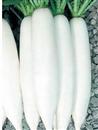
1. Xiachangbai No. 2. This variety was introduced from Thailand and is a hybrid with exceptionally strong heat tolerance. Under high temperature conditions it resists pithiness and black heart; the leaves are upright and green; the fleshy root is long and cylindrical, 30 cm long, about 6 cm in diameter, with 1/2 buried in the soil; the skin and flesh are white, smooth and glossy, with excellent quality and fast growth, harvested and marketed about 40 days after sowing, with a single plant weight of about 500 g. The suitable sowing temperature is above 23°C. In plain areas, sowing can be done from late May to late September in the south, from late June to late August in the Yangtze River basin, and from late July to late August in the Huai River basin; in high mountain areas below 500 m altitude, sowing should be delayed by 30 days; in other areas, determine the suitable sowing period according to local temperatures, and do not sow too early to prevent premature bolting. Sow in holes, with a row spacing of 20 cm × 25 cm. Pay attention to careful land preparation, apply sufficient base fertilizer, cultivate on high ridges, with a loose soil layer of more than 30 cm, provide sufficient fertilizer and water at the seedling stage, and prevent waterlogging and drought in the middle and late stages.
2. Fuyuan No. 1. This variety is a first-generation summer radish hybrid bred by the Handan City Vegetable Research Institute in Hebei Province. It has many outstanding advantages such as early maturity, heat resistance, disease resistance, high yield, attractive roots, and good quality, and is suitable for fresh eating and processing. The leaf rosette is semi-upright, the leaves are green, deeply lobed, with 20-22 functional leaves. The fleshy root is long and cylindrical, 38 cm long, 6 cm in diameter, straight, slightly green above ground, with 1/2 buried in the soil, white, with a smooth and delicate skin; the flesh is white, crisp and tender with a sweet taste, and of superior quality. The average weight of a single root is 700 g, and the maximum can reach 1000 g. The growth period of this variety is 50 days, the plants grow vigorously, and they can grow normally at a high temperature of 38°C. In two consecutive years of variety comparison trials locally from 1999-2000, the incidence rates of viral disease and black rot were both zero, while the control Xiakang 40 days had a viral disease incidence rate as high as 73%. In field production, the yield per 667 sq m (1 mu) is 2600 kg, and high yields can reach 3000 kg, an increase of 40% over the control Xiakang 40 days. It can be planted in all types of soil across the country, with sandy loam being the best. The sowing period is July-August, and the best sowing period is early July; when it is marketed, the market is in a gap period for radishes, so prices are high and returns are good.