-

Detailed Explanation of Key Points of Artificial Selective Breeding Techniques for Snakes
Strengthening artificial selective breeding of snakes is of great significance for improving snake reproduction survival rates, growth and development speed, product quality and economic benefits. It is work that snake farms cannot afford to neglect, and it must be carried out year-round with unremitting effort. In selective breeding, the following three points should be well handled: 1. Selection of breeding eggs. Breeding eggs placed for incubation must be fresh and of high quality. Eggs stored for a long time have a low hatch rate and a high mortality rate; the hatchlings are weak and grow slowly. Therefore, female snakes should be checked frequently before laying eggs. When eggs are found to be approaching the cloaca, they should be promptly
-
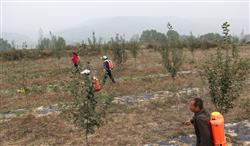
How to Use the Non-Selective Herbicide Paraquat
How is the non-selective herbicide paraquat used? What is the dosage? We ask netizens to help explain. Paraquat is a contact non-selective herbicide that can be used for weed control in orchards, mulberry fields, lawns and ditches. Zhongdi Network has compiled the usage methods, listed below for netizens' reference. Paraquat in orchards...
-
What are the basic principles for selective mating of cashmere goats?
Principles for selective mating of cashmere goats
-
Patent granted for a family-based selective breeding method for red tilapia
Family-based selective breeding method for red tilapia receives invention patent
-
How to Carry Out Selective Breeding and Breed Conservation in Jian Carp Farming
Any superior breed, if selective breeding and breed conservation are neglected, will often lead to breed degradation, reduced yield and deterioration of other traits. Jian carp has stable genetic traits and can, through within-breed reproduction, pass the superior traits of this breed on to its offspring. However, different carp breeds easily interbreed and become mixed, individuals within the same breed also differ, and the living environment can have a considerable effect on the traits of a breed. Therefore, attention must be paid to selective breeding of superior stock: according to the breed's standards, fish with good traits in all relevant respects should be selected as broodstock for rearing and allowed to reproduce.
-
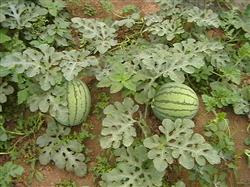
How to Cleverly Use Non-Selective Herbicides in Summer Sesame Fields
When watermelons are cultivated in greenhouses, small arched sheds and with plastic film mulch, the temperature and humidity conditions inside the protected area are suitable for weed growth, and manual weeding is inconvenient, resulting in vigorous weed growth and severe damage. Few herbicide products are registered for use in watermelon fields in China, and many farmers misuse herbicides in watermelon fields, leading to poor weed control results...
-
How is the chloride ion-selective electrode method used to determine the mixing uniformity of compound feed?
May I ask how the chloride ion content is determined when using the chloride ion-selective electrode method to measure the mixing uniformity of compound feed
-
What are the common types of non-selective herbicides?
With the continuous development and progress of agricultural technology, it can be said that today's agricultural production has achieved many new results, including the research and development of many new herbicide varieties. At present, herbicides on the market are truly diverse, and ordinary farmers find it hard to fully
-
What are the application scope and suitable crops of alachlor?
Alachlor is a selective pre-emergence herbicide, and many people use alachlor to control weeds in their own farmland. What is the application scope of alachlor? Let's take a look! 1. Application scope of alachlor. Alachlor is suitable for cotton, rapeseed, corn, peanut,
-
Detailed Guide to Gamecock Breeding Techniques: Teaching You How to Raise Gamecocks Scientifically
The first step in gamecock breeding is selecting and breeding good stock, requiring a large body, strong bones, and well-developed breast muscles, with roosters weighing over 3.5 kg and hens over 2.5 kg; the second step is proper disease prevention, keeping the coop clean, and carrying out vaccination and disinfection; the third step is scientific feed formulation,
条件筛选