-
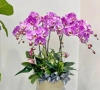
Don't panic if your Phalaenopsis orchid gets sun-scorched and wilts! This rescue method works better than randomly watering. How do you save a Phalaenopsis orchid that has wilted from sun exposure? First do 2 emergency steps, then do 3 things.
Everyone knows Phalaenopsis orchids like indirect light, but if you accidentally let them get too much sun, the leaves wilt and curl, and the edges even turn scorched black. It really hurts to see! Actually, after sunburn, don't panic. With timely emergency care, they can still be saved. The key is to focus on "shade, rehydration, and controlling the environment." Just like a person with sunburn needs to get out of the sun and apply moisturizer, Phalaenopsis orchids also need to be treated accordingly.
-

Key Technical Points and Methods for Centipede Farming Explained
The first step is to build the breeding pond, which should be a brick-and-cement structure and provide a warm, cool, humid and quiet environment; the second step is feeding management, raising 200-300 centipedes per sq m, with food mainly consisting of yellow mealworms, crickets, locusts, tender plant leaves, etc.; the third step is preventing natural enemies and diseases,
-
Key Technical Points and Daily Management Methods for Freshwater Fish Farming
The first step in freshwater fish farming is pond clearing: after draining the pond, sun-dry it for half a month, then disinfect and add water; the second step is stocking fry, selecting high-quality fry and disinfecting them before stocking; the third step is feeding, where in addition to special feed, ryegrass can also be fed; the fourth step is fish disease
-
Detailed Guide to Gamecock Breeding Techniques: Teaching You How to Raise Gamecocks Scientifically
The first step in gamecock breeding is selecting and breeding good stock, requiring a large body, strong bones, and well-developed breast muscles, with roosters weighing over 3.5 kg and hens over 2.5 kg; the second step is proper disease prevention, keeping the coop clean, and carrying out vaccination and disinfection; the third step is scientific feed formulation,
-
How to Grow Onions? A Detailed Guide to Planting Methods and Techniques
The first step in growing onions is to select a good cultivar; the second step is to prepare the beds and apply fertilizer, first plowing and fertilizing before sowing, then sowing and raising seedlings at the right time; the third step is transplanting, with the transplanting time for film-mulched fields around the Start of Winter and for non-mulched fields around Frost's Descent; the last
-
How to Grow Onions? Detailed Explanation of Planting Methods and Key Technical Points
The first step is to choose a good seedbed site and carry out deep plowing, fertilization and watering of the land; the second step is to sow high-quality seeds and cover with plastic film, paying attention to watering during this period; the third step is transplanting, and after transplanting water promptly; the last step is to do a good job of field management, and then from late May to
-
How to Grow Tomatoes Well? A Detailed Guide to Planting Methods
Step one, prepare the nutrient soil in a certain ratio; step two, soak plump, disease-free seeds in warm water; step three, germinate the treated seeds, and after germination is complete, sow them by broadcasting, drilling or dibbling; step four,
-
How to Grow Watermelons? A Detailed Explanation of Planting Methods and Key Technical Points
The first step is to soak and sprout the seeds, while also preparing the seedbed; the second step is to select the site, then carry out land preparation and fertilization; the third step is to transplant the watermelon seedlings; the fourth step is to prune the vines, press the vines and set the fruit; the fifth step is to apply fertilizer at the right time according to the growth condition
-
Growing Methods and Key Technical Points for Baby Bok Choy
The first step is variety selection; generally, the varieties Aikangqing, Dongchangqing and Shanghaiqing are chosen. Apply 1000 kg of decomposed farmyard manure per mu as base fertilizer. Evenly broadcast the seeds on the seedbed surface; after sowing, lightly rake the seedbed surface, cover the seeds, then firm the soil by treading and water thoroughly. Do
-
Key Points and Detailed Methods of Red Mushroom Cultivation Techniques
The first step is to prepare the mushroom house, with the temperature controlled at 25-28 degrees; the second step is to prepare the bedding material, using bean stalks, straw and similar items after water decomposition as the bedding material; the third step is to cultivate the mycelium, keeping the humidity at 65%-75%, and once the mycelium has developed and taken shape, keep the humidity at 75%. Finally, do
条件筛选