-

Detailed Explanation of Key Points of Rice Dry Seedbed Sparse Planting Cultivation Technology
The rice dry seedbed sparse planting cultivation technology is based on the characteristics required for high yield, applying comprehensive cultivation technical measures to promote rice in its growth and development process to achieve strong seedlings, healthy plants, long panicles, uniform panicles, many grains, and plump grains, finally achieving high yield, low consumption, and high efficiency, and achieving high yield.
-
Detailed Explanation of Rapid Propagation Methods for Cherry Seedlings
1. Land preparation and seedbed making In mid-to-late April, select well-drained sandy loam soil, apply 2000-3000 kg of high-quality farmyard manure per 667 sq m (1 mu), deep plow, level and harrow fine. Then make beds, bed width 1 m, length 15-20 m, and use a 200-fold ferrous sulfate solution for soil disinfection
-
A Detailed Explanation of Corn Seedling Raising Methods and Key Technical Points
Summary Seedbed seedling raising: spread nutrient soil into a seedbed surface, then scatter the seeds on the seedbed surface and cover with soil; when transplanting, lift the seedlings together with the soil. Nutrient cup seedling raising: use cup-shaped containers or a pot-making machine to make the nutrient soil used for raising seedlings into nutrient cups, then sow and raise seedlings in the nutrient cups; after the seedlings are grown, transplant them together with the cups. Soilless seedling raising: use wooden boards or other containers to make seedling trays, and raise seedlings in the trays by hydroponics.
-
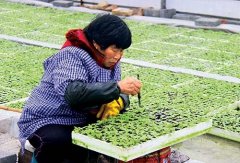
Tobacco Planting Time and Seedbed Management Techniques
Tobacco is widely grown in our country, so do you want to grow tobacco? Would you like to learn how to grow tobacco? Tobacco seedling raising: tobacco seeds are very small, and from sowing to the seedling stage they are easily damaged by environmental influences, so a seedbed should be set up
-
Current Technical Guidance on Rice Seedbed Management
Currently, some early-sowing areas are affected by sharp temperature changes caused by cold waves, and rice seedlings have suffered frost damage to varying degrees, which has affected seedbed management and will delay the transplanting process to a certain extent. In order to improve seedbed management and reduce low-temperature damage, the following technical guidance on seedbed management is hereby proposed. 1. Small-tunnel seedling cultivation. According to the weather forecast, add more covering material on the tunnel and keep it sealed for insulation. In case of frost, candles can be lit or smoke can be generated inside the tunnel to raise the temperature and prevent freezing. For medium and large tunnel seedling cultivation, ventilation should be reduced or even stopped. Straw curtains should be placed around the tunnel, plastic film should be laid flat inside the tunnel,
-
Occurrence of Pests and Diseases in Rice Seedbeds and Current Control Methods
During the rice seedbed stage, aphids, thrips, and damping-off disease mainly occur, harming the growth of rice seedlings. Adult and nymph rice thrips often gather at the leaf auricle, ligule, and inside the central leaf to cause damage; the affected parts first show small yellow-white spots, after which mottled white patches appear on the leaf surface. Affected seedlings recover green slowly, become stunted and fail to grow, appearing as if "stuck in the clump." Damping-off disease mostly occurs in wet (semi-dry) seedling nurseries and dry seedling nurseries, causing seedling death. Because temperatures in early to mid-April are unstable, aphids, thrips, and damping-off disease are prone to occur, affecting full, uniform, and strong seedlings. Agricultural technology centers of all townships and subdistrict offices are requested to strengthen water
-
What are the key points of cotton seedbed management? Do these well and the seedlings will be stronger
This year the weather during cotton sowing was good, with plenty of sunlight. At present, the large-area cotton has full stands and has entered the seedbed management stage. The following points should be grasped in detail: 1. After full emergence, spray each 10 sq m of seedbed with 3 ml of "Zaofa No. 1" plus 0.6 kg of water; spray once more after 8-10 days to prevent leggy seedlings and cultivate large, strong seedlings. 2. After full emergence, choose sunny weather to sun the bed and disperse moisture, and at the same time spray chemicals to prevent disease. 3. For the few dry, stiff cotton seedlings lacking water and fertilizer, promptly supplement fertilizer and water. Before 9 a.m., ventilate first and then remove the film to supplement water, and water with urea plus diluted manure water. After drying, scatter dry fine soil, then cover with film to keep warm.
-
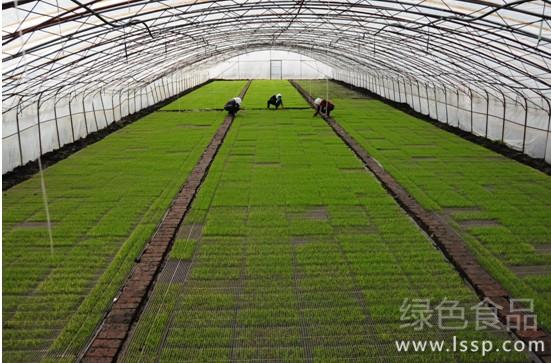
Wet Seedbed Technology for Early Rice: Easy to Operate and Highly Adaptable
Wet Seedbed Technology for Early Rice: Easy to Operate and Highly Adaptable
-
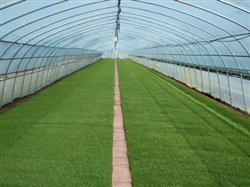
Operating and Maintenance Methods for Rice Seedling-Raising Greenhouse Seedbeds
The rice seedling-raising seedbed greenhouse is mainly composed of a greenhouse frame, light-transmitting covering materials (including plastic film, plastic panels, PC boards, etc.), several individual seedbeds and a spray irrigation system. This device features a compact structure, high land utilization rate and convenient operation. Operating methods 1. Before installation, the site must be leveled...
-
Key Technical Points for Dry Seedbed Raising of Rice Seedlings in Plug Trays under Large and Medium-Sized Plastic Tunnels
(1) Seed selection. Choose varieties of superior quality, high yield, disease resistance and medium-to-upper tillering capacity that tend toward the heavy-panicle type. In the first accumulated temperature zone, represented by Wuchang and Tailai, suitable main varieties include Wuyoudao No. 1, Songjing No. 2, Tengxi 140, Wudao No. 3 and Mudanjiang 19; in the second accumulated temperature zone, represented by Ning'an, Fangzheng, Yanshou, Huachuan and Suihua...
条件筛选