Wet Seedbed Technology for Early Rice: Easy to Operate and Highly Adaptable
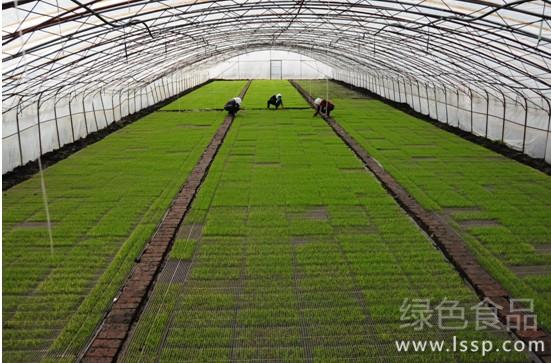
Rice Seedling Raising
The wet seedbed technology for early rice is easy to operate and highly adaptable. It is suitable for raising seedlings of different rice varieties in different seasons (early and late seasons), and is widely used by farmers in our city. When the technology is properly mastered, the seedlings raised are of good quality, have strong stress resistance, and give high yields. The standard operation of this seedling-raising technology is briefly described as follows:
1. Seedbed preparation: Choose a field that is sheltered from the wind and faces the sun, rich in soil organic matter, and convenient for irrigation and drainage as the seedbed. After selecting the site, carry out dry plowing and dry leveling 5—7 days before sowing and harrow it level, open furrows and make beds. The bed width is 1.4—1.5 m, the furrow width is 0.25—0.3 m, and the furrow depth is 0.15—0.2 m. Prepare the beds according to the requirements of "straight furrows and level surface, sufficient fertilizer and clean weeds, moderate softness and hardness." Along with bed preparation, apply 15—20 kg of compound fertilizer per mu, mix the fertilizer and mud evenly and harrow level.
2. Seed soaking and sprouting: When soaking the seeds, first soak them in clean water for 12—24 hours, then soak them for another 24—36 hours in 300—500 times diluted 85% strong chlorine preparation. Scoop them out, rinse off the chemical, and then sprout them. When sprouting, first wash and prewarm the seeds with 38—40°C warm water for 5 minutes, then put the paddy seeds into baskets and seal them tightly on all sides with disease-free rice straw to keep them warm. Then pour warm water over them once every 3—4 hours, keeping the temperature at 35—38°C. When the paddy seeds show white, regulate the temperature to 25—30°C for sprouting at a suitable temperature to promote root growth. It is ready when the sprout is half a grain long and the root is 1 grain long. Before sowing, spread the sprouted seeds out at room temperature to harden the sprouts for about 5 hours, then sow.
3. Sowing at the right time and in the right amount: Early rice in our city is generally sown in mid-March when the weather is clear. The sowing rate per mu of seedbed is: 35—40 kg for hybrid rice and 50—60 kg for conventional rice. When sowing, first sow 70% of the sprouted grain, then sow 30% to fill in evenly, and after sowing press the seeds into the soil. After pressing the seeds into the soil, spray the seedbed herbicide and then cover with film to keep warm.
4. Seedling management: Before the early rice emerges, keep the seedbed moist and the furrows free of water to enhance soil permeability. From emergence to before removing the film, in principle do not irrigate water onto the beds, so as to promote rooting. When removing the film, shallow water may be let onto the beds, keeping shallow water on the seedbeds. If a cold wave occurs, deep water may be irrigated to protect the seedlings. From full emergence to the one-leaf-one-heart stage, if the temperature inside the film exceeds 35°C, open the west end of the film for ventilation. After the two-leaf stage, the film may be opened to lower the temperature and harden the seedlings, that is: on sunny days, open both ends from 10 a.m. to 3 p.m. to keep the temperature inside the film at about 25°C; cover the film again in the evening. At the one-leaf-one-heart stage of the seedlings, apply 4 kg each of urea and potassium chloride per mu of seedbed as "weaning fertilizer" to ensure the nutrient needs of the seedlings during growth. Three days before transplanting, it is advisable to apply another 2—3 kg each of urea and potassium chloride per mu as "send-off fertilizer."
⟧ 5. Control of diseases, insects, and weeds: After spraying the seedbed herbicide to seal off and kill weeds, during the seedling stage weeds should also be pulled out and damping-off disease controlled. If continuous low temperature occurs, it is advisable to spray 70% dexon to prevent seedling rot.