-
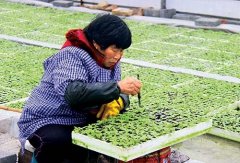
Tobacco Planting Time and Seedbed Management Techniques
Tobacco is widely grown in our country, so do you want to grow tobacco? Would you like to learn how to grow tobacco? Tobacco seedling raising: tobacco seeds are very small, and from sowing to the seedling stage they are easily damaged by environmental influences, so a seedbed should be set up
-

A Detailed Explanation of Corn Seedling Raising Methods and Key Technical Points
Summary Seedbed seedling raising: spread nutrient soil into a seedbed surface, then scatter the seeds on the seedbed surface and cover with soil; when transplanting, lift the seedlings together with the soil. Nutrient cup seedling raising: use cup-shaped containers or a pot-making machine to make the nutrient soil used for raising seedlings into nutrient cups, then sow and raise seedlings in the nutrient cups; after the seedlings are grown, transplant them together with the cups. Soilless seedling raising: use wooden boards or other containers to make seedling trays, and raise seedlings in the trays by hydroponics.
-
Detailed Explanation of Rapid Propagation Methods for Cherry Seedlings
1. Land preparation and seedbed making In mid-to-late April, select well-drained sandy loam soil, apply 2000-3000 kg of high-quality farmyard manure per 667 sq m (1 mu), deep plow, level and harrow fine. Then make beds, bed width 1 m, length 15-20 m, and use a 200-fold ferrous sulfate solution for soil disinfection
-
Detailed Explanation of Key Points of Rice Dry Seedbed Sparse Planting Cultivation Technology
The rice dry seedbed sparse planting cultivation technology is based on the characteristics required for high yield, applying comprehensive cultivation technical measures to promote rice in its growth and development process to achieve strong seedlings, healthy plants, long panicles, uniform panicles, many grains, and plump grains, finally achieving high yield, low consumption, and high efficiency, and achieving high yield.
-
Detailed Explanation of the Key Points of Rice Dry Seedbed Seedling Cultivation Technology
In recent years, the performance of dry seedbed seedling cultivation and field transplanting by our city's agricultural technology extension center in various townships shows that the rice dry seedbed seedling cultivation technology has the effects of saving labor, saving field, saving water, saving expenditure, being easy to operate, and significantly increasing yield. The main reason for the yield increase is making full use
-
How to grow seedlings of seedless watermelon? Practical experience shared
Seedbed establishment The seedbed land must be chosen in a place that is sheltered from the wind, facing the sun, high in terrain, and close to a water source, for ease of management. The seedbed is 2.5 m wide and 0.15 m deep, and the length is determined as needed. When establishing the seedbed, care should be taken to make its bottom as flat as possible. Before making the pots, spread a layer of sandy soil on the bottom of the seedbed to facilitate lifting the seedlings.
-
The correct method for making and mixing seedbed soil
To make seedbed soil, you first need to choose suitable field soil, combine it with organic fertilizer and chemical fertilizer, and then mix them in a certain ratio. The nutrient soil needs to be disinfected. Sowing can be done on a sunny day; higher temperatures will make seedlings emerge faster. Types of nutrient soil according to use
-
Detailed Explanation of Key Techniques for Growing Winter Melon in Greenhouses
First prepare the seedbed and seedling trays, then after soaking, dressing, and sprouting the high-quality plump seeds, sow them in the seedbed. Water thoroughly once before sowing, cover with a thin layer of soil after sowing, then add plastic film and a small arch shed. Once 3 true leaves have grown, they can be transplanted. After transplanting
-
How to Grow Onions? Detailed Explanation of Planting Methods and Key Technical Points
The first step is to choose a good seedbed site and carry out deep plowing, fertilization and watering of the land; the second step is to sow high-quality seeds and cover with plastic film, paying attention to watering during this period; the third step is transplanting, and after transplanting water promptly; the last step is to do a good job of field management, and then from late May to
-
What are the technical key points for fertilizing the seedbed for dry-raised rice seedlings?
The main advantages of the dry-raised rice seedling technique are a short seedling age, strong seedlings, and convenient management. It can be used for machine transplanting and manual hand transplanting, with high work efficiency and good quality. It is suitable for adoption under different production systems. So what are the technical key points for fertilizing the seedbed for dry-raised rice seedlings? According to experimental research and
条件筛选