-

How Should Potatoes Be Stored? A Full Analysis of Scientific Preservation Techniques
How to scientifically store fresh potatoes for seed, food and processing use is a key link in extending the potato industry chain. Through scientific storage, market supply and demand can be regulated and value can be increased by 20% to 30%. Through in-depth investigation and research and production practice, the author discusses the current potato storage situation in Weichang County, the existing problems and scientific storage methods. 1. Current potato storage situation in Weichang Although farmers in Weichang have the habit of storing potatoes and have accumulated rich storage experience, there are also many
-
Rice gene design breeding: scientists cultivate new varieties
The aroma of rice is richer, like fruit, with higher iron and zinc content, so there is no need to supplement other nutrients; all of this can be achieved through molecular design of rice genes. Recently, the author learned from the "Crop Molecular Design and Innovation" symposium that China is currently building a large bioinformatics infrastructure platform to ensure that high-quality genes are "hit every time." Zhu Yingguo, an academician of the Chinese Academy of Engineering, said that taking rice as an example, japonica rice with a soft and glutinous texture is more favored, and people also hope that rice aroma will be richer or have special aromas such as "fruity" notes. Moreover,
-
Scientific control methods for the first-generation Asiatic rice borer (Chilo suppressalis) in rice
According to surveys conducted across Hubei Province, the overwintering mortality rate of the Asiatic rice borer this year was higher than last year, and the post-winter population base was lower than last year but still relatively high. In addition, suitable climate conditions and the expansion of high-quality rice varieties are both favorable to the occurrence and damage of rice stem borers, and the first-generation Asiatic rice borer will show a major outbreak trend in the rice-growing areas of our province, making the control situation still severe. In response to this severe situation, all localities should strengthen leadership, raise awareness, actively organize control efforts, and quickly launch a campaign to wrest grain from the pests to ensure the safety of grain production. 1. Recognize the situation clearly and strengthen organizational leadership. Last winter, our province suffered freezing ice and
-
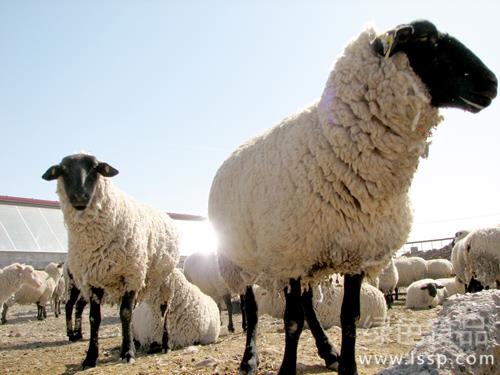
Improving Traditional Feeding Methods: Scientific Management Techniques for Meat Sheep Fattening
Improving Traditional Feeding Methods: Scientific Management Techniques for Meat Sheep Fattening
-
Key Technical Points for Scientific Management of Soybeans Adapted to Seedling Conditions
Liang Huizhen, associate researcher at the Cash Crop Research Institute of the Provincial Academy of Agricultural Sciences, said that at present most areas of our province's soybeans are at the flowering and podding stage, which is the period of greatest nutrient and water uptake and also the peak period of root nodule nitrogen fixation. The main goal at this stage is to promote more flowering and more pod setting, prevent premature senescence, control excessive vegetative growth, increase flowers and preserve pods, reduce shedding, and lay the foundation for a high yield. Due to the tight time schedule at sowing, summer soybeans often receive no or little basal fertilizer, and by the time the soybeans set pods, nutrient deficiency occurs, so flower and pod fertilizer should be applied promptly. At
-
Detailed explanation of An pear cultivation techniques, key points of scientific planting and management
An pear is one of the important varieties of the Ussurian pear system, mainly distributed in the Yanshan mountain area of northeastern Hebei Province and western Liaoning Province. An pear is loved by people for its unique flavor, golden color, low price and extremely strong storability; it is also widely cultivated in the Yanshan mountain area for its strong resistance and adaptability. 1. Variety characteristics. The fruit of An pear is spherical or oblate, containing soluble solids 12.9%-16.2%, organic acids 0.9-1.43%, vitamin C 8.2
-
How to cultivate Dianthus (Dianthus chinensis) scientifically? Detailed methods and key techniques
Dianthus is mostly propagated by seed, sown in September at a temperature of 12-18°C, and seedlings emerge in about 10 days; it can also be propagated by cuttings, cutting 6 cm long branches as cuttings. For potting, it is best to use a culture soil mixed with 7 parts garden soil, 1 part compost soil, and 2 parts sandy soil. When the seedlings grow to 4-5 leaves, they can be transplanted into small flower pots with a diameter of 6-8 cm; after growing into larger seedlings, they are then planted in flower pots with a diameter of 15 cm and placed in a sunny spot for cultivation. During the growth period, apply fertilizer water once every 10-14 days, and the flowers
-
A Detailed Guide to Scientific Propagation Methods and Techniques for Gypsophila
Gypsophila can be propagated by sowing and tissue culture: ① Propagation by sowing. First, select disease-free, vigorous plants as seed-collection mother plants. When the capsules turn from green to pale yellow, harvest them, dry them, and after the seeds fall out, remove impurities and store them in a dry, ventilated place. In the southern Yangtze River basin area, sowing is mostly done in March. After the seeds germinate and emerge, thinning must be carried out to increase the spacing between seedlings so as to improve ventilation and light penetration and make them grow vigorously; they can also be sown directly in holes at a plant-to-row spacing of 20 cm x 40 cm on the cultivation seedbed for care and management. Those sown during this period
-
What is the scientific way to store potatoes? A complete breakdown of the methods
For the heap storage method, choose a warehouse with good ventilation and a dry site, first fumigate and disinfect with a mixture of formalin and potassium permanganate, then put the potatoes into the warehouse, generally piling 750 kg per sq m, about 1.5 m high, surround them with crates, baskets or wooden boards, and place several bamboo ventilation tubes in the middle. This method is suitable for short-term storage and the storage of autumn potatoes. For the ventilated warehouse storage method, put the potatoes into baskets and stack them in the warehouse, about 25 kg per basket, and a stack height of 5 to 6 baskets is appropriate. In addition, they can also be piled loose in the warehouse, with a pile height of 1.3 to 1.
-
How to Choose Chicken Feed? Master the Scientific Selection Method
Choose the manufacturer and brand. There are many manufacturers at present. When purchasing feed, make sure to identify the manufacturer and choose products that have been tested by research institutions and then promoted for use. Choose according to the type of livestock or poultry and its growth and development stage. Compound feed is formulated for different types of livestock and poultry and different production purposes. Chicken feed is further divided into chick feed and adult chicken feed. Therefore, when selecting, be sure to purchase according to the instructions on the compound feed. Do not judge the quality of feed by appearance alone. Some farmers mistakenly believe that feed with good color and a pleasant smell, which produces black droppings after feeding, is
条件筛选