Improving Traditional Feeding Methods: Scientific Management Techniques for Meat Sheep Fattening
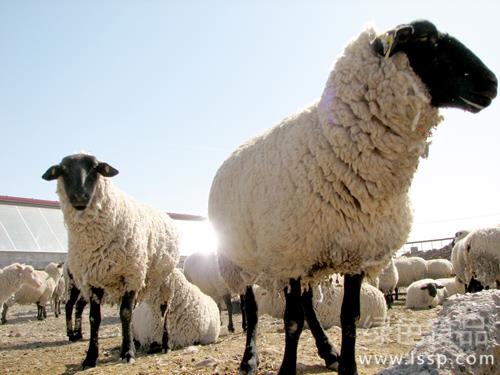
Sheep Farming
The sheep farming industry is both ancient and newly emerging. Fattening sheep is aimed at obtaining good-quality, abundant mutton in a short time at low cost. How to improve traditional feeding methods to fatten sheep quickly is an urgent problem for modern sheep farmers.
1. Select Good Breeds
Choose the best crossbreeding combination of sheep and make full use of hybrid vigor to increase production. For example, using Boer goats and others as the sire and local white goats as the dam for multiple crossbreeding, the resulting meat-type goats have the characteristics of large body size, stable genetic performance, high reproductive performance, strong disease resistance, high meat yield, white wool, good luster, and good elasticity.
2. Build Pens and Sheds
Meat sheep pens and sheds should be warm in winter and cool in summer, and should be built in a place with high terrain, dry ground, good drainage and ventilation, and clean and sanitary conditions. Facing south with a north-facing back, in a half-slope style, the rear wall is generally 1.8 m high and the front eave is 2.2 m high, with an exercise yard outside, creating a good living environment for fattening sheep.
3. Raising Ewes
Ewes should be grazed on high-quality pasture or mountain land, or kept in sheds and fed high-quality forage. At the same time, each ewe should be fed 0.4-0.7 kg of mixed concentrate per day. The composition of the mixed concentrate: corn 60%, wheat bran 8%, cottonseed cake 16%, soybean meal 12%, salt 1%, calcium hydrogen phosphate 3%.
4. Selecting Lambs for Fattening
From the flock of lambs, select lambs that are large, well developed, strong in feed intake, and free of disease to form a post-weaning fattening group. It is best to choose male lambs, because male lambs grow quickly and have not yet reached sexual maturity at this time.
5. Supplementary Feeding of Lambs
Grain feed can be used together with an appropriate amount of soybean cake (meal), or a mixed concentrate can be used, such as corn 45%, wheat bran 22%, soybean meal 30%, salt 1%, fish meal 2%. The amount of concentrate fed to lambs increases with age in months. At 20-30 days of age, each lamb is fed 50-70 g; at 1-2 months of age, 100-150 g; at 2-3 months of age, 200 g, with supplementary feeding 2 times a day.
6. Timely Tail Docking
Tail docking of lambs can accelerate meat sheep growth, improve meat quality, and reduce mutton odor. Lambs can have their tails docked at 2-21 days of age, but 2-7 days of age is most suitable. Tail docking is best done on a sunny morning. Methods: first, rubber band tail docking. Use a rubber band with good elasticity and place it between the 2nd and 3rd tail vertebrae of the lamb, so that the lower part of the tail cannot receive nutrients and atrophies, and it falls off by itself after 10 days. Second, quick knife tail docking. First tie the base of the tail with a thin rope to cut off blood circulation, then use a sharp knife to cut it off 4-5 cm from the tail, and bandage it with gauze. On the afternoon of the same day, the tie rope can be untied, and it heals after 5-7 days.
7. Castration to Promote Growth
Castration of male lambs is generally carried out at the same time as tail docking, and the rubber band method or surgical method can be used. The rubber band method is commonly used: push the testicles of male lambs within 7 days of age into the scrotum, and tightly tie the spermatic cord area together with the scrotum using a rubber band. After 20-30 days, the scrotum and testicles will dry up and fall off naturally.
8. Timely Disinfection
In the feeding and management of meat sheep, there must always be a sufficient and clean supply of drinking water, good ventilation in the shed, dry ground, bedding straw, and feed that is not contaminated. Sheep pens, sheep sheds, feed troughs, and water troughs should be cleaned and disinfected frequently; lambing bedding straw, forage, tools, and so on should be frequently placed in the sun to dry; work clothes and medical instruments should be frequently boiled for disinfection.
9. Disease Prevention
According to the local epidemic characteristics of sheep diseases, adhere to the feeding principle of “prevention is more important than treatment” and carry out drug prevention and immunization for the flock in a planned way to prevent the occurrence of infectious diseases and parasitic diseases.
10. Choosing the Right Time for Marketing
When fattening sheep are plump and strong, they can be marketed in time according to market conditions, which can shorten the fattening cycle of meat sheep and also improve the economic benefits of sheep farmers.