What are the scientific methods for growing corn?
How do you grow corn scientifically? Please provide guidance. Corn contains large amounts of lecithin, linoleic acid, grain alcohol, and vitamin E. Long-term consumption can effectively lower serum and cholesterol levels, reduce the occurrence of high blood pressure and arteriosclerosis, and has the effect of delaying cell aging and the degeneration of brain function. Corn contains anti-cancer factors...
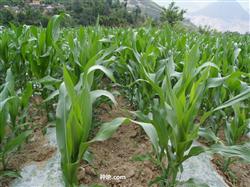
How do you grow corn scientifically? Please provide guidance
Corn contains large amounts of lecithin, linoleic acid, grain alcohol, and vitamin E. Long-term consumption can effectively lower serum and cholesterol levels, reduce the occurrence of high blood pressure and arteriosclerosis, and has the effect of delaying cell aging and the degeneration of brain function.
Corn contains an anti-cancer factor - glutathione, which can use its own chemical function to "attack" carcinogenic substances, causing them to lose their toxicity, and then drive carcinogens out of the digestive tract.
Corn contains selenium and magnesium. Selenium can accelerate the decomposition of peroxides in the body, depriving malignant tumors of oxygen supply and thereby inhibiting them, while magnesium can not only inhibit the development of cancer cells but also help waste products in the body be excreted as quickly as possible, thereby playing a significant role in cancer prevention.
Corn contains lysine, which can not only inhibit the side effects of anti-cancer substances on the human body but also inhibit tumor growth.
Corn contains large amounts of cellulose, which can accelerate intestinal peristalsis and shorten the time that food residue stays in the intestinal tract, therefore playing an important role in the prevention and treatment of rectal cancer.
Corn contains abundant vitamins, such as carotene (provitamin A), B vitamins, vitamin E, etc. After carotene enters the human body, it is converted into vitamin A, which can block and inhibit the proliferation of cancer cells and restore the function of normal tissues, playing a certain role in preventing lung cancer, stomach cancer, intestinal cancer, skin cancer, etc. The synergistic action of vitamins A, E and the B group can deactivate carcinogenic chemical oxidants in the body and thus play a cancer-preventing role.
Uses of sweet corn
Fresh sweet corn ears: after harvest, they are sold directly to consumers through supermarkets or farmers' markets for household consumption. This is the simplest consumption method, with the best tasting quality and also the largest consumption volume. Several types including common sweet, enhanced sweet and super sweet can all be used.
Canned sweet corn: a processed product of sweet corn kernels, available in whole-kernel and paste forms. It can be eaten straight from the can or further cooked and processed, for consumption by households and the catering industry. Generally, super sweet varieties are used more often.
Sweet corn kernels: mainly provide processing raw materials to large-scale catering businesses and food processing industries. According to raw material requirements, several types of sweet corn can all be used.
Sweet corn ears: mostly used in the catering industry, such as the sweet corn segments in KFC fast-food restaurants. Generally, common sweet and some enhanced sweet varieties are used; super sweet varieties are more difficult to process.
Vacuum-preserved fresh ears: preservation period of 18 months, with good preservation effect, mainly aimed at household and ready-to-eat consumption. There is great room for development. Several types of sweet corn can all be used.
Vacuum-preserved corn cobs: basically the same as canned sweet corn products, with a preservation period of 18 months. Because the cost is greatly lower than canned products, they are expected to replace part of the canned market and enter households, the catering industry and the food processing industry, with broad market development space.
Sweet corn beverage: simple processing technology, relatively low cost; clear and beautiful appearance, pleasant taste, nutritious and healthful - it is a product with a huge potential market.
Field weeding: herbicides, manual weeding
Seedling raising: soil-ball seedling raising, seedling tray raising, seedling bed raising, direct seeding
Field fertilizer and water management: seedling stage, funnel stage, tasseling stage, early pollination stage, grain-filling stage
Field disease and pest control: disease control, pest control
Harvesting of fresh ears
Exchange of planting technology experience
Weed control in corn fields
Pre-emergence control: apply herbicide 5-7 days in advance (such as glyphosate, Gramoxone (contact action on leaves) + Dual Gold, acetochlor, etc.). When using herbicides, the field should be kept moist. Then carry out seedling raising and sowing.
Control during the growing period: during the growing period, methods such as laying plastic film and manual weeding can be used.
Seedling raising of sweet corn
1. Preparatory work before seedling raising - mobilize farmers: prepare the seedling bed well, prepare bamboo strips, film, shade net, etc. Before preparing the seedbed, some lime can be spread in the field first to adjust the pH of the soil. Spread 2000 jin of farmyard manure or pig urine water, biogas slurry, etc.
2. Seedling raising methods: soil-ball seedling raising, seedling tray raising, seedling bed raising, direct seeding
2-1. Soil-ball seedling raising
After preparing the seedling bed, sprinkle water to moisten it, and spread 2-3 jin of compound fertilizer per mu, and 2-3 liang of granular insecticide for soil pests (such as carbofuran, Dichongjue, etc.). It can also be spread on the seedling bed after sowing, but the amount should be smaller.
To make soil balls, take fine soil from the field and mix with water to a moisture content of 60%-70%, knead it into soil balls the size of an egg, place them on the previously leveled seedling bed in close arrangement, and after the soil balls are slightly dry, gently press a shallow hole with the index finger, generally about 1cm-1.5cm deep and about 1.5cm in diameter. Make about 300 of them (to avoid excessively rapid water evaporation from the soil balls in summer), then place one seed in each hole, cover with 1cm of semi-dry fine soil, and fill the gaps between the soil balls with fine soil. If the soil is too dry, sprinkle it moist with a watering can.
Arch it over with bamboo strips, cover well with film or shade net (usable in clear weather) or wet straw (used in dry weather). In summer and autumn, all four sides need ventilation, and the seedling bed moisture should be maintained.
When the first leaf has grown, remove the film if there is no rain.
2-2. Seedling tray raising
Sprouting: mix fine sandy soil with a moisture content of about 50%-60% evenly with the seeds, pile them up, and maintain the temperature at about 30°C until the seeds split open by 0.2-0.5 cm, then sieve out the seeds with a mesh sieve ready for sowing.
Sowing: place the seedling trays on the leveled seedling bed, sieve soil into the trays (half-fill the trays), water once with a root-growing and seedling-strengthening agent, using 40g per jin of seed. Put the seeds into the tray cells, level the fine soil, then water moist. Arch over with bamboo strips, cover well with film or shade net (usable in clear weather) or wet straw, wet plastic bags (used in dry weather). In summer and autumn, all four sides need ventilation, and the seedling bed moisture should be maintained.
2-3. Seedling bed raising
Level and loosen the seedling bed, place the seeds evenly on the bed, cover with 1 cm of fine soil, then water moist and maintain the seedling bed moisture. Arch over with bamboo strips, cover well with film or shade net (usable in clear weather) or wet straw, wet plastic bags (used in dry weather). In summer and autumn, all four sides need ventilation, and the seedling bed moisture should be maintained.
2-4. Direct seeding:
Sowing: control the plant spacing at about 30 cm, with holes about 1 cm deep. One seed per hole. For sandy soil, place the seeds well, cover with soil and press firm, with the covering soil thickness controlled at about 1 cm. If the temperature is relatively low, plastic film can be used as cover; covering with plastic film can raise the soil temperature by 3-10 degrees. Spray herbicide on the same day after sowing to ensure the weeding effect.
Seedling stage management
Seedling bed management at the seedling stage: maintain ventilation on all four sides and seedling bed moisture, and begin appropriate hardening of the seedlings from the first leaf.
Seedling stage management after transplanting: 1. Transplanting of seedlings: transplant promptly when the seedlings have two leaves and one heart (the larger the seedlings, the more serious the root damage), and water with settling water; some pesticide for soil pests can be appropriately spread. 2. Promoting roots and strong seedlings at the seedling stage: super sweet corn has a relatively short growth period, so the early plant growth has a relatively large impact on the final yield. Therefore, the fertilizer and water supply in the first month must be fast! For smaller seedlings in the field, apply more watering several times as appropriate to ensure that the seedlings at the seedling stage are uniform and easy to manage.
Field fertilizer and water management
After transplanting, each fertilizer application is generally 5-6 days apart, with the time and fertilizer amount changed according to the specific growth condition.
1. First fertilizer application: on the day of transplanting, 10 jin per mu of 15-15-15 Norwegian compound fertilizer
2. Second fertilizer application: after 5-6 days, 20 jin per mu of 15-15-15 Norwegian compound fertilizer, adding Dexon to the fertilizer water to prevent soil insects (one packet per mu)
The first two fertilizer applications are all Norwegian fertilizer, applied directly onto the roots.
After the second fertilizer application, dig a middle hole with a diameter of 20 cm and a depth of about 5 cm between every four plants, for use in later heavy fertilizer applications.
Third fertilizer application: 40 jin per mu of compound fertilizer (10 Norwegian + 30 Sanyuan blue fertilizer)
Fourth and fifth fertilizer applications: 50-60 jin per mu (20 Norwegian + 40 Sanyuan blue fertilizer)
Field disease and pest control
1. Pest control:
1-1. At the seedling stage, mainly underground pests
Control: spread 2-3 liang of granular insecticide for soil pests (such as carbofuran, Dichongjue, trichlorfon, etc.). It can also be spread on the seedling bed after sowing, but the amount should be smaller.
1-2. Aphids: spray with pesticides such as imidacloprid, emamectin benzoate, dimethoate, etc.
1-3. Corn borer
Wide damage range and many damaged parts: leaves, stems, tassels and ears; long damage period: from the middle whorl stage all the way to ear harvest; severe damage degree: in fresh ear production and mechanized assembly-line operations, one worm at the top causes a loss of 1/3; several worms in the middle cause the whole ear to be ruined.
Therefore, corn borer must be prevented before flowering by using 1 packet of BT powder (Bacillus thuringiensis) + 2 packets of monosultap mixed with 5-6 jin of fine sandy soil (mixed half a day in advance) and placed into the whorl in the evening.
BT powder and monosultap can also be mixed evenly and put into a mineral water bottle with a small hole, then squeezed out to spray onto the whorl or corn silks.
Field disease control
1. Southern leaf blight: one of the most common corn diseases, can be controlled with triazole fungicides such as propiconazole and iprodione. Generally at the five-leaf stage, before and after continuous rainy days, and before tasseling, when preventing the disease, infection often starts from the bottom leaves.
2. Stripe leaf spot occurs at the tasseling stage. When the symptoms develop to striped drying, it cannot be cured, so prevention should be the main approach. At present, it is understood that propiconazole and iprodione are used for prevention. Differentiate from magnesium deficiency symptoms: there is fungal residue on the leaves, which will spread and infect.
3. Head smut is mainly because the seeds carry fungi at sowing. Seed coating contains fungicide to prevent seed-borne fungi, so seeds are not soaked and not washed.
4. Sheath blight: this disease harms the leaf sheaths and stems of the several nodes near the ground of corn, causing basal stem rot, destroying conductive tissues, and affecting the transport of water and nutrients. It mainly occurs in the late growth period of corn. Control agents: at the early stage of the disease, spray with 1% validamycin 400 times + Tianda 2116 grain-specific type 600 times, or spray with 70% thiophanate-methyl 700 times + Tianda 2116 grain-specific type 600 times for control.
Field disease and pest control
Corn rust:
It mainly infects leaves, and in severe cases can also infect ears, husks and even male flowers. At first, only light yellow elongated to oval brown small pustules are scattered on both sides of the leaves; later the pustules rupture and release rust-colored powder, namely the summer spores of the pathogen; later black nearly round or oblong protrusions grow on the lesions, and after cracking expose dark brown winter spores.
Control methods: (1) Avoid partial and excessive application of nitrogen fertilizer, and improve host disease resistance. (2) At the early stage of the disease, begin spraying 25% triadimefon wettable powder 1500-2000 times solution or 40% carbendazim-sulfur suspension 600 times solution, 50% sulfur suspension 300 times solution, 30% solid lime-sulfur mixture 150 times solution, 25% diniconazole EC 3000 times solution, 12.5% flutriafol wettable powder 4000-5000 times solution, once every about 7 days, for 2-3 consecutive applications.
Precautions
This cultivation technology was summarized by our company only based on many years of planting experience. It cannot completely suit the conditions of your region, so it must never be copied and applied mechanically. Please follow the technical regulations for your local soil, climate and cultivation conditions, and you need to continuously improve it in actual planting.
Click to get more corn planting techniques
Click to get more grain crop planting techniques