How to scientifically cultivate Angelica sinensis? Key techniques explained
How to scientifically cultivate Angelica sinensis? Here is an introduction. For cultivating Angelica sinensis, you can refer to the following methods: 1. Site selection and land preparation: Choose a gently sloping field facing south to north with half shade and half sun, requiring loose soil and good structure. Deep plow once before Grain Full (Xiaoman), break up the soil clods to make a seedbed; the bed surface is 1 m wide, and the length varies with the terrain. Dig drainage between beds...
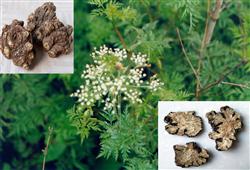
How to scientifically cultivate Angelica sinensis? Please give an introduction.
For cultivating Angelica sinensis, you can refer to the following methods:
1. Site selection and land preparation: Choose a gently sloping field facing south to north with half shade and half sun, requiring loose soil and good structure. Deep plow once before Grain Full (Xiaoman), break up the soil clods to make a seedbed; the bed surface is 1 m wide, and the length varies with the terrain. Between beds, dig drainage ditches 30 cm wide and 15-20 cm deep. The planting site should be deeply plowed and finely harrowed, with 2500-5000 kg of base fertilizer applied per mu, mixed evenly by turning the soil, and made into raised beds 1.2-1.5 m wide. Between beds, dig drainage ditches 30 cm wide and about 20 cm deep.
2. Propagation method: In production, seedling raising and transplanting are often used.
The sowing period should be determined according to the altitude and temperature of each place. In Gansu, Sichuan, and Yunnan, it is about July, and in Shaanxi, around August. The sowing method is broadcasting; mix the seeds with ash and scatter them on the bed surface, press lightly, cover with a small amount of fine moist soil, and cover with grass to achieve light transmission and moisture retention. The seedling age should not exceed 110 days, and the sowing rate is 4-5 kg per mu. Transplanting is divided into winter transplanting and spring transplanting, with a plant spacing and row spacing of 25 cm x 25 cm. Spring transplanting is around Pure Brightness (Qingming), and winter transplanting is suitable after Cold Dew (Hanlu) and before Frost Descent (Shuangjiang). Using the direct seeding method for production, it can be done in winter, spring, or autumn, and can control early bolting of Angelica sinensis. Among these, winter direct seeding is slightly better, but the yield is not high.
3. Field management
(1) Seedling stage management: After sowing, the soil must be kept moist to facilitate seed germination. After about 40 days, loosen the covering grass. When the seedlings are about 3 cm tall, loosen the soil once and remove weeds immediately. After the dog days, choose a cloudy day to remove all the covering grass. During the seedling stage, pay attention to drought prevention and drainage.
(2) Lifting and storing seedlings: From Cold Dew (Hanlu) to Frost Descent (Shuangjiang), when the temperature drops to about 5°C and the seedling leaves begin to wither, dig up the seedlings, tie them into small bundles with a little soil, air-dry the moisture, and store them in cellars or heaps. Seedlings that are too old should not be stored in heaps; when storing in heaps, pay attention to placing the heads facing outward and the roots facing inward.
(3) Replanting and thinning: Under normal circumstances, about 20 days after transplanting, when the seedlings have emerged completely, carry out thinning and replanting. It is best to replant with small seedlings with soil on cloudy and rainy days. About 3 months after planting, finalize the stand, remove diseased and weak seedlings, and keep 1 plant per hole.
(4) Intertillage and weeding: In mid-May, carry out the first weeding, which should be shallow hoeing, and do not bury the seedlings with soil. In mid-June, carry out the second weeding, which can be deeper hoeing to promote root development.
(5) Bolting removal: After transplanting, plants that flower and fruit in the same year are called early bolting; their roots cannot be used medicinally and should all be removed.
(6) Topdressing: Angelica sinensis is a fertilizer-loving plant. In late June during the leaf flourishing stage and in early August during the root growth stage, phosphorus, potassium, and nitrogen fertilizers should be applied as topdressing.
Click to get more Angelica sinensis cultivation techniques
Click to get more medicinal herb cultivation techniques