-
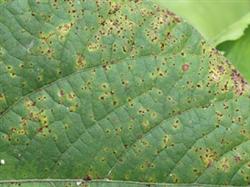
What are the main symptoms of rust disease in yardlong beans?
Yardlong beans can be infected by the pathogen throughout the entire growing period, but resistance weakens and susceptibility increases from the beginning of flowering to the podding stage. The disease mainly attacks the leaves. In the early stage of the disease, scattered chlorotic yellowish-white spots appear on the underside of the leaves, and the spots gradually multiply until they densely cover the entire leaf. On the corresponding reverse side of the lesions, yellowish-brown...
-
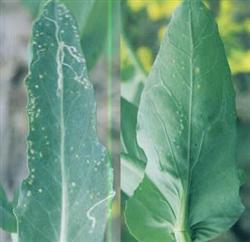
Comprehensive Control Techniques for White Rust of Rapeseed
The pathogen of rapeseed white rust is Albugo candida, a disease commonly occurring on rapeseed and cruciferous vegetables in the Yangtze River basin, often occurring together with rapeseed downy mildew on the same flower stalk. I. Symptoms: All aboveground organs of rapeseed are susceptible throughout the entire growth period. Pale green small spots first appear on the leaf surface, later turning yellow...
-
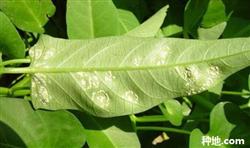
What are the control methods for white rust in water spinach?
How do you control white rust in water spinach? Please advise. First, carry out a 2- to 3-year crop rotation with other vegetable varieties. Second, before sowing, treat the seed at a ratio of 300 g of 35% metalaxyl per 100 kg of seed for sterilization; third, in the early stage of the disease, use 50% copper metalaxyl wettable powder at 6000 to 7000 times dilution, or 72.2% propamocarb aqueous solution...
-
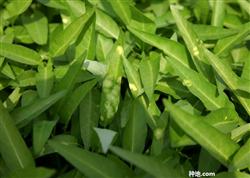
What are the control methods for white rust in water spinach?
How do you control white rust in water spinach? Please advise. 1. Implement a 2- to 3-year crop rotation with other vegetable varieties. 2. Before sowing, dress the seed for sterilization at a ratio of 300 g of 35% metalaxyl per 100 kg of seed; 3. In the early stage of the disease, spray with 50% copper metalaxyl wettable powder at 6000 to 7000 times dilution, or with 72.2% propamocarb aqueous solution at 8...
-
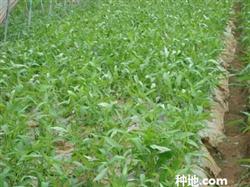
What are the control methods for white rust in water spinach?
How should water spinach be cultivated? Please advise. 1. Variety selection. Suitable varieties for planting include Daji Huang, Dagu Qing, Jian Ye, Si Yong, Daji Qing, and others. 2. Cultivation season. Greenhouse cultivation can basically achieve year-round production and year-round supply. 3. Land preparation and fertilization. Water spinach grows quickly...
-
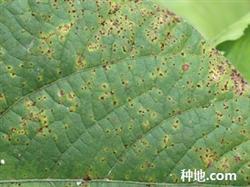
What are the methods for controlling cowpea rust in autumn?
How do you prevent rust when growing cowpeas in autumn? Please explain: the growing environment for autumn-planted cowpeas has high temperatures and relatively abundant rainfall, and in addition the amount of inoculum (urediospores) left behind in the field from spring-planted cowpeas is large. Therefore, autumn-planted cowpeas are prone to rust, and farmers should carry out integrated control early. Main symptoms: cowpeas can be infected by the pathogen throughout the entire growing period...
-
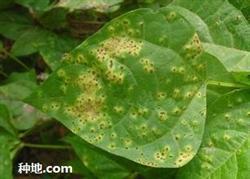
How to prevent bean rust? These practical methods you need to master
How to prevent bean rust? Please note that bean rust mainly damages the leaves, and in severe cases also damages the petioles and pods. It can cause the plant's leaves to turn yellow and fall off, the plant to become stunted, with few and small pods, and finally to wither and die. Control measures: 1. Clean the field, after harvest remove the diseased plant debris from the field and burn it in a centralized manner to reduce...
-
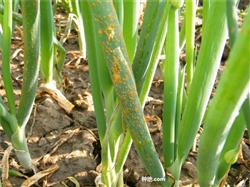
How to prevent and control Welsh onion rust disease during continuous rainy days?
How to prevent Welsh onion rust disease during continuous rainy weather? Please advise. In summer and autumn, with high temperatures and frequent rain, if continuous rainy weather occurs, Welsh onions are prone to rust disease, and farmers should promptly take effective measures to strengthen prevention and control. Timely pesticide application for prevention and control: In summer and autumn, especially after 2-3 days of continuous rainy weather, promptly inspect Welsh onions for rust...
-
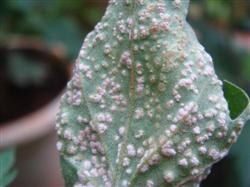
How to prevent and control chrysanthemum white rust? A detailed guide to practical control techniques
Chrysanthemums are loved for their elegant, bright colors and rich fragrance. Growing flowers can cultivate people's character, enrich cultural life, and improve physical and mental health. At the same time, some varieties of chrysanthemums grown can also be eaten or used as medicine, achieving two benefits at once. However, in the process of cultivating and propagating chrysanthemums, they often suffer from a variety of diseases...
-
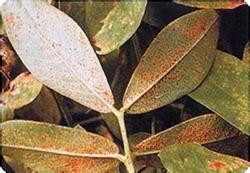
Analysis of the Causes of Peanut Rust Occurrence and Spread
What are the causes of peanut rust occurrence and spread? First, peanut rust is a fungal disease caused by Puccinia arachidis. The urediniospores are yellow, round or nearly round, with minute spines on the surface, and each urediniospore has one germination pore on each side of its middle section. Most urediniospores produce only one germ tube, and an appressorium forms at the tip of the germ tube, from which an infection hypha penetrates the peanut. Urediniospores can germinate only in the presence of water droplets or a water film. They have strong tolerance to low temperatures and poor tolerance to high temperatures. Under normal conditions, the germ tube penetrates the internal tissue after 65 hours, the hyphae continue to grow and produce haustoria, and after 7 days, pinpoint-sized white spots appear and begin to produce urediniospores; after 8 days, the white spots turn yellow-brown and form uredinia; after 10 days, the epidermis of the uredinia ruptures and releases urediniospores to continue infection. During the peanut growing period, the expansion and spread of peanut rust are mainly from local inoculum sources, but in the northern peanut regions, there is also the issue of external inoculum sources for the pathogen in early spring. The main factors affecting the occurrence and spread of peanut rust: First, the amount of overwintering inoculum. If the amount of overwintering inoculum is large, peanut rust may occur severely the following year.
条件筛选