-

Symptoms and Control Methods of Korean Pine Blister Rust
Symptoms: The disease occurs on the bark of branches and trunks. In the early stage of infection, the affected bark swells slightly and softens, cracks begin to form in early May, and yellowish-white blister sacs, which are the rust pustules (aecia) of the pathogen, emerge from within. In early to mid-June, the rust pustules mature and turn orange-yellow. From mid-May onward, the sacs rupture and release powdery rust spores, finally leaving a membranous white covering that gradually falls away and disappears. By the end of June, most blister sacs have ruptured and dispersed; the old diseased bark becomes rough and often develops a layer of sooty mold fungi, appearing black. Because the disease occurs year after year, the bark thickens and swells, and resin flows out. In late August and September
-
Analysis of the Relationship Between Rusty Patches on Pear Fruit Surfaces and Pesticide Use
Irregular rust-colored patches often appear on pear fruit surfaces, affecting the appearance quality of the fruit. Fruit surface rust is generally called fruit russeting, which is formed by the gradual thickening and suberization of cell walls, with epidermal cells and the cuticle rupturing and exposing the surface, forming brown rust-colored patches. Another type of rusty patch is actually "pesticide russeting," caused by improper pesticide use or excessive pressure when spraying pesticides. There is also a type called "water russeting," mainly caused by poor environmental conditions, damp and rainy weather, insufficient light, and mold parasitizing the fruit surface. The occurrence of fruit russeting is related to many factors in cultivation. Such as variety, strain differences
-
Wheat variety Jimai 20 can resist the new wheat stem rust fungus
Identified in Kenya through the International Maize and Wheat Improvement Center, Jimai 20 is the only wheat among China's 116 winter wheat varieties that is resistant to the new Ug99 wheat stem rust fungus. On April 12, the United Nations Food and Agriculture Organization issued a warning that a new type of wheat stem rust fungus named "Ug99" has spread from East Africa to Yemen. This new type of wheat stem rust may pose a threat to 80% of wheat varieties in Africa and Asia. Once it spreads over a large area, global food production will suffer heavy losses. Wheat stem rust is a fungal disease that affects plants
-
Control Methods for Spruce-Bird Cherry Cone Rust
Spruce-bird cherry cone rust occurs in Inner Mongolia, Jilin, Heilongjiang, Sichuan, Yunnan, Tibet, Shaanxi, Gansu, Qinghai, ** and other places in China. The disease damages Picea asperata (dragon spruce), Picea purpurea (purple cone spruce), Picea likiangensis (Likiang spruce), Picea brachytyla var. complanata (oil wheat hanging spruce), Picea jezoensis (Yeddo spruce), Picea schrenkiana (Schrenk spruce), ** spruce and others. Symptoms: The disease damages the upper surface of female cone scales. Infected scales are twisted, rolled back and disorganized. On the upper surface, many purplish-brown small spheres are produced, arranged in a single layer; these are the aeciospore pustules of the pathogen. Sometimes aeciospore pustules also form on the underside of the scales.
-
What are the control methods for the wolfberry rust mite?
The wolfberry rust mite belongs to the family Eriophyidae. Swarms of mites densely cover the leaves and suck the sap, causing the leaves to turn rust-colored and drop early. Adult mites overwinter in bark crevices, bud axils and other places. The following year, after the wolfberry leaves unfurl in mid-April, they begin their damaging activity, and they begin laying eggs in late April. Late May to late June is the peak period of reproduction. After that, because the leaves turn rust-colored and the nutritional conditions deteriorate, the number of mites drops greatly. From late July to early August, new leaves emerge and a second reproduction peak appears. In mid-September reproduction slows, and after leaf fall in October the adult mites move to
-
Symptom Identification and Control Methods of Rust Disease in Codonopsis pilosula
It damages the leaves. The diseased area on the underside of the leaf is slightly raised, forming the uredinium, which later ruptures and releases orange-yellow urediniospores. The disease is most severe from June to July. Control methods: (1) Clear away withered branches and fallen leaves in winter. (2) During the disease period, spray with a 200-fold dilution of 50% dinitro compound or a 400-fold dilution of 97% sodium dithiocarbamate, once every 7 days, for 2 to 3 consecutive applications.
-
Why are there insects inside pomelos? Symptoms of thrips damage and rust mite damage on pomelos
The season when pomelo flowers fill the air with fragrance is also a season when pests and diseases occur frequently. At this time, control of thrips and rust mites should be strengthened to ensure the quality of pomelo fruit. Otherwise, pomelos will suffer great losses, so we must do a good job in this regard. Pomelos are at the flowering stage, and their flowering period is long, from
-
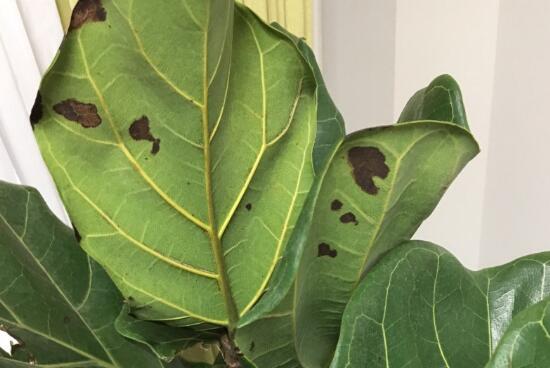
What to Do When Fiddle-Leaf Fig Leaves Develop Rust Spots? Causes and Notes on Watering and Temperature
The fiddle-leaf fig (Ficus lyrata), a beautiful foliage plant, has large, shapely leaves that look like a cello, and it stays green all year round, making it deeply loved by plant enthusiasts. But during cultivation, many growers find that their fiddle-leaf fig leaves develop rust spots, which seriously affects the plant's ornamental value, and they are eager to know what to do when fiddle-leaf fig develops rust spots
-
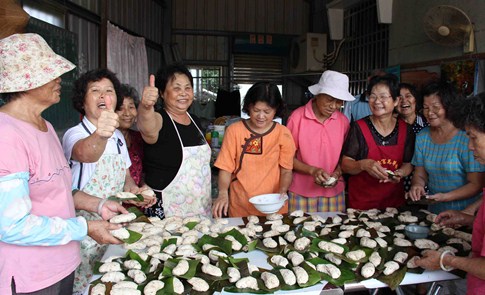
Jingliao Taro Kuaiqiao in Tainan, Grandma's Handmade Rustic Goodness
Tainan Countryside Notes: The Good Taste of Grandma's Taro Kuaiqiao in Jingliao
-

条件筛选