What are the methods for controlling cowpea rust in autumn?
How do you prevent rust when growing cowpeas in autumn? Please explain: the growing environment for autumn-planted cowpeas has high temperatures and relatively abundant rainfall, and in addition the amount of inoculum (urediospores) left behind in the field from spring-planted cowpeas is large. Therefore, autumn-planted cowpeas are prone to rust, and farmers should carry out integrated control early. Main symptoms: cowpeas can be infected by the pathogen throughout the entire growing period...
How do you prevent rust when growing cowpeas in autumn? Please explain
The growing environment for autumn-planted cowpeas has high temperatures and relatively abundant rainfall, and in addition the amount of inoculum (urediospores) left behind in the field from spring-planted cowpeas is large. Therefore, autumn-planted cowpeas are prone to rust, and farmers should carry out integrated control early.
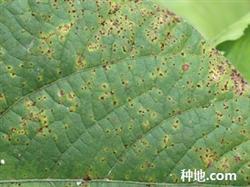
Main symptoms: cowpeas can be infected by the pathogen and develop the disease throughout the entire growing period, but resistance weakens and susceptibility increases from the beginning of flowering to the podding stage. The disease mainly attacks the leaves. In the early stage of the disease, scattered chlorotic yellowish-white spots appear on the lower surface of the leaves, and the spots gradually increase until they densely cover the entire leaf. On the corresponding underside of the lesions, yellowish-brown slightly raised scab-like spots, namely uredia, form; after the uredia rupture, large numbers of urediospores are released, and in the later growth stage black telia sometimes form on old leaves. The leaves wither, yellow and fall off, the plants are stunted, the pods are few and small, the growth period is shortened, and finally the plants wither, become thin and die.
Control methods: integrated control measures based on strengthening the management of soil, seed, fertilizer and water, supplemented by timely spraying of pesticides.
1. Remove diseased residues and reduce sources of infection: after harvesting spring-planted cowpeas, collect the residual plants and dead seedlings and burn them to reduce sources of infection.
2. Seed selection and site selection: Seed selection and planting: choose disease-resistant varieties, such as Suifeng No. 8 and Zaofeng No. 3, and cultivate on raised beds, preferably with double rows or single rows, so that waterlogging is easily drained and aeration is improved, which is unfavorable for the landing and invasion of urediospores. Site selection: it is best to choose a field where the previous crop was a grass-family crop, and not to choose a field where the previous crop was a legume or peanut. This can avoid direct attack by the rust fungus.
3. Rational fertilization: apply sufficient base fertilizer, apply topdressing early, and increase the application of phosphorus and potassium fertilizers, so that root nodule activity is enhanced, the plants grow robustly, the leaves are dark green and thick, and disease resistance is increased.
4. Timely application of pesticides for control: apply pesticides promptly in the early stage of the disease. The pesticides can be 50% triadimefon at 600-800 times dilution, or 50% sulfur suspension concentrate at 500-600 times dilution, or 70% thiophanate-methyl at 800-1000 times dilution, sprayed as a liquid. Spray once every 8-10 days, for 2-3 consecutive sprays.
Click to get more cowpea growing techniques
Click to get more vegetable growing techniques