-
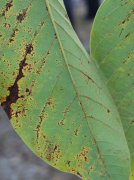
Symptoms and Control Methods of Rust Disease in Atemoya Orchards
Because orchards in mountainous areas and river valleys have high humidity, they are prone to triggering the spread and expansion of "annona rust." The Taitung District Agricultural Research and Extension Station of the Council of Agriculture (hereinafter referred to as the Taitung Station) recently monitored Beinan, Luye, and Donghe, among other areas, and found that some atemoya orchards
-
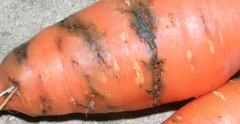
Carrot Planting Time and Method, and Carrot Rust Fly Damage and Control Measures
Sow carrots from early spring to midsummer, and from late spring to early winter. Stored roots will see you through until the following spring. Sow the fastest-growing early varieties into a greenhouse or hoop-house bed or pots kept under cover. You can also use row covers or a cold frame
-

What are the symptoms and characteristics of jujube rust? How to prevent and control it well?
During the growth of jujube trees, they are very susceptible to jujube rust, which mainly threatens the leaves of jujube trees, causing early defoliation and other situations, leading to reduced sweetness of jujubes, fruit drop, and other occurrences, resulting in reduced yields for growers. Jujube rust only occurs on the leaves,
-
How to grow potted chrysanthemums so they bloom profusely and how to prevent and control rust disease?
The chrysanthemum is a very famous ornamental flower with a great many varieties, cultivated all over the world. Chrysanthemums can be planted in the open ground or grown in pots in courtyards, and they carry the meaning of good fortune and longevity. Let's take a look below at how potted chrysanthemums can bloom
-
How much is a jin of cowpeas? Detailed explanation of rust disease prevention and control methods
Cowpea is a vegetable rich in nutrients, with a crisp texture and many ways to prepare it, and it is deeply loved by consumers. Cowpeas are widely grown in the northern regions of China, can be sold on the market all year round, and have a strong ability to adapt to the growing environment. So what is the current
-
What are the symptoms and control methods of pear rust?
During the cultivation of pear trees, pest and disease attacks occur for various reasons, among which pear rust is a relatively common one, also known as red star disease. Once it occurs, it has a relatively large impact on the quantity and quality of the fruit. So what are the symptoms of pear rust? How to treat it
-
What pesticide is effective for controlling wheat rust?
Wheat rust is one of the common diseases of wheat and also one of the most serious types of disease, so what pesticide should be used for wheat rust? 1. What is wheat rust Wheat rust is a disease whose affected parts are mainly the leaves, leaf sheaths, stems and ears. In the early stage of the disease
-
How to Treat Rust Spots on Fiddle-Leaf Fig Leaves? Causes of Blight Rot and Fungicide Control Methods
The fiddle-leaf fig is a common foliage plant, and many people like growing fiddle-leaf fig potted plants; it is also one of the most common indoor potted plants. The leaves of the fiddle-leaf fig are fairly large and emerald green; placing one at home not only serves as a decorative plant but also has a certain air-purifying
-
Identification of Mushroom Rust Spot Disease Symptoms and Introduction to Control Methods
The mushroom (scientific name: Agaricus campestris) is composed of two parts: the mycelium and the fruiting body. The mycelium is the vegetative organ, and the fruiting body is the reproductive organ. Mushrooms have as many as 36,000 sexes, and mature spores germinate into hyphae. The hyphae are multicellular, have septa, and elongate by apical growth; they are white, slender, cottony, and gradually become filamentous. The hyphae interweave with one another to form a dense mass known as the mycelium. After the mycelium has saprophytically colonized the substrate, the dark brown compost turns light brown. When mature, the fruiting body of the mushroom closely resembles an open small umbrella. It is composed of parts such as the cap, stipe, gills, annulus, and pseudorhiza. Most mushrooms can be used as food and medicine, but poisonous mushrooms can harm people.
-
A Detailed Guide to the Occurrence and Control of Cowpea Rust Disease
Cowpea (scientific name Vigna unguiculata), commonly known as black-eyed pea, ginger bean, belt bean, hanging bean pod. Cowpea is divided into two types, long cowpea and rice cowpea, and belongs to the legume family. Cowpea is an annual plant of the legume family. The stem has three types: dwarf, semi-climbing and climbing. In the south, climbing types are mainly cultivated,
条件筛选