-

What is rose rust and what are the control methods
What is rose rust? How to prevent and control it, please provide an introduction to the methods. Rose rust mainly damages the buds, leaves, young shoots, petioles, receptacles, pedicels and other parts of roses. It mainly occurs on buds and leaves. During the spring germination period, the base of diseased buds swells, and a large amount of orange-red powdery material grows within 1~3 layers of scales, like a small...
-
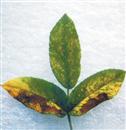
How to prevent and control rose rust? These methods you need to master
I. Symptoms Rose rust is a major disease of roses, common throughout southwest China, and more severe in areas with warm weather year-round and rainy, foggy winters. According to the author's surveys over many years, the incidence rate in some areas of our province is as high as 80%. White-flowered and purple-flowered roses are both infected, causing leaf drop, affecting growth and flowering, and it also...
-

How to prevent and control chrysanthemum rust? Triazole fungicides can be used
Chrysanthemum rust mainly damages the leaves, and can also damage the stems. At the beginning of the disease, pale yellow spots appear on the underside of the leaves, along with raised light brown or rust-colored blister-like structures; pale yellow spots appear on the upper leaf surface, slightly sunken, and soon the blister-like protrusions crack open and release yellow-brown powder. Warm and high humidity favors the disease. During the rainy season in April-May and the rainy weather in late autumn...
-

-
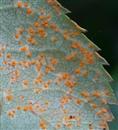
Symptoms, Identification, and Control Methods of Rose Rust
Rose rust occurs in climatically suitable regions around the world. It sometimes causes severe damage to greenhouse-cultivated roses. In addition to roses, the disease can also infect rugosa roses, wild roses, and other flowering plants. Pathogen: Rose rust has many pathogenic species; 10 species have been reported abroad and 3 species are known in China. Among them, Phragmidium montivagum (Pers.) Schlecht. is the main pathogen, belonging to the phylum Basidiomycota, genus Phragmidium.
-
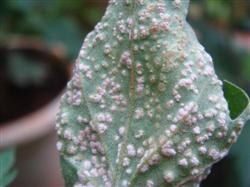
How to prevent and control chrysanthemum white rust? A detailed guide to practical control techniques
Chrysanthemums are loved for their elegant, bright colors and rich fragrance. Growing flowers can cultivate people's character, enrich cultural life, and improve physical and mental health. At the same time, some varieties of chrysanthemums grown can also be eaten or used as medicine, achieving two benefits at once. However, in the process of cultivating and propagating chrysanthemums, they often suffer from a variety of diseases...
-
Control Methods for Spruce-Bird Cherry Cone Rust
Spruce-bird cherry cone rust occurs in Inner Mongolia, Jilin, Heilongjiang, Sichuan, Yunnan, Tibet, Shaanxi, Gansu, Qinghai, ** and other places in China. The disease damages Picea asperata (dragon spruce), Picea purpurea (purple cone spruce), Picea likiangensis (Likiang spruce), Picea brachytyla var. complanata (oil wheat hanging spruce), Picea jezoensis (Yeddo spruce), Picea schrenkiana (Schrenk spruce), ** spruce and others. Symptoms: The disease damages the upper surface of female cone scales. Infected scales are twisted, rolled back and disorganized. On the upper surface, many purplish-brown small spheres are produced, arranged in a single layer; these are the aeciospore pustules of the pathogen. Sometimes aeciospore pustules also form on the underside of the scales.
-
Symptoms and Control Methods of Korean Pine Blister Rust
Symptoms: The disease occurs on the bark of branches and trunks. In the early stage of infection, the affected bark swells slightly and softens, cracks begin to form in early May, and yellowish-white blister sacs, which are the rust pustules (aecia) of the pathogen, emerge from within. In early to mid-June, the rust pustules mature and turn orange-yellow. From mid-May onward, the sacs rupture and release powdery rust spores, finally leaving a membranous white covering that gradually falls away and disappears. By the end of June, most blister sacs have ruptured and dispersed; the old diseased bark becomes rough and often develops a layer of sooty mold fungi, appearing black. Because the disease occurs year after year, the bark thickens and swells, and resin flows out. In late August and September
-
Symptom Identification and Control Methods of Spruce Bud Rust
Spruce bud rust is a newly discovered disease in the forest regions of northern China. It has been reported in the natural forest areas of the Greater Khingan and Lesser Khingan Mountains. Abroad, it is mainly distributed in countries such as the United States, Canada and Sweden, where it damages white spruce, black spruce and Norway spruce. It harms the terminal buds and lateral buds of seedlings, saplings and mature trees, seriously affecting seedling quality and the normal growth of plantations. Symptoms appear in late May when new leaves begin to grow. During the same period, diseased buds grow faster and longer than healthy buds, but soon stop growing. The diseased leaves growing from diseased buds
-
How to prevent and control the damage of Lijuan spruce tip rust to Meijing?
Meijing tip rust is a newly discovered disease on Qinghai spruce (Picea crassifolia), mainly distributed in spruce forests at altitudes of 2600-2800 m in the eastern section of the northern slope of the Qilian Mountains in western Gansu, harming Qinghai spruce. Its harmfulness is second only to Qinghai spruce needle rust, and its onset period is about one month earlier than Qinghai spruce needle rust. Symptoms: Diseased buds of spruce sprout 10-15 d earlier than healthy buds. Starting in early June, the diseased buds swell into a conical shape, peach-red in color, with densely dotted small protrusions on the surface, which are the fungal spermogonia. New leaves emerging on the tender tips are deformed,
条件筛选