-

What causes rust spots on fiddle-leaf fig leaves?
The fiddle-leaf fig (Ficus lyrata) is a small shrub, often found in mountain areas, open fields or scrub forests in southeastern and south-central China. Its leaves are papery and it gets its name because the leaves are shaped like a cello. The leaves of the fiddle-leaf fig are dark green, glossy, and grow vigorously and densely, with very
-
Identification of Mushroom Rust Spot Disease Symptoms and Introduction to Control Methods
The mushroom (scientific name: Agaricus campestris) is composed of two parts: the mycelium and the fruiting body. The mycelium is the vegetative organ, and the fruiting body is the reproductive organ. Mushrooms have as many as 36,000 sexes, and mature spores germinate into hyphae. The hyphae are multicellular, have septa, and elongate by apical growth; they are white, slender, cottony, and gradually become filamentous. The hyphae interweave with one another to form a dense mass known as the mycelium. After the mycelium has saprophytically colonized the substrate, the dark brown compost turns light brown. When mature, the fruiting body of the mushroom closely resembles an open small umbrella. It is composed of parts such as the cap, stipe, gills, annulus, and pseudorhiza. Most mushrooms can be used as food and medicine, but poisonous mushrooms can harm people.
-
How to Treat Rust Spots on Fiddle-Leaf Fig Leaves? Causes of Blight Rot and Fungicide Control Methods
The fiddle-leaf fig is a common foliage plant, and many people like growing fiddle-leaf fig potted plants; it is also one of the most common indoor potted plants. The leaves of the fiddle-leaf fig are fairly large and emerald green; placing one at home not only serves as a decorative plant but also has a certain air-purifying
-
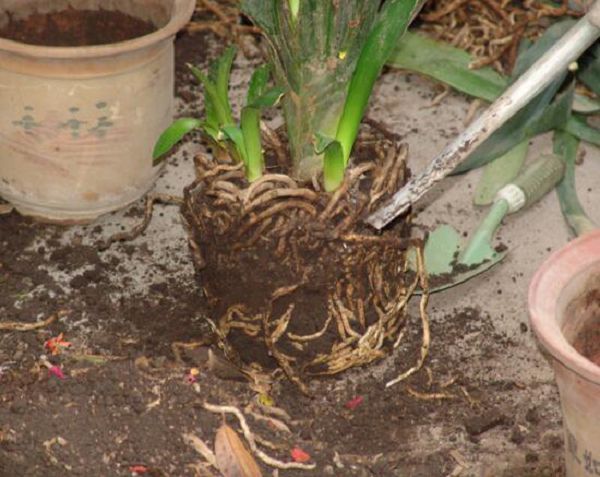
How to deal with rust spot disease in clivia? Solve it in three steps: fertilizing, applying medicine, and changing the potting soil
How to deal with rust spot disease in clivia: fertilizing, applying medicine, and changing the potting soil
-
How to prevent rust-colored spots on mushroom caps
This is generally caused by failing to open doors and windows promptly for ventilation after watering, which makes the humidity in the mushroom house too high; water droplets then collect on the cap surface for a long time, producing rust-colored spots in localized areas. Rust-colored spots resemble bacterial spots, but they are limited to the surface. Preventive measures: open doors and windows for ventilation on schedule or when the weather is suitable, bring in fresh air, and evaporate the moisture on the surface of the mushrooms.
-
What are the control methods for mushroom rust spot disease?
Mushroom rust spot disease, also called brown spot disease or bacterial blotch, is caused by Pseudomonas tolaasii, an acidophilic species of the genus Pseudomonas. It spreads through insects, tools, the hands of workers and other carriers. The disease is severe when the casing soil of the mushroom bed has a pH below 5.5, when ventilation is poor, when humidity is too high, and when the mushroom caps remain constantly moist and sticky after watering. Its symptoms are: it generally infects only the epidermal layer of the mushroom cap, causing spots of varying size that are initially yellowish-brown and rust-like in appearance, which later gradually turn brown or black, and sometimes scars with mucus also appear on the caps.
-
Why do mushrooms grow as freakish "water-rust spot mushrooms"?
If the mushroom house and the surface of the growing medium are not ventilated promptly after watering, the humidity in the mushroom house becomes too high, small water droplets form on the mushroom surfaces, and over time rust-colored spots appear. Prevention measures: after each watering, open the doors and windows for 30 to 60 minutes to ventilate.
-
Control Methods for Rust Spot Disease in Oyster Mushrooms
The rust-colored or dark brown spots appearing on the caps and stipes of oyster mushrooms are called rust spot disease of oyster mushrooms. This disease is a bacterial disease that easily occurs during the fruiting body growth stage of oyster mushrooms. The pathogen causing this disease is a species of Pseudomonas bacteria that is extremely widely distributed in nature. In the early stage of the disease, the spots are only the size of a needle tip and light in color, generally not affecting commercial value. As the disease worsens, the spots rapidly enlarge and their color continuously deepens, often appearing oval or spindle-shaped, or connecting with each other to form irregular large patches, with rust-yellow discolored areas around the patches.
-
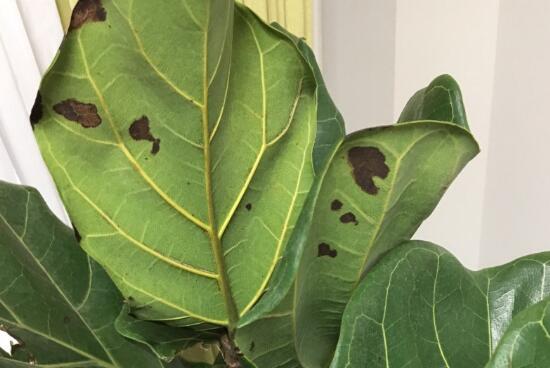
What to Do When Fiddle-Leaf Fig Leaves Develop Rust Spots? Causes and Notes on Watering and Temperature
The fiddle-leaf fig (Ficus lyrata), a beautiful foliage plant, has large, shapely leaves that look like a cello, and it stays green all year round, making it deeply loved by plant enthusiasts. But during cultivation, many growers find that their fiddle-leaf fig leaves develop rust spots, which seriously affects the plant's ornamental value, and they are eager to know what to do when fiddle-leaf fig develops rust spots
-
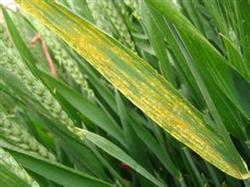
Wheat stripe rust can be managed by a zone-based strategy of treating key spots to protect the wider area
Wheat stripe rust is a serious biological disaster that has long affected the safe production of wheat in China. In years when the disease is common, wheat yields are reduced by 10%-20%, and in years of severe epidemic, losses can reach more than 60%, or even leave wheat with almost no harvest. Based on a comprehensive analysis of factors such as the amount of inoculum, weather conditions and variety distribution, it is predicted that in 2011...
条件筛选