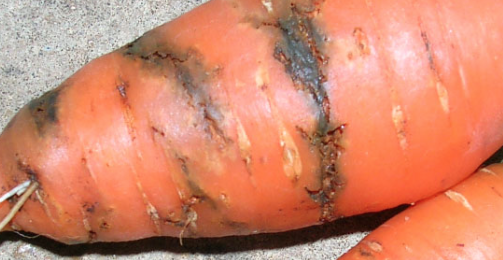
Carrot Planting Time and Method, and Carrot Rust Fly Damage and Control Measures
Sow carrots from early spring to midsummer, and from late spring to early winter. Stored roots will see you through until the following spring. Sow the fastest-growing early varieties into a greenhouse or hoop-house bed or pots kept under cover. You can also use row covers or a cold frame to sow earlier.
Our Garden Planner can help you work out when to start sowing. Simply select and drop in a row or block of carrots, then click on the plant list that comes with sowing and harvest dates based on your location. Add crop protection - such as row covers - and the sow and harvest dates will be adjusted accordingly. Click back to the plant list and you will see the dates are now half a month earlier than for carrots without protection.
For a continuous supply of carrots, you will need to sow every two to three weeks, with the final sowing using a maincrop variety sown in midsummer.
How to Sow Carrots
Carrots dislike being transplanted, so it is best to sow them directly where they are to grow. Remove all stones from the soil - if a carrot root hits a stone it will fork - then rake the soil to a fine tilth. Now mark out the seed rows. The seed drill should be about a quarter of an inch (1cm) deep, with rows spaced about six inches (15cm) apart, depending on the variety you are sowing. Sprinkle some seeds thinly along the row, then close the soil back over the row to cover the seeds. Carrot seeds are very small, so to make sowing easier you can mix the seeds with dry sand, which will help spread the seeds within the row. When you have finished, mark the row with the variety and the date.
To sow into pots, fill the container with potting soil, then gently firm it down until hard. Sow very thin seeds on the top, then cover with a quarter of an inch (1cm) of potting soil. Water, then label.
How to Prevent Carrot Fly Damage
Carrot fly and its maggots are very damaging, notorious for ruining roots. To stop this low-flying insect, cover with row covers or garden fleece immediately after sowing. Pay attention to the edges of the cover so that there are no gaps. Keep the cover on for the whole life cycle of the crop.
Carrots grown in containers are easily protected from carrot fly by simply raising the container up off the ground.
Caring for Carrots
Any clumps of seedlings can be thinned as needed by very carefully pulling out the excess seedlings. However, this can disturb the roots of neighbouring seedlings, so you can instead use scissors to snip off the leaves. Do this on still days to prevent the carrot smell from alerting nearby carrot flies.
Sometimes carrots can run to seed (bolt) before they have had a chance to form their roots. Keep the soil moist in dry weather to help avoid this, and clear weeds regularly to minimise competition for available moisture and nutrients.
Carrots generally do not need extra feeding, but occasionally covering with an organic mulch such as compost or leaf mould will help prevent the tops from turning green.