-

Goji berry hedge around the garden also brings extra income, double benefit from planting
Building a garden is easy, but guarding it is hard, and a full perimeter fence takes up space; is there a tree that can both enclose the garden and increase income? Yes. That is the cold-hardy large-fruited goji berry. Through the author's observation, it has the following advantages: 1. Easy to plant and highly resistant. It overwinters without freeze damage at 45°33' N latitude, and is drought-tolerant and poor-soil-tolerant. Seeding, cuttings, and division all readily produce new plants, and apart from occasional aphids, no other pests or diseases have been seen. 2. Fast growth and results in the same year. In the year of planting, goji berry can reach a height of 1.5 m to 2 m, initially providing protection. On vigorous leaf axils
-
What is the story behind "ground bud mushrooms," also known as "soil-topping mushrooms"?
Symptoms: They mainly appear at the early fruiting stage. The fruiting bodies are attached at a low position, usually inside the compost, on the surface of the compost, or in the lower part of the coarse soil layer, and after growing they break through the soil and push up through the mud. Causes: 1. Soil is mixed into the compost, or the casing layer is unevenly dry and wet. When the temperature, humidity, and air conditions inside the compost are suitable for fruiting body growth, the mycelium twists around the soil, thickens, and forms primordia. After the primordia differentiate, they grow upward and push up through the mud. If upward conditions are unsuitable, they will even turn around and grow downward under the bed, forming bottom-of-bed mushrooms. 2. If the coarse soil is watered over too long a period, and after watering the mushroom house is ventilated too much and the temperature in the mushroom house drops, mycelial growth into the coarse soil is inhibited and fruiting is promoted too early. If the fine soil is applied too late or too thickly, if watering is not timely, if watering is too fast or too urgent, or if ventilation lasts too long after watering, the soil layer lacks sufficient moisture and the mycelium does not climb onto the fine soil for a long time, all of which lower the fruiting position. 3. If water is sprayed too early or too urgently at the fruiting stage, or if the amount of water sprayed is too large, upward growth of the mycelium in the soil layer is inhibited, forcing the mycelium to twist together among the coarse soil particles, thereby lowering the fruiting position, causing sparse fruiting and abnormal fruiting positions, and increasing the number of ground bud mushrooms.
-
What kind of ground cover plant is dwarf lilyturf?
Dwarf lilyturf, ophiopogonjaponicus, is a plant of the genus Ophiopogon, native to eastern and southern Asia. The plant is 5-10 cm tall, with clustered, sessile, narrowly linear, dark green, leathery, arching leaves. In summer it bears small pale blue flowers in racemes. Dwarf lilyturf is evergreen all year round and highly shade-tolerant, suitable for border planting, pot culture, or embellishing rockery and rock walls, and it is also an elegant indoor plant. The greatest feature of dwarf lilyturf is its relatively low stature, and in gardens it can be arranged to form an ornamental lawn. Dwarf lilyturf is propagated by division, and division and seedling raising can be done throughout the year, but
-

Domestically produced Xiongying drone born with 100 million pixels, can identify 1 cm objects on the ground, patrol mountains and count vegetables
High-spec domestically produced drone "Xiongying" is born! 100 million pixels capture 1 cm objects on the ground, impressive at patrolling mountains and counting vegetables
-
Methods for Controlling Underground Pests of Codonopsis pilosula and Key Technical Points
The main underground pests harming Codonopsis pilosula are white grubs, cutworms and mole crickets; the above-ground pest is spider mites. Control methods for underground pests: use poisoned soil and poisoned bait to lure and kill them. Poisoned soil preparation: use 0.5-1.5 kg of 35% endosulfan per mu, 15 kg of soil, mix and scatter among the seedling roots; poisoned bait preparation: use 1 kg of roasted cake meal per mu, add 35 g of trichlorfon, mix well with water, scatter on the bed surface and beside the beds, in the furrows or on the ridges. Control methods for above-ground pests: the above-ground pest of Codonopsis pilosula is spider mites, generally
-
How to deworm pigs of roundworms? These 4 methods are very practical
(1) Use 20 grams of pumpkin seeds per 10 kg of pig body weight, grind into powder and mix into the feed to feed the pigs, feeding continuously 2 times. Pumpkin seeds can not only expel roundworms, but also pinworms and tapeworms. (2) For every 10 kg of pig body weight, take 15-20 grams each of areca nut and chinaberry tree bark, add 1 kg of water and boil, then after cooling mix with a small amount of feed and feed. (3) Take rangoon creeper fruit and grind it up for later use. For piglets of 10-15 kg, feed 5-8 grams each time, feeding continuously 2 times (feed at 7-8 pm, and feed once more at breakfast the next day). 20-
-
Building cozy foreign-style mushroom houses to achieve year-round mushroom production
Fengdu Town in Gutian County, Fujian Province, has taken breaking through the seasonal cultivation of mushrooms as a difficult problem to overcome in developing the edible fungi industry, increasing investment in science and technology, building European-style "foreign mushroom houses," changing traditional cultivation methods, and achieving off-season constant-temperature cultivation and year-round production. At the site, rows of distinctive European-style "foreign mushroom houses" can be seen; they are a newly built edible fungi production base of Gutian County "Gugu Yizu" Biotechnology Co., Ltd., covering an area of 20 mu, with a total of 24 modern specialized rooms, and each mushroom house is equipped with a large
-
Variegated Liriope is an excellent ground cover plant
Aliases: Variegated Liriope, Lilyturf. Latin name: Liriope platyphylla Wang et Tang. Origin and distribution: subtropical regions of China, growing in mountainous areas and moist places under dense forest in valleys. Morphological characteristics: Variegated Liriope, a variant of broadleaf Liriope, with plants about 30 cm tall. Roots slender, much branched, sometimes locally swollen into spindle-shaped small fleshy tuberous roots, with stolons. Leaves broadly linear, leathery, leaf margins golden yellow, inside the margin
-

Black Tide Survey: Microplastics Found in Seas Around All of Taiwan! Everyday Plastics Dominate, with the Bajhang River, Houjin River and the Northeast Coast Most Affected
Black Tide Survey: Microplastics Found in Seas Around All of Taiwan! Everyday Plastics Dominate, with the Bajhang River, Houjin River and the Northeast Coast Most Affected
-
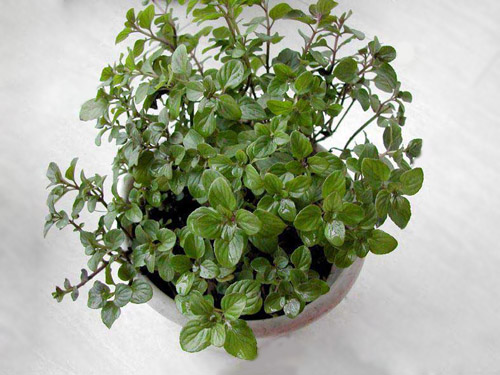
What are the care methods for spearmint round-leaved mint?
Round-leaved mint scientific name: mentha rotundifolia (Linn.) Huds. Other name: spearmint round-leaved mint. Family and genus: Lamiaceae, Mentha. Morphological characteristics: perennial herb, stem 4-angled, densely covered with white fuzz. Leaves opposite, oblong-ovate to round
条件筛选