Black Tide Survey: Microplastics Found in Seas Around All of Taiwan! Everyday Plastics Dominate, with the Bajhang River, Houjin River and the Northeast Coast Most Affected
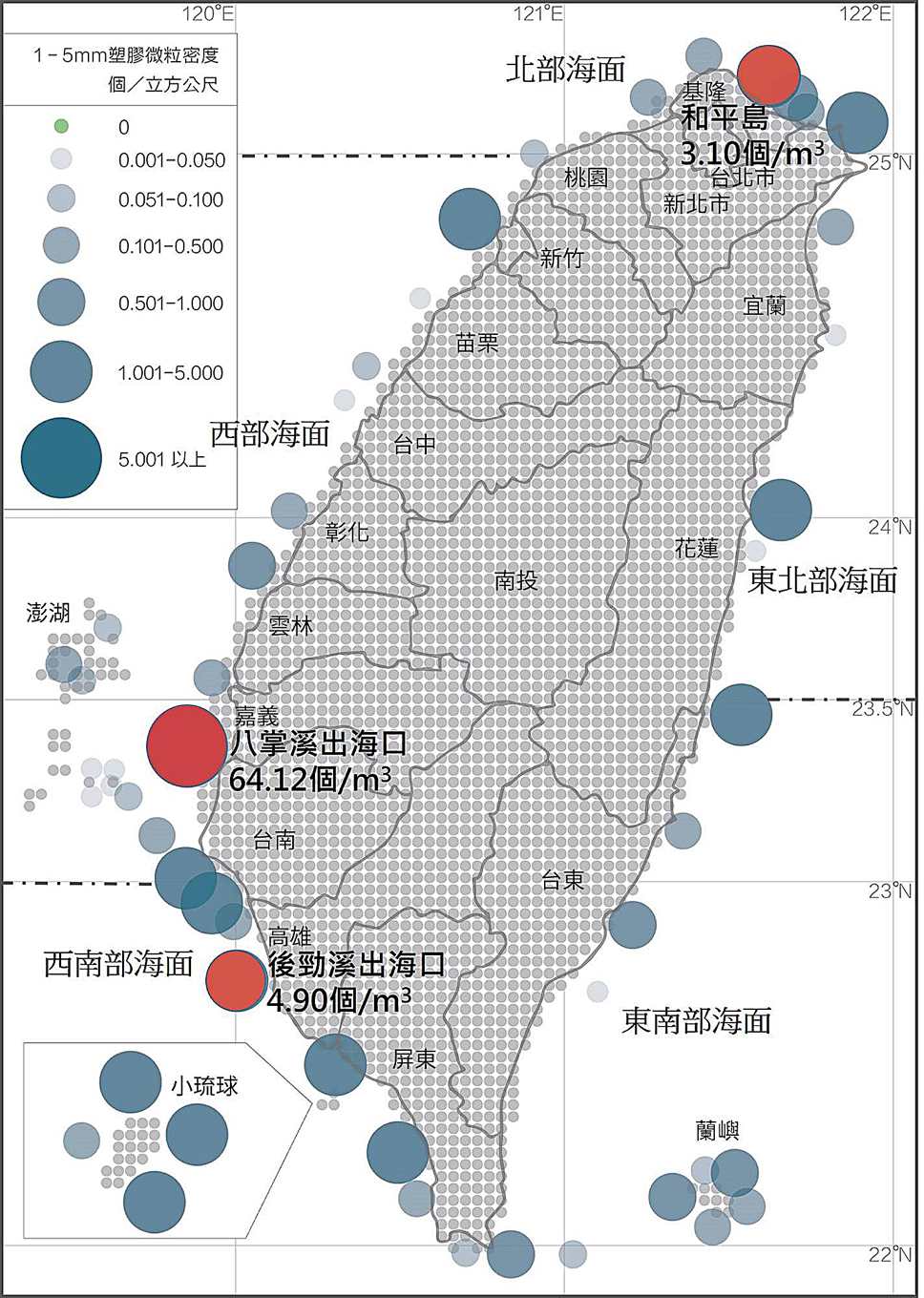
The Kuroshio Ocean Education Foundation conducted its "Island Voyage Project" circumnavigating all of Taiwan in May 2018, and today (the 3rd) released Taiwan's first survey of microplastics in the seas around the entire island, finding traces of microplastics in every sea area around Taiwan. Hard plastics (such as bottle caps) accounted for the highest proportion, meaning plastics used in daily life were the largest source. Microplastic levels were also relatively high in the waters off the southwest, where soft plastics that may come from plastic bags and food packaging accounted for 9.7%, and foamed plastics from the oyster-rack supports used in fishing activity accounted for 6.9%. The three areas with the highest microplastic levels in Taiwan, in order, were: the Bajhang River, the Houjin River and the waters off the northeast coast.
Chiu Wen-yen, an honorary chair professor at National Taiwan Ocean University, said many countries pay attention to this issue by setting up task forces and formulating policies, but in Taiwan's annual budget for year 108 of the Republic of China, only the Ocean Conservation Administration was expected to spend a million on surveys, which was far too little. Chiu Wen-yen called on the government to actively commit resources and funding and to unite all departments in order to comprehensively solve the microplastics problem.
Not just the sea: microplastics are in tap water too
In February last year, the Environmental Protection Administration and environmental groups jointly released the "Taiwan Marine Debris Governance Action Plan", declaring that by 2030 all single-use plastic products, including shopping plastic bags, disposable tableware, takeaway drink cups and plastic straws, would be fully banned, and setting out a clear timetable for reducing four categories of single-use plastic items, laying out four major directions: source reduction, prevention and removal, research and investigation, and expanded cooperative participation, in the hope of moving from restricting plastics and reducing plastics all the way to a plastic-free ocean.
In September last year, the Environmental Protection Administration also released its first survey of microplastic levels in tap water, seawater, beach sand and gravel, and shellfish, confirming that most samples contained microplastics. The number of plastic particles detected in tap water ranged from 0 to 6 per litre; microplastic counts in seawater ranged from 1,000 to 18,500 per 1,000 litres; beach sand and gravel from 26 to 2,400 per kilogram; and farmed and wild shellfish from 0.2 to 5.2 per gram. The plastics came from disposable tableware, bottle caps, exfoliating beads in facial cleansers, drink cups, diapers, tires, plastic packaging and various other consumer goods, comprising 12 kinds of plastic components.
Chang Hui-chun called on the government to do more, noting that although it has set policies on the consumer habits side and carried out related investigations on the testing side, it has not been seen to propose deeper solutions or discussion in response to the official survey of last September. Truly solving the microplastics problem requires more resources to be committed; this Island Voyage Project merely presented a fact, and how to carefully investigate further and prescribe the right remedy afterward requires more attention and support from the government and all sectors.
Did you know: Microplastics are plastic fragments smaller than 5mm. They absorb toxic substances from the environment, and are eaten by plankton, fish fry and other marine life; when humans then eat marine life, this not only harms the marine ecosystem but ultimately affects human health, causing even greater harm than large plastic fragments.