-

New honeysuckle variety Mengshan Red blooms all year round
1. The color of the flower buds is highly variable. Before blooming, they change from purple-red to bright red; when blooming, they turn pink; after blooming, they become a mix of red, yellow, and white, very beautiful. The fragrance is stronger than ordinary honeysuckle, and the medicinal potency is high. The flowers, leaves, and stems can all be used as medicine, for treating painful swellings, boils, and sores, externally contracted cold, and the early stages of pestilential disease, clearing heat and detoxifying. 2. Early blooming. It blooms 5-10 days earlier than ordinary honeysuckle, with the flowering period from mid-May to mid-October, about 150 days. It can bloom 4 times a year. The yield of dried flowers is about 100 kg per mu. 3. Strong stress resistance. Apart from slight susceptibility to aphids,
-
What are the control methods for round spot disease of Panax notoginseng?
It can damage all parts of the plant. In the early stage of leaf disease, yellow spots appear on the underside of the leaves. In humid weather or during continuous rainy days, they rapidly expand into transparent round spots. When the weather is dry after the disease occurs, the lesions are relatively large, round and brown, with obvious concentric rings. When the stems are affected, the damaged parts are chestnut-colored, and the diseased area has a grayish-white mold layer, which can cause bud rot and stem base rot. Control methods: First, during the epidemic season of round spot disease, open the ventilation doors of the Panax notoginseng garden to increase air flow and reduce humidity inside the garden. Second, adjust the light intensity for Panax notoginseng to avoid excessively strong light, which is conducive to the spread of the disease.
-
Where is forest food found and how do you get it? A roundup of common edible plants
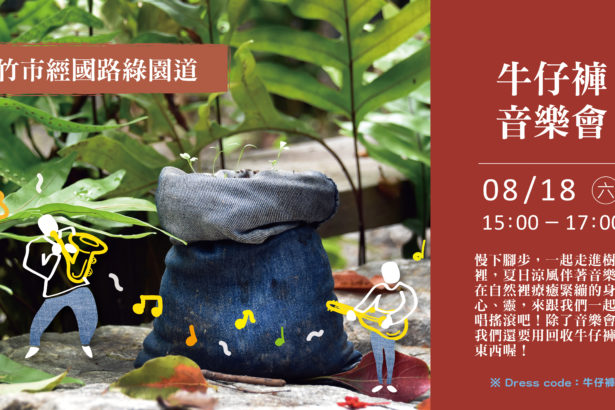
8/18 [Jeans Concert]? - Hsinchu City Food Forest Series
-
Control methods for the Ningxia ground pearl (Porphyrophora ningxiana) pest on licorice
It is distributed in all licorice-producing areas nationwide, generally causing damage from the seedling stage to the mature plant stage. The Ningxia ground pearl has 8 host plant species, all of which are perennial leguminous herbaceous perennials, with licorice suffering the most severe damage, while other hosts are only slightly affected. (1) Damage period and damage symptoms: Overwintering nymphs can move intermittently when the surface soil temperature reaches 6°C, and become frequently active when the daily average temperature exceeds 12°C, in order to search for hosts. Early March is the initial activity stage, mid-to-late April is the peak period for searching hosts, and by mid-May they have basically all settled. From late May to late July
-
Semi-underground three-dimensional cultivation of oyster mushrooms yields high output and good returns
Semi-underground three-dimensional bed-frame cultivation of oyster mushrooms is a new approach explored in recent years to achieve high yields and improve economic returns. According to trials, on an area of 20 sq m, with 2000 kg of substrate, the annual output of oyster mushrooms is about 2500 kg, with a biological efficiency of over 120%. The key technical points are as follows: 1. Building the greenhouse: first dig a pit 1.8 m to 2 m deep and 4 m to 5 m wide, with the length determined as needed, and place the three-dimensional bed frames inside. On top, use bamboo poles and plastic film to build an arched shed, pack the surrounding edges firmly with soil, and cover with straw mats. Leave ventilation openings of about 30 square cm on all four sides, east, west, north and south, and build a small door on the west side for workers to enter and exit.
-
What kind of jujube variety is Jinling Round Jujube?
Variety origin: Jinling Round Jujube is a rare fresh-eating jujube variety discovered during a jujube resource survey in 1993. Its hundred-year-old mother tree grows on cold, thin hillside soil in western Liaoning and is still highly productive to this day. After being selected as a superior line, it underwent nearly ten years of breeding and experimental observation, and its genetic traits are stable. In September 2002, it passed the scientific research achievement appraisal of the Liaoning Provincial Department of Science and Technology, and in September 2002, it passed the review of the Forest Tree Improved Variety Approval Committee of the Liaoning Provincial Forestry Department. Variety characteristics: The fruit is nearly round, with an average single-fruit weight of 26g, and the fruits are uniform in size. The color is deep red and glossy
-
Be Alert to Porcine Epidemic Diarrhea: Pig Farmers Should Take Precautions Early Around Spring Festival
Epidemic diarrhea occurs mainly around the Spring Festival (from December to March of the following year), and mostly breaks out after cold, damp weather or a sudden cold wave, showing endemic prevalence. Clinical symptoms: piglets first vomit and then develop diarrhea, with thin feces that are yellow or green and mixed with milk curds, arched backs, tucked tails, sensitivity to cold and shivering, and in the later stage sunken eyeballs and severe dehydration, with body temperature normal or slightly elevated; the course of disease is 5-7 days, and the younger the age, the higher the mortality rate, with a mortality rate of 30%-40% in piglets within 7 days of age; adult pigs refuse feed, show projectile diarrhea and pass watery thin feces,
-
What is ground bed cultivation of Gastrodia elata? Let us walk you through this cultivation method
In low-lying flat land with a high water table, relatively low temperatures, and damp, rainy conditions, or when cultivating Gastrodia elata on a small scale in a new area, this planting method can be used. Bed cultivation is also divided into two methods: single-layer planting and double-layer planting. ① Single-layer planting method: Level the ground and make a bed 60-70 cm wide; the bed length depends on the terrain and the amount of Gastrodia elata to be planted. On the leveled bed surface, first spread a 2-3 cm thick layer of base culture material, then lay the fungus logs horizontally with a spacing of 6 cm. On both sides of the fungus logs, first add culture material up to half the height of the logs,
-
Detailed Explanation of Breeding Techniques and Processing Methods for the Gold-edged Ground Beetle
The gold-edged ground beetle is an excellent variety, with fast reproduction and growth, relatively simple rearing methods, low artificial breeding costs, and good sales returns. 1. Preparation of rearing site and clay jars. After old rural houses are cleaned and disinfected, any flat place that can provide shade and shelter from rain is suitable for placing clay jars to rear gold-edged ground beetles. Clay jars generally have an outer diameter of 49 cm and a height of 58 cm. Level the ground, place a water basin, place the clay jar on the water basin, then place 3-4 layers of bricks inside the clay jar (leaving gaps) to absorb water and regulate humidity, then
-
Detailed Explanation of Underground Shiitake Cultivation Methods and Techniques
Underground shiitake cultivation uses underground tunnels, natural caves and other underground facilities to grow shiitake mushrooms, allowing year-round spawn production and fruiting in all four seasons. This is another new cultivation site for shiitake production after wild forest areas, mushroom houses and plastic sheds. This cultivation method has developed rapidly in China, with a history of more than 20 years, and a complete set of production models for large-scale underground shiitake cultivation has been formed. It can be done both in bags and in blocks. Underground shiitake cultivation makes full use of the low-temperature and moisture-retaining properties of this site, and with the addition of cultivation bed racks and light sources, it can
条件筛选