-

What Do Farmed Frogs Eat? An Introduction to Their Main Foods and Feed Types
Frogs mainly eat rice leaf rollers, rice stem borers, rice caseworms, armyworms, corn borers, cotton pink bollworms, duckweed snout moths, browntail moths, rice eye butterflies, rice leaf beetles, rice weevils, scarab beetles, ladybugs, white-backed planthoppers, gray-backed planthoppers, rice black stink bugs, brown-backed planthoppers, rice leafminers
-
How to control the rice leaf roller? Latest technical method tutorial
The rice leaf roller is one of the major pests in rice-growing regions of China, also known as the rice leaf-rolling caterpillar, the leaf-scraping worm, etc. It is widely distributed across all rice regions. Besides damaging rice, it can also feed on crops such as barley, wheat, sugarcane and foxtail millet, as well as weeds such as barnyardgrass, Leersia hexandra, paspalum, Paspalum distichum, crabgrass, foxtail, goosegrass, thatch grass and reed.
-
What are the best special-effect pesticides for rice leaf roller and rice stem borer?
In the process of rice cultivation, some pests and diseases are often unavoidable, and the leaf roller and the stem borer are two of the more damaging pests. What are the special-effect pesticides for rice leaf roller and rice stem borer? I. Special-effect pesticides for rice leaf roller and rice stem borer
-
What are the control methods for the rice leaf roller?
Rice leaf rolling is caused by the rice skipper and the rice leaf roller. For controlling the rice leaf roller, 34% profenofos-fluorine emulsifiable concentrate is a new-generation insecticide. This product is a new compound ultra-long-acting insecticide with a broad insecticidal spectrum and stable efficacy. Field trials show that spraying 50 ml per mu diluted in 40 kg of water, with a treatment interval of 23 days, achieves a control effect of over 95%, requires 2 fewer applications than conventional pesticides, reduces pesticide cost by more than 50%, and can save 2/3 of labor, truly delivering labor savings, cost reductions, and improved quality and efficiency.
-
Timely Control of the Rice Leaf Roller Is Essential and Cannot Be Delayed
The rice leaf roller is one of the major rice pests in our province. Its larvae damage the leaves, turning rice leaves into a mass of withered white. Especially when it attacks at the booting or heading stage, it will cause a sharp decline in rice yield. This pest has seven generations a year, and the second-generation larvae are the most numerous and cause the most serious damage to early rice. If control is not timely, it will break out in a major outbreak during the heading period, causing incalculable losses. For forecasting the rice leaf roller, the appropriate control timing should be determined based on the forecast of the occurrence period. Based on past conditions, investigation should begin 4 days after the peak of the moth flight
-
Can emamectin benzoate control the rice leaf roller?
Emamectin benzoate is a new type of high-efficiency semi-synthetic antibiotic insecticide synthesized starting from the fermentation product avermectin B1. It has the characteristics of biological pesticides such as ultra-high efficiency, low toxicity (the formulation is nearly non-toxic), no residue, and no pollution. Compared with avermectin, its insecticidal activity is first increased by 1-3 orders of magnitude. It has extremely high activity against the larvae of Lepidoptera insects and many other pests and mites. It has both stomach poison action and contact action, and has very good effects at very low doses (0.084~2g/ha), and in the process of controlling pests it is harmless to beneficial
-
What pesticide gives the best control effect against older larvae of the rice leaf roller?
Chlorpyrifos and abamectin-monosultap are effective agents for controlling the rice leaf roller, but they must be applied during the 1st-2nd instar young larval stage (at this stage the rice leaf roller has not yet rolled leaves and caused damage, or has just begun rolling the leaf tips and causing damage), when the rice in the field has just begun to roll leaves. For rice leaf roller larvae of the 3rd instar and above, on the one hand they are protected because they are wrapped inside the rice leaves, and on the other hand they are insensitive to nereistoxin-type pesticides such as monosultap and to organophosphorus pesticides such as chlorpyrifos, methamidophos and monocrotophos, so the control effect after spraying is poor. Relatively speaking, older rice leaf
-
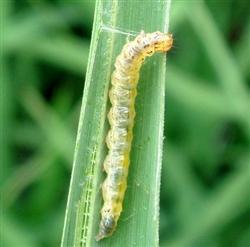
Which pesticide is effective for controlling the rice leaf roller?
Which pesticides are effective against the rice leaf roller? Please give an introduction. The rice leaf roller, also known as the rice leaf roller worm, commonly called the leaf scraper, white leaf worm, leaf folder, etc., is a major pest during the rice growing period. This pest damages rice as larvae, binding leaves into longitudinal rolls, hiding inside and chewing the upper epidermis and mesophyll; the symptom is that the damaged leaves...
-
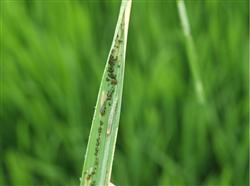
What insecticide works well to control the rice leaf roller?
What insecticide should be used to spray the rice leaf roller? Please give an introduction. The rice leaf roller's occurrence is characterized by early immigration, many peak generations, and large moth numbers, with the fifth (3rd) and sixth (4th) generations occurring continuously and severely, causing heavy natural damage. Because current high-yield cultivation uses large amounts of nitrogen fertilizer in the late stage, plus the expansion of direct-seeded rice, machine-transplanted rice and other cultivation areas, the rice growth period is delayed...
-
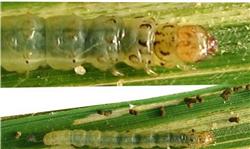
What should be noted when controlling the rice leaf roller (Cnaphalocrocis medinalis) in rice?
What should be noted when controlling the rice leaf roller in rice? Please give guidance. To control the rice leaf roller, you must first know the timing of control. The control timing is determined comprehensively through the development progress of the insect stages and the fluctuation dynamics of adults under light traps, with reference to the stage duration table and in combination with short- and medium-term weather forecasts. To ensure a true grasp...
条件筛选