What insecticide works well to control the rice leaf roller?
What insecticide should be used to spray the rice leaf roller? Please give an introduction. The rice leaf roller's occurrence is characterized by early immigration, many peak generations, and large moth numbers, with the fifth (3rd) and sixth (4th) generations occurring continuously and severely, causing heavy natural damage. Because current high-yield cultivation uses large amounts of nitrogen fertilizer in the late stage, plus the expansion of direct-seeded rice, machine-transplanted rice and other cultivation areas, the rice growth period is delayed...
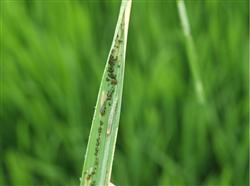
What insecticide should be used to spray the rice leaf roller? Please give an introduction
The rice leaf roller's occurrence is characterized by early immigration, many peak generations, and large moth numbers, with the fifth (3rd) and sixth (4th) generations occurring continuously and severely, causing heavy natural damage. Because current high-yield cultivation uses large amounts of nitrogen fertilizer in the late stage, plus the expansion of direct-seeded rice, machine-transplanted rice and other cultivation areas, the rice growth period is delayed, and the late growth is good, this further favors the occurrence of the sixth (4th) generation. It is expected that in 2007 the occurrence degree of the rice leaf roller in our province will still reach level 4-5, with northern Jiangsu at level 3-4 and southern and central Jiangsu at level 4-5, similar to the previous year; the expected occurrence area is 65 million mu-times, similar to the previous year.
Control of the rice leaf roller should adhere to the control strategy of "control the early generation to suppress the later one," scientifically select pesticide types, and strictly apply the pesticide from the egg-hatching peak to the young larva stage to ensure control effectiveness.
(1) Adhere to the pesticide control strategy of "control the early generation to suppress the later one," moving the control threshold earlier. For example, if the fourth (2nd) generation immigrates early and in large numbers in the main landing areas such as southern Jiangsu and the riverside areas, which favors the occurrence of the rice leaf roller that year, a targeted control should be carried out in early to mid-July to reduce the local insect source base and occurrence degree of the fifth (3rd) generation.
(2) Grasp the appropriate control timing. Because most pesticides currently have poor control effects on older larvae, especially nereistoxin-type pesticides, the control time should be moved earlier to the egg-hatching peak to the young larva peak period to improve control effectiveness.
(3) Scientifically select pesticide types. Vigorously promote highly effective pesticides such as fipronil, chlorpyrifos, profenofos, phenthoate and Sanfu, and prohibit pesticides such as pyrethroids and methamidophos. Per mu, use 48% chlorpyrifos 80-100 ml, or 5% fipronil 30 ml, or 40% profenofos 80-100 ml, or 25% dimehypo aqueous solution 250 ml, or 90% monosultap wettable powder 50 g, add water and spray for control. Note that nereistoxin-type pesticides such as dimehypo should not be used in silkworm and mulberry areas to avoid phytotoxicity to silkworms.
Click to get more insecticide application techniques
Click to get more pesticide application techniques