-
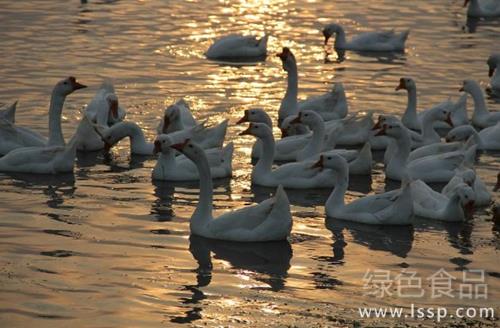
Master the key technical points of winter goose fattening, get good returns by marketing before the Spring Festival
Good returns from marketing winter geese before the Spring Festival; key technical points of winter goose fattening
-

Cotton Harvesting Techniques: Careful Picking Brings Higher Returns
I. Cotton should be harvested at the right time. Cotton harvesting is the last step in cotton production and the key to ensuring a high-yield, high-efficiency harvest. Because cotton is an indeterminate inflorescence crop, it successively forms buds, flowers, bolls and maturity, and requires multiple harvests. Therefore, after the cotton boll matures, the third stage of fiber development still has to be completed during the cracking process, namely the fiber dehydration and convolution period, about 7 days or so. The moisture content of the cotton boll shell drops from 80% to 30%, and the moisture content of the cotton pulp drops from 57% to 18%. The fiber further dehydrates and matures, forming convolutions, and at the same time, due to cellulose deposition, fiber strength continues to increase.
-
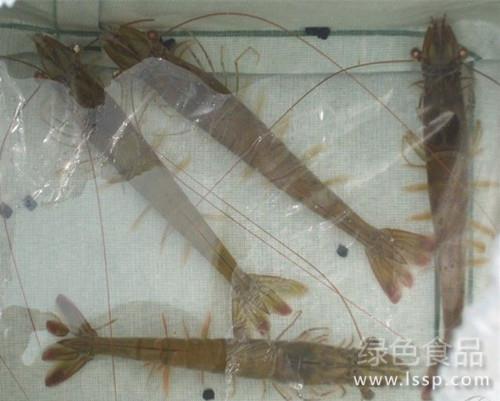
8 key points for the safe overwintering of broodstock shrimp: raise them well and get high breeding returns
Raise broodstock shrimp well for high breeding returns: 8 key points for safe overwintering of broodstock shrimp
-
Schisandra intercropping pattern offers good returns
Northern Schisandra is derived from the mature dried fruit of Schisandra chinensis of the genus Schisandra in the family Magnoliaceae. The plant is a perennial deciduous woody climbing vine, with woody stems reaching 8-10 m long. It grows wild in forests and forest margins, climbing trees. It flowers from May to July each year, and the fruit ripens from August to early October. The ripe red spike-like berries are picked for medicinal use. Schisandra cultivation techniques (1) Suitable growing environment for Schisandra. Schisandra prefers a cool, moist living environment and is shade-tolerant, with a suitable shading level of about 20%. The first
-
Correct Methods and Technical Key Points for Returning Wheat Straw Compost to the Field
Choose a flat spot at the edge or corner of a field close to a water source, and firm the ground. Chop the wheat straw short, soak it with water, and then build the pile. First spread a layer of wheat straw about 25 cm thick, press it firm, then pour on human and livestock manure and urine, or for every 100 kg of dry wheat straw add 0.5 kg of urea and 2 kg of superphosphate, and spread a layer of pond mud 10 cm thick on top. Then spread another layer of straw, pour on fertilizer, and cover with pond mud. Build up layer by layer in this way until the pile reaches 1.5-2 m high. Finally seal the pile with thin mud. After 30 days, turn the pile and add an appropriate amount of water. After 2 months in summer, or 3-4 months in winter, it will be
-
Detailed Explanation of the Technical Key Points for Returning the Full Amount of Wheat Straw to the Field
Crop straw is an important by-product of crops. It is also an important production resource for agriculture and industrial production. Returning crop straw to the field not only avoids the environmental pollution problems caused by rotting and burning, and achieves feeding the land with the land itself, but also consolidates the foundation of soil fertility for greatly increasing soil organic matter content, improving soil structure, building up soil fertility, strengthening the quality construction of cultivated land, and raising crop yield and quality. In every agriculturally developed country in the world, great attention is paid to the scientific rationality of the fertilization structure and the
-
Garlic-Ginger Intercropping Brings Good Returns: A Full Analysis of the Planting Advantages
In the history of Zhucheng City, Shandong Province, ginger was mostly grown as a sole crop. Trials and demonstrations of garlic-ginger intercropping began in the 1980s and achieved relatively good economic returns. However, because the intercropping techniques were not fully matched, for example no intercropping rows were left, the intercropped ginger bulbs became smaller, and some even failed to meet export standards, which dampened ginger growers' enthusiasm for intercropping. In order to explore the cultivation techniques for garlic-ginger intercropping, the author carried out multiple trials and survey analyses from 1992 to 1995 in Chengguan Town, Lubiao Township and other places, and summarized a matched set of techniques suitable for local garlic-ginger intercropping. After extension, a double
-
How to Return Rice Straw to the Field? A Detailed Guide to Five Practical Techniques
1. Short-cut rice straw incorporation by plowing technique. Cut the rice straw by hand or machine into lengths of 15-20 cm, and spread it evenly over the paddy field. Generally, the amount of dry rice straw spread per mu is 200-250 kg; if early rice straw is used for return, the amount spread per mu of main field is 1/2 or 2/3 of the total rice straw per mu. After the rice straw is spread, on the basis of the original fertilizer amount, apply an additional 8-12 kg of ammonium bicarbonate or 5-6 kg of urea per mu as base fertilizer; if it is a cold-waterlogged field, apply 15-25 kg of lime per mu in combination to accelerate the softening and rotting of the rice straw. The final
-
Correct Methods and Technical Key Points for Returning Rice Straw to the Field
1. Rice straw mulching in wheat fields. After wheat sowing is completed, use 250-300 kg of rice straw per mu, cut into 10-20 cm straw segments, and spread evenly over the field so that the straw does not form piles and the soil is not left exposed. 2. Rice straw mulching in rapeseed fields. When transplanting rapeseed, plant the seedlings according to the specified spacing into holes with sufficient basal fertilizer, cover with soil, and then evenly spread rice straw over the whole field at 300 kg/mu, so that the straw does not cover the holes (seedlings) and the soil is not left exposed, while also applying integrated chemical weed control and necessary field management measures. 3. Drainage and
-
Rice straw return technology is being vigorously promoted and applied.
Vigorously promoting rice straw return is one of the most economical and effective ways to recycle nutrients through the soil-crop-soil cycle. It not only plays a very important role in improving soil and building up soil fertility, but also has great significance for improving soil potassium and silicon nutrient conditions, balancing crop nutrition, and alleviating the contradiction between the shortage of potassium fertilizer resources in our country and the excessively rapid rise in chemical fertilizer prices. 1. Increasing soil organic matter content. Rice straw has a high organic matter content. Generally, dry rice straw has an organic matter content of 40%. After being returned to the field, it is beneficial to the
条件筛选