-
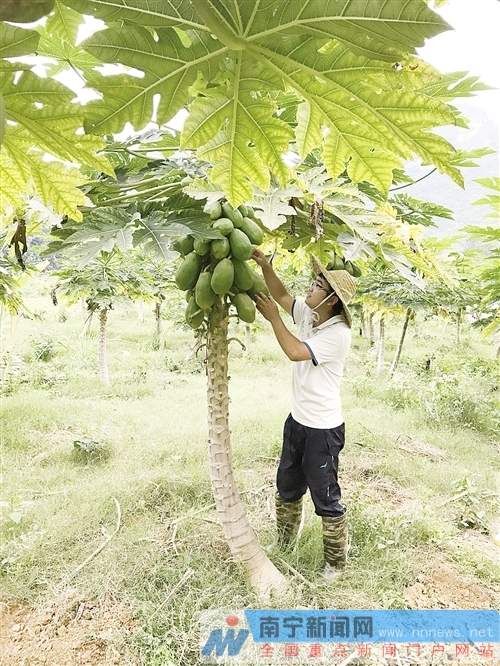
A post-90s college student returns to his hometown to grow papayas, leading the villagers onto the road to prosperity
"Post-90s" college student returns home to grow papayas and leads villagers onto the road to prosperity
-
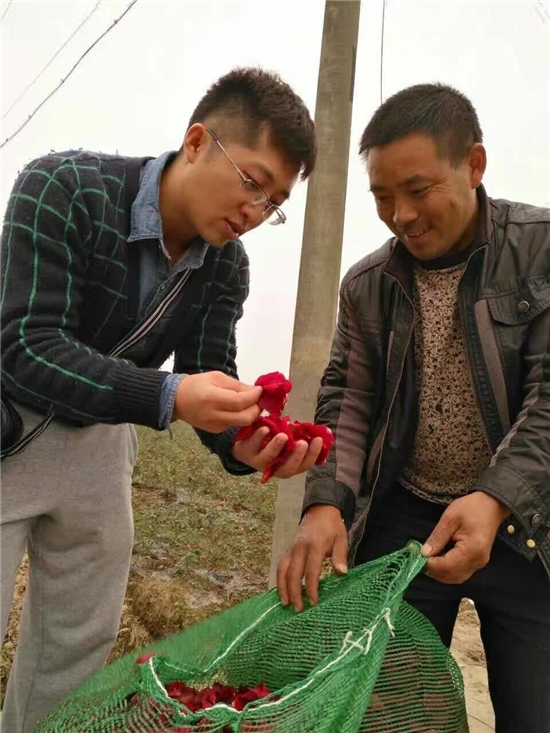
A college graduate returns home to start a business growing roses, blossoming into a "flower of prosperity"
A college graduate returns home to start a business growing roses, blossoming into a "flower of prosperity"
-
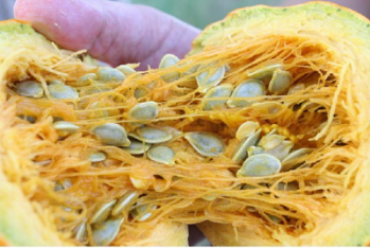
A young farmer returns to his village to start a business, earning 300,000 yuan a year by growing a new type of pumpkin
A young farmer returns to his village to start a business, earning 300,000 yuan a year by growing a new type of pumpkin
-

Mushroom base drives villagers to prosperity, a migrant worker returns home to start a business
Returning migrant worker builds a shiitake mushroom base to help villagers get rich
-
Combining Planting and Breeding Helps Returning Farmers Find a Path to Prosperity
"Combining Planting and Breeding" Leads Returning Farmers onto the Road to Prosperity
-

Rex rabbit farming opens a path to wealth: small rabbits bring big returns
A path to wealth, with rex rabbits leading the way
-
Analysis of the Reasons for the High Economic Returns of Winter Cultivation of Straw Mushrooms
Straw mushrooms (Volvariella volvacea) are a type of fungus that thrives in high temperature and high humidity, suited to growing in an environment of constant temperature and stable moisture. Therefore, moving the heat-loving straw mushroom to winter cultivation requires growing it in greenhouses with good insulation capacity, which increases cost inputs such as heating. However, straw mushrooms produced in winter sell for 2 times the price of those conventionally cultivated in summer, so appropriate adjustments should be made to the substrate formula and cultivation management, among other aspects, in order to increase the input-output ratio and improve economic returns. The main techniques for winter cultivation of straw mushrooms are introduced as follows: 1. Select a suitable substrate formula, build a pile and ferment the straw mushrooms.
-
High returns from intercropping mushroom cultivation in citrus orchards
The author succeeded in growing mushrooms between the rows of a densely-canopied citrus orchard, achieving a double harvest of both citrus and mushrooms. Large-scale promotion has shown that generally each mu of orchard produces more than 3000 kg of citrus per year, worth 4000 yuan; and 800 kg of fresh mushrooms, worth 3200 yuan. After deducting production costs of 1500 yuan, the total net income is more than 5700 yuan, which is more than 2000 yuan higher than growing citrus alone. Intercropping mushrooms in the orchard also helps to increase humidity, retain warmth and improve the soil. 1 Raw material preparation Each mu requires 1500 kg of dry wheat straw (rice straw or sawdust may also be used), 20 kg of lime and 15 kg of urea
-
Four-spored mushroom cultivation in summer is difficult, but mastering the techniques brings high returns
Summer cultivation of the four-spored mushroom (Agaricus bisporus) is more difficult than that of the common button mushroom. If cultivation techniques are careless, or if the temperature during the fruiting period is too high or too low, failure will result. The high-yield secrets for summer cultivation of the four-spored mushroom are described below: 1. Plant early at the right time. Planting too early means low temperatures in the early stage, which is unfavorable for the growth of summer mushroom mycelium; planting too late means that timely feeding for the autumn mushroom will shorten the harvesting period of the summer mushroom. Therefore, after cleaning the spring mushroom growing room in late April, the summer mushroom compost can be pre-wetted and stacked. 2. Compost fermentation. 1. Compost formula (calculated for 110 sq m). Rice straw 2000 kg, gypsum 7
-
High economic returns from raising adult crabs as a supplementary crop in fingerling ponds
Raising adult crabs as a supplementary crop in fingerling ponds, relying on high density for success, practicing ecological farming, and replacing concentrated feed with coarse feed, is a new low-input, high-output farming model that the author has summarized from years of practice. Last year, in a pond of two mu, the author invested a total of 1,000 yuan in fingerling costs and feed costs. The result was an output of 70,000 "huopian" fingerlings worth 3,000 yuan, 20,000 one-year-old fingerlings worth 4,000 yuan, and 40 kg of adult crabs worth 1,000 yuan, for a total output value of 8,000 yuan. After deducting costs, the per-mu
条件筛选