-

Semi-underground three-dimensional cultivation of oyster mushrooms yields high output and good returns
Semi-underground three-dimensional bed-frame cultivation of oyster mushrooms is a new approach explored in recent years to achieve high yields and improve economic returns. According to trials, on an area of 20 sq m, with 2000 kg of substrate, the annual output of oyster mushrooms is about 2500 kg, with a biological efficiency of over 120%. The key technical points are as follows: 1. Building the greenhouse: first dig a pit 1.8 m to 2 m deep and 4 m to 5 m wide, with the length determined as needed, and place the three-dimensional bed frames inside. On top, use bamboo poles and plastic film to build an arched shed, pack the surrounding edges firmly with soil, and cover with straw mats. Leave ventilation openings of about 30 square cm on all four sides, east, west, north and south, and build a small door on the west side for workers to enter and exit.
-
Mixed farming of turtles and earthworms in the same pond yields high economic returns
Under micro-flowing water conditions, amphibious turtles and aquatic earthworms are co-cultured in one pond, with the aquatic earthworms serving as the main feed or supplementary feed for the turtles. This can make the turtles strong and healthy, grow faster, shorten the breeding cycle, reduce feeding costs, and more than double economic returns. Moreover, throughout the entire rearing process, contamination of the product by hormone drugs is avoided, meeting the basic requirements for pollution-free food and making it more popular with consumers. The main technical points are introduced as follows: 1. Pond construction: choose a site with abundant water sources and good water quality
-
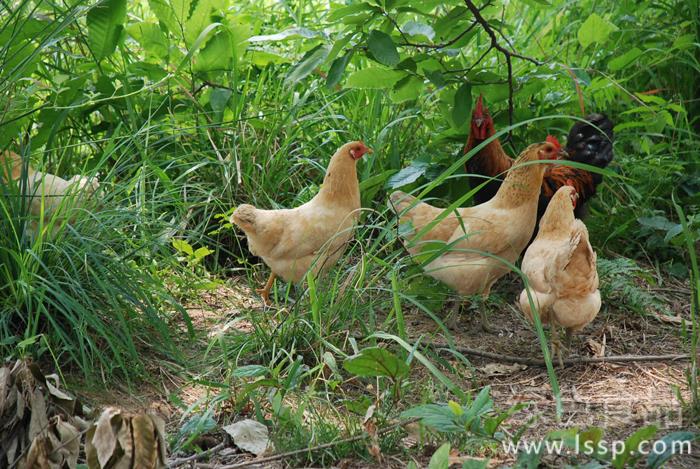
Free-range chickens are more popular than feedlot chickens, and new techniques bring high returns in raising them
Free-range chickens are more popular than feedlot chickens; new techniques bring high returns in raising free-range chickens
-
Deep processing of sweet potatoes brings good returns, giving farmers a new way to increase their income
I. Crispy rice crust 1. Raw material preparation. Select 10 parts of fresh sweet potatoes with a high dry matter content, cut off the roots and stems, and wash them with water. Separately select 1 part of highly sticky glutinous rice, soak it in water and wash it for 30 minutes, then drain off the water. Next, put the sweet potatoes and glutinous rice into separate pots, add water, and steam them thoroughly over high heat for later use. Then put the mashed cooked sweet potatoes and glutinous rice, while still hot, into a bucket, and quickly pound them with a thick stick into a paste. At the same time add a small amount of white sugar water to increase sweetness and flavor. 2. Spreading the paste. Take a clean cloth sheet and spread it flat on a sun-drying mat,
-
High economic returns from intercropping apricot trees with Chinese medicinal herbs
In recent years, farmers in the rural areas around Luoyang, Henan, have adopted the "forest-medicinal herb intercropping" method to plant trees and grow medicinal herbs, becoming wealthy through both the "forest" and the "medicinal herbs." The soil in the Luoyang area is very high in potassium, so the kernel apricot, a potassium-loving plant, finds the necessary soil conditions to grow there. Moreover, the light, heat and moisture conditions here all suit the growth requirements of kernel apricot. Kernel apricot is cold-tolerant, light-loving and tolerant of poor soil, making it suitable for planting on semi-arid hilly slopes. After planting, kernel apricot can bloom and bear fruit in two to three years, and in four to five
-
Sweet potato starch is in high demand in the market, and timely processing yields high returns.
Sweet potato starch occupies an increasingly important position in people's daily diet. Potato-based chemical products have now become the main raw materials for chemical products such as lactic acid, citric acid, disposable tableware and degradable agricultural mulch film. It is understood that the current price of refined white potato starch has risen by nearly 10% compared with last year, and the reason for this price trend is undoubtedly the supply-demand gap for sweet potato starch. Relevant data show that at present, the demand for sweet potato starch in the domestic market alone is more than 1 million tons, while the production volume is far less than this number.
-
Intercropping honeysuckle yields well, with high returns from multiple harvests on one plot
Honeysuckle is a commonly used bulk Chinese medicinal herb, with wide uses and high value. It is currently in short supply on the market, and there is even a phenomenon of a price with no goods available. According to the growth characteristics of honeysuckle, adopting a high-efficiency intercropping model of widening rows and reducing plant spacing, rational close planting, intercropping medicinal herbs, and using "medicinal herbs" to support "flowers" can achieve the effect of "planting flowers in the current year, seeing results in the current year." Scientific close planting increases yield and income 1. Field cultivation. In autumn, winter or early spring, on the selected plot, apply 5000 kg of organic fertilizer, 100 kg of superphosphate, and 30 kg of sulfur
-
Raising cotton seedlings in foam tray substrate with hydroponics gives higher returns
The widely promoted F1 hybrid cotton variety Ezamian No. 10 was selected to compare the cultivation effects of plastic soft-tray substrate seedling raising, foam tray substrate hydroponic seedling raising, and fertile-soil nutrient bowl seedling raising. The results showed that on alluvial fluvo-aquic soil in the Wuhan area, with cotton planted in continuous cropping with rapeseed, the net income per unit area was highest with foam tray substrate hydroponic seedling raising, followed by plastic soft-tray substrate seedling raising. Therefore, matching cotton varieties with simplified, light-labor cultivation techniques selected according to local conditions and promoting them together can improve the profitability of cotton growing.
-
Key Technical Points for No-Till Planting with Rice Straw Return
No-till technology with rice straw return refers to a simple planting method in which, after the rice harvest, the rice straw is spread evenly over the field, no plowing is done, and only chemical weed control is carried out before wheat can be sown. This technology was successfully developed in May 2000 through dedicated experimental research by the Chengdu Second Institute of Agricultural Sciences. The no-till wheat planting technology with rice straw return fully combines the advantages of straw return, no-till, and broadcasting, and scientifically assembles them into a complete new technology package, which has not yet been formally reported at home or abroad. Experimental research shows that this comprehensive supporting technology not only increases
-
The integrated fish-goose farming model can increase economic returns by 30%.
Integrated fish-goose farming is a three-dimensional ecological farming model that combines poultry rearing with fisheries management. According to comparisons, under the same conditions, integrated fish-goose farming increases economic returns by about 30% compared with raising fish or geese separately. 1. Benefits of integrated fish-goose farming. 1. Geese are fully automatic, energy-saving and highly efficient aerators for fish ponds. In integrated fish-goose farming, farmers do not need to worry about oxygen depletion in the water caused by weather changes, because whenever the weather changes, the geese will scramble to jump into the water to bathe and chase each other, churning up splashes, which has a particularly good oxygenating effect on the fish pond.
条件筛选