-
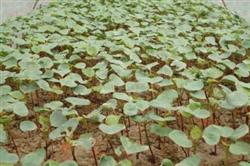
To grow strong cotton seedlings, the seedbed must be protected against five major threats
Common problems in cotton nutrient-cup seedbeds are mainly manifested as drought, waterlogging, disease, fertilizer burn, herbicide damage, and cold damage to seedlings, heat injury to seedlings, and spindly seedlings. The preventive measures are as follows: The moisture content of the cup soil should be moderate. The nutrient-cup seedbed should be located where both drainage and irrigation are convenient. The ideal moisture content of the cup soil is such that it forms a ball when squeezed by hand and breaks apart when dropped to the ground. ...
-
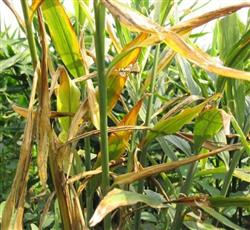
What pests and diseases should ginger be protected from? Detailed explanation of control key points
What pests and diseases should ginger be protected from? Please help introduce the following pests and diseases that need to be controlled during ginger cultivation: stem diseases (ginger blast, ginger rot, etc.); when diseased plants are found in the field, promptly dig out the diseased plants and the soil around them, carry them out of the field for deep burial, apply 125 grams of bleaching powder in the hole or pour 1% bleaching powder solution, then use...
-
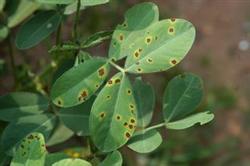
Implement three protection measures in the late growth stage of peanuts to promote increased yield
What is the difference between peanut black spot and peanut brown spot? Peanut black spot and peanut brown spot are the most common leaf diseases of peanuts. Their common feature is the formation of spots on the leaf surface, so they are collectively called leaf spot disease. The main differences are: brown spot occurs earlier, appearing at the early flowering stage, and in the later stage the lesions on the leaves are relatively large, round or irregular...
-
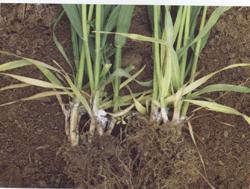
Four protection measures for wheat spring field management
I. Occurrence and harm of wheat sharp eyespot. Wheat sharp eyespot is a fungal disease mainly transmitted through soil. With the improvement of yield levels, the promotion of high-yielding varieties, and wheat field management with heavy water and heavy fertilizer, its harm has become increasingly serious. The pathogen of wheat sharp eyespot has a wide host range; besides infecting wheat, it can also...
-
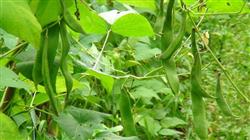
Key Techniques for Controlling Root Rot of Kidney Beans in Protected Cultivation
The suitable planting areas for white kidney beans in Shangri-La County are the mountainous and semi-mountainous areas of five townships along the Jinsha River: Hutiaoxia Town, Jinjiang Town, Shangjiang Township, Wujing Township, Sanba Township and Luoji Township. These areas sit against high mountains, have a beautiful environment, are free from the "three wastes" pollution of industry and mining, and are far from towns and cities. The soil is mostly red-brown earth and oil-sand soil...
-
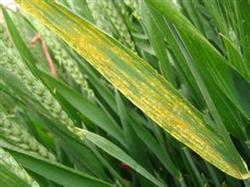
Wheat stripe rust can be managed by a zone-based strategy of treating key spots to protect the wider area
Wheat stripe rust is a serious biological disaster that has long affected the safe production of wheat in China. In years when the disease is common, wheat yields are reduced by 10%-20%, and in years of severe epidemic, losses can reach more than 60%, or even leave wheat with almost no harvest. Based on a comprehensive analysis of factors such as the amount of inoculum, weather conditions and variety distribution, it is predicted that in 2011...
-
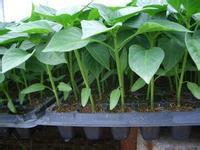
Detailed Explanation of Key Techniques for Raising Pepper Seedlings in Protected Cultivation
Seedling raising time and seedling stage. For spring cultivation of peppers in protected cultivation, sowing and seedling raising is generally carried out from January to February, with a seedling age of 90 to 110 days. Sow at the appropriate time according to the planting period. Seedling raising facilities. (1) High-efficiency energy-saving solar greenhouse; (2) Insulated improved solar seedbed; (3) Plastic greenhouse, small arch shed plus plastic film mulching and straw curtains. Seed...
-
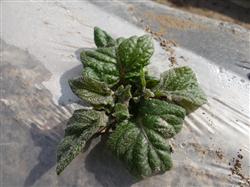
How to take frost protection measures after spring potatoes emerge
At present, temperatures are low and frost is frequent, and spring potatoes that have already emerged inside the plastic film are prone to frost damage when the film is broken to release the seedlings, so it is advisable not to break the film to release the seedlings for now, and to wait until after the Spring Festival when temperatures rise slightly, then break the film to release the seedlings at the appropriate time. If low-temperature frost weather occurs after the seedlings are released, straw can be spread over the beds to prevent the seedlings from freezing. Here...
-
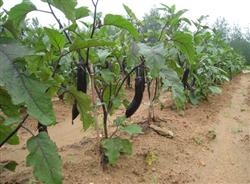
Detailed Explanation of the Multi-Bud Scion Harvesting Technique from a Single Seedling for Eggplant in Protected Cultivation
Grafting cultivation of eggplant has become the most important disease-resistant and yield-increasing cultivation method in current protected eggplant production. When raising grafted eggplant seedlings, the one-seedling-one-bud scion harvesting technique is generally used, but this method involves high seed costs and high production costs. For this reason, based on the principle of apical dominance in plant growth and combined with the characteristic of strong lateral bud sprouting in eggplant seedlings...
-
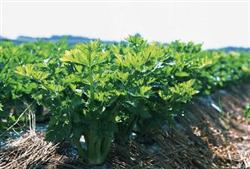
How to overwinter and protect spinach seedlings in the north? Key technical points explained in detail
Celery, also known as Western celery, foreign celery, or American celery, is planted in autumn in the Shuyang area. The average yield per mu is 3000-4000 kg, and high-yielding fields can reach 5000 kg per mu. Its high-yield autumn cultivation techniques are briefly described as follows: 1. Select good varieties for sowing. Choose varieties that bolt late, have strong stress resistance, are not prone to softening, and have thick, solid stalks...
条件筛选