-
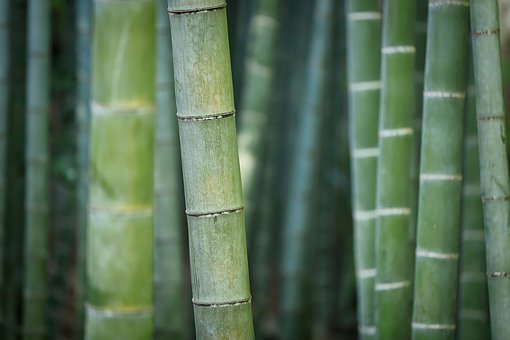
When is the best time to plant perennial bamboo? How should you care for it to make it grow more vigorously? What can it be processed into to make money?
Bamboo is a relatively common perennial evergreen plant of the grass family, subfamily Bambusoideae, in China, and it is widely cultivated because of its broad range of uses. At present, many regions also plant it as a landscaping tree in various areas.
-
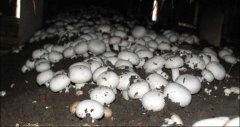
Where are mushroom processing plants located? What products can mushrooms be processed into?
Mushrooms, as a commercial vegetable, can not only be sold on their own, but can also be processed into what products for sale? Which processing plants are relatively well known? Let's take a look together! Domestic companies related to mushrooms: Gushen Lingzhi: China's number one lingzhi brand, the country's largest edible and medicinal fungi deep-processing enterprise.
-

What Are the Mushroom-Processed Foods? An Introduction to Common Types of Mushroom Products
Mushrooms are now a common dish on the market, but did you know that besides being sold directly for eating, they can also be made into what kinds of goods for sale? What price range do they fall within? Let's take a look together. Shiitake stem meat floss, mushroom sauce, mushroom soy sauce
-

How are leeches harvested and processed? Hebei Daheng Breeding Base shares its experience
The leech is a commonly used traditional Chinese medicine, with functions of breaking blood, removing stasis, and promoting menstruation, treating blood stasis accumulation, amenorrhea in women, dry blood causing consumptive disease, traumatic injuries, red and painful eyes, corneal opacity, and more...
-

Corn stalks processed into cattle feed generate 80 million yuan in revenue
Corn stalks turn into "bread," cattle mouths turn into gold: 80 million
-
How Domestic Soybeans Are Processed and Upgraded into "Golden Beans"
How Domestic Soybeans Are Processed and Upgraded into "Golden Beans"
-
Potato waste turned into treasure, can be processed into protein feed
Recently, researchers at Harbin Institute of Technology have made encouraging progress in research on using discarded potato waste to produce single-cell protein feed. The researchers not only screened out an excellent combination of bacterial strains for producing cell protein, but also designed and formulated a complete process route for producing single-cell protein feed from potato waste. The use of potato waste with juice for liquid fermentation to produce cell protein is the first proposal and application of its kind both domestically and internationally. China produces more than 70 million tons of potatoes annually, and more than 3.4 million tons of potato waste remain after starch processing.
-
Potato pulp waste turned into treasure, can be processed into protein feed
Recently, researchers at Harbin Institute of Technology have made encouraging progress in research on using discarded potato pulp to produce single-cell protein feed. The researchers not only screened out an excellent strain combination for producing cell protein, but also designed and formulated a complete process route for producing single-cell protein feed from potato pulp. Adding juice to the pulp and using liquid fermentation to produce cell protein is the first proposal and application of its kind both in China and abroad. China produces more than 70 million tons of potatoes annually, and starch processing leaves behind more than 3.4 million tons of potato pulp. The pulp is rich in fiber
-
Fish scales turned from waste into treasure, processed into fertilizer
Currently, a new type of high-quality organic fertilizer - fish scale fertilizer - is being highly praised by many fruit growers in provinces such as Fujian and Guangdong. This product was first developed by a woman in Chishiwan Village, Meiling Town, Zhao'an County, Fujian Province. Over the past two years, she has processed recovered fish scales into fish scale fertilizer, which has both opened up a source of agricultural fertilizer, reduced environmental pollution from waste fish scales, and increased her personal income. Zhao'an Bay is one of the fine fishing grounds in Fujian Province, among which Gongkou Port trades about 30,000 tons of fresh fish annually from Jinjiang and local light boats. Around the port there are more than 40 fish cargo
-
How is Acetes processed? A detailed guide to Acetes processing technology
Acetes, namely Acetes chinensis, also known as small white shrimp, water shrimp, etc., belongs to the class Crustacea, family Sergestidae, with a laterally compressed body and a thin shell. Body length is generally 2.5-4 cm. The rostrum is short and small, roughly triangular in side view, with the lower margin oblique and slightly curved, and the upper margin bearing two teeth; the telson is very short, rounded at the end, without spines, and the posterior half of the lateral margins and the terminal margin bear feather-like setae. The first three pairs of walking legs are tiny chelate, and the posterior two pairs are completely degenerate. The body is colorless and transparent, with only the mouthparts and the second antennae flagellum red, the ventral surface of the sixth abdominal segment slightly red, and the base of the endopod of the uropod bearing 3-8 red spots
条件筛选