When is the best time to plant perennial bamboo? How should you care for it to make it grow more vigorously? What can it be processed into to make money?
Bamboo is a relatively common perennial evergreen plant of the grass family, subfamily Bambusoideae, in China, and it is widely cultivated because of its broad range of uses. At present, many regions also plant it as a landscaping tree in various areas. So when is the best time to plant bamboo? How should you care for it to make it grow more vigorously? What can it be processed into to make money?
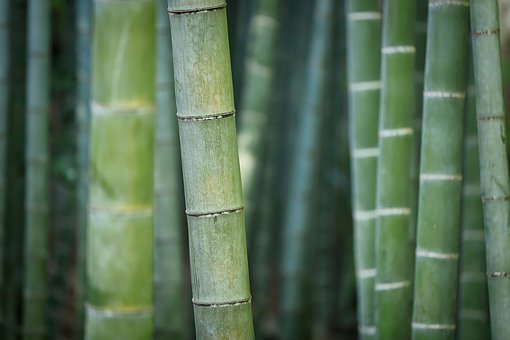
Planting time:
For running bamboo, the scattered bamboo species usually begin to send up shoots in March and May. By June, most running bamboo has basically started its height growth, and August and September are the season for rhizome growth. After that, as the temperature keeps dropping, growth also slows down, until February of the following year, when growth resumes as the temperature warms up again.
The best planting time for running bamboo is from October to February of the following year, and October, the little Indian summer, is especially good. In November and December, because the temperature is low, the physiological activity of bamboo is easily weakened, so very few shoots emerge and grow.
Clumping bamboo sprouts in March and May and sends up shoots in June and August, and it is not cold-tolerant, so it is best planted in February. Bamboo seedlings can also be used, and the effect is much better than the former.
The development of mixed bamboo falls between the previous two. It only sends up shoots and grows bamboo from May to July, so the best planting time is from October to December or from February to March of the following year.
Planting tips:
1. Soil: Bamboo prefers acidic or neutral soil and avoids heavy clay and alkaline soil. Fertile, loose sandy soil can be used, or field soil mixed with leaf mold and fine sand to increase the soil's air permeability.
2. Flower pot: Bamboo is a shallow-rooted plant, so a pot with a shallower mouth can be chosen. After planting, adding some ornamental stones or moss can improve the ornamental value of the bamboo, making it appear fresher and more elegant.
3. Watering: Bamboo likes moisture and fears waterlogging. Newly transplanted bamboo should first be watered thoroughly. In daily management, do not water too much. In summer, water every day and spray the leaves, while in winter reduce watering to prevent frost damage.
4. Fertilizing: When planting bamboo, organic fertilizer should be mixed into the potting soil. After normal growth, apply appropriate additional fertilizer, and follow the principle of light fertilizer applied frequently. In spring and summer, apply 0.5% urea or 1.0% compound fertilizer with water.
5. Pests and diseases: The main insect pests of bamboo include bamboo aphids and bamboo scale insects, which can be sprayed with insecticides. The main diseases include sooty mold and witches' broom, so management should be strengthened and diseased plants pruned promptly.
6. Pruning: Bamboo grows relatively quickly, so it should be pruned at the right time, removing old growth and keeping young growth, removing dense growth and keeping sparse growth, and removing weak growth and keeping strong growth. When repotting each year, dead branches should be properly removed, which can keep the plant shape graceful.
What can it be processed into to make money?
Bamboo charcoal, handicrafts, musical instruments, etc.
Bamboo can be made into bamboo charcoal through baking. Bamboo charcoal is now used in many situations, including removing environmental odors and for specially flavored foods, mainly because activated carbon made through crushing and activation has good adsorption and purification effects and is often used in automobiles, homes, and sewage treatment. At the same time, using bamboo to make handicrafts, musical instruments, and the like is also relatively valuable.
1. Building materials: doors and windows, moldings, flooring, outdoor flooring, etc.
2. Furniture: sofas, clothes racks, wardrobes, computer desks, bookshelves, shoe racks, shoe-changing benches, office furniture, etc.
3. Daily necessities: bamboo baskets, toothpicks, chopsticks, chopstick holders, cutting boards, summer sleeping mats, tea sets, lamps, charcoal products, bamboo blinds, etc.
4. Handicrafts: bamboo slips, bamboo sticks, bamboo scrolls, bamboo weaving, bamboo root handicrafts, bamboo carving handicrafts, bamboo fans, xiao flutes, di flutes, etc.