-

Autumn cultivation of edible fungi requires passing five critical stages successfully, with a detailed explanation of planting methods
Autumn production of edible fungi requires passing "five stages"
-
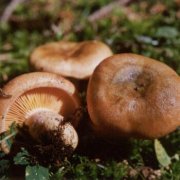
Chongyang mushroom planting methods, price per jin, and detailed explanation of its benefits and nutritional value
Chongyang mushroom is a fungus that currently cannot be cultivated artificially and is a purely natural fungus species. It is very particular about its growing environment, so artificial cultivation is very difficult to achieve, and it may be impossible to grow, which would result in significant losses. How much is Chongyang mushroom per jin? This depends on
-
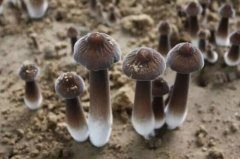
A Detailed Guide to Black-Skin Chicken-Foot Mushroom Cultivation Techniques, Price per Jin, and Investment per Mu
Large-scale artificial cultivation of the black-skin chicken-foot mushroom has low production costs, a short cycle, and high yields, and can meet people's market demand for the black-skin chicken-foot mushroom. So how do you grow the black-skin chicken-foot mushroom? The price of the black-skin chicken-foot mushroom is 35 yuan per jin, and prices vary somewhat from region to region.
-
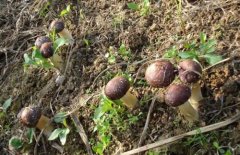
The Latest Cultivation Techniques, Formulas and Planting Times for Wine Cap Stropharia (Stropharia rugosoannulata): A Detailed Guide
Do you know how to grow wine cap stropharia? Would you like to grow it yourself? Below we introduce a simple yet high-yielding cultivation method. Let's take a look. 1. Substrate preparation: rice straw 100%, plus wheat bran or rice bran 10%, cornmeal 5%, gypsum powder 2%,
-
Adding rice husk to mushroom casing soil brings better planting benefits
In conventional mushroom cultivation management, casing soil is a technically demanding task. There are special requirements for the casing soil's texture, soil aggregate structure, aeration, and water retention and holding capacity. In particular, when making large, medium, and small casing soil particles, it is both labor- and time-consuming, and the labor intensity is high. To effectively solve these problems, the author has repeatedly reformed mushroom casing soil technology since 1990, and finally determined to use surface humus soil from within forest stands or paddy field plough layer soil (sandy loam or clay loam are both acceptable) mixed with 5% fresh rice husk
-
Why oyster mushroom transplanting gives such good yield increases
Practice has shown that thinning and transplanting densely clustered mushroom buds gives good yield increases. The transplanting method is as follows. 1. Transplant at the right time: transplant when the mushroom buds have just appeared. 2. Planting material: there are no strict requirements; they can be planted on either spawn material that has not yet fruited or material that has already been harvested. Spawn material that has not yet fruited helps the mycelium wounds from transplanting heal and the fruiting bodies develop well. 3. Transplanting method and management: transplanting should be done by digging holes in the spawn brick or spawn bed. Place the small clump of mushroom buds that has been picked into the hole that has been dug, and press firmly around it so that the mushroom buds and the spawn material on the surface of the spawn brick or bed
-
Detailed Explanation of High-Yield Cultivation Techniques for Transplanting Oyster Mushroom Buds
In bed-style cultivation of oyster mushrooms, it is common for mushroom buds to grow unevenly, and this is even more serious in outdoor sunken-bed cultivation. Of these densely packed small mushroom buds, no more than 3 to 4 grow into edible mushrooms, and the vast majority gradually wither after three to five days. On one hand, this consumes a large amount of nutrients; on the other hand, if the withered mushroom buds are not dealt with in time, they will rot and deteriorate, causing pests and diseases and reducing the yield of the next crop. If these mushroom buds are selectively transplanted and cultivated, it can not only reduce pest and disease damage, but also increase yield by 20%. The method for transplanting oyster mushroom buds is introduced as follows: 1. Preparatory work. For transplanted
-
Transplanting oyster mushrooms is a new way to achieve high yields
Researchers at the vegetable supply base of Shengli Oilfield, through repeated experiments, have found a new way to achieve high yields of oyster mushrooms - transplanting. The key technical points are introduced as follows: 1. Choosing a good transplanting bed There are no special requirements for choosing a transplanting bed. As long as the mycelium is growing normally, the substrate surface is free of contaminating microorganisms, there are no pests, and the dryness and moisture levels meet the standard, the key point is that any mushroom block or bed that has not yet produced mushrooms can be used as a transplanting bed. 2. Key technical points of transplanting First, strictly disinfect the small shovel or small knife used for transplanting according to conventional methods. Then select mushroom buds that are growing densely in a coral-like shape
-
The broken-planting technique for oyster mushroom logs helps increase yield
For oyster mushrooms cultivated in mushroom bags, the yield drops greatly after 2-3 flushes of mushrooms. If the temperature rises, the quality will also be reduced. How can later flushes be cultivated to equal or even exceed the yield of the previous flushes? Below is a simple and practical method - the broken-planting method. Remove the plastic bags from mushroom bags that have produced 2-3 flushes, then scrape the old surface layer once, and soak in 5% lime water. If the mushroom logs are relatively dry, also soak in 1% salt water for half a minute. Before soaking, poke a hole through the mushroom log from top to bottom so
-
Key Cultivation Techniques for Interplanting Oyster Mushrooms in Pear Orchards
After the pears are harvested, the pear orchard has a relatively long fallow period. Using the empty rows between pear trees to grow one season of oyster mushrooms can yield good returns. 1. Choosing the bed site: It is best to choose a pear orchard relatively close to the village, with good soil quality, convenient irrigation and drainage, and smooth transportation. 2. Carefully preparing the beds: The mushroom beds are 8-10 m long and 1.2 m wide. The bed soil should be plowed 15-20 cm deep and carefully prepared so that the soil is loose and free of weeds, loose on top and firm below, forming a ball when squeezed by hand and breaking apart when dropped on the ground. Build a ridge 4-5 cm high around the bed surface to conserve moisture. After the mushroom beds are prepared, dig drainage
条件筛选