-
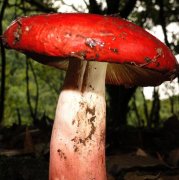
What are the effects and functions of Wuyishan, Nanping and Yunnan red mushrooms?
Red mushrooms cannot be cultivated artificially, so there are no artificially grown red mushrooms. Judging from the places they pass through, the areas that produce more red mushrooms are the Nanping area of Fujian, as well as the central and southern parts of Yunnan. There are slight differences between the two places. Fujian has four distinct seasons, and red mushrooms begin to appear before spring and summer, while Yunnan is divided into a rainy season and a dry season, and once the rainy season begins, mushrooms are produced. Mountain villagers generally take them to small markets to sell, at about 200 per kilogram (Yunnan uses kilograms), and when dried they become about 400-600. This thing still needs to be bought from mountain villagers you know well. Many bought online are the ones others have picked over, and the quality is a bit poor.<br /> <img alt="red mushroom" src="/uploads/allimg/190730/1-1ZI0163Q4946.jpg" style="height: 501px; width: 500px;" /><br /> <br /> Wuyishan is a world natural and cultural heritage site, with a pleasant climate, fertile soil, and sweet water quality. It is the place with the best-preserved biodiversity in the world, rich in all kinds of wild mushrooms, and one of the best edible mushroom producing areas in the world. <div> Red mushrooms are a rare mountain delicacy and a natural nutritious fine product, and have the reputation of “king of mushrooms”. They selectively grow in primitive hardwood broad-leaved forests in special places, are collected purely wild, and the yield is extremely low, so “things are precious when they are rare”, and their nutritional value and dietary therapy value are especially high. Nutritional value: pure natural wild red mushrooms contain rich vitamin B, D, E, and also contain niacin, which is rare in other foods, as well as trace elements such as iron, zinc, selenium, and manganese. Red mushrooms are known for being mellow and delicious, fresh and refreshing, and for their clear red soup color.</div> <div> </div> <div> Recommended ways to eat: 1. For “postpartum confinement” use: 1 liang of camellia oil, 2 liang of minced old ginger, 2 local eggs, stir-fry over high heat for a few minutes, add 1 liang of brown sugar, 2 liang of dried red mushrooms, and stew in soup with 1 silkie chicken (or 0 chicken from the countryside) and eat. 2. For tonifying deficiency and kidney deficiency with waist pain: 5 local eggs, 4 liang of dried red mushrooms, 2 liang of longan, 1 liang of brown sugar, cook in soup and eat. 3. For removing water: cook 2 liang of dried red mushrooms with other foods and eat, without adding salt.</div> <div> </div> <div> Because the yield of red mushrooms is scarce, all major supermarkets sell only small amounts.</div>
-

How to Select White Tremella? Master These Few Shopping Tips
How to choose white tremella? What should you pay attention to when buying white tremella? Please introduce. White tremella is a traditional delicacy and also an excellent tonic, but once it spoils, it must never be eaten. This is because the toxic substance in spoiled white tremella is Flavobacterium farinofermentans, and there is currently no effective medicine to treat it, so identification is essential. The following introduces how to...
-
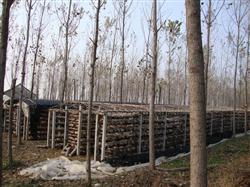
Key Techniques for Summer Cultivation of Black Wood Ear (Auricularia heimuer) in Forest Intercropping
How do you cultivate black wood ear in forest intercropping in summer? Please provide guidance. Under normal conditions, black wood ear grown in forest intercropping should produce 3 flushes. However, at present, after some first-flush wood ears are harvested, the bags become infected with contaminant microorganisms before the second flush even emerges, causing reduced yields or even total crop failure in the second and third flushes, which hurts profits. I. Causes of contaminant microorganism infection during flush transition: (1)...
-
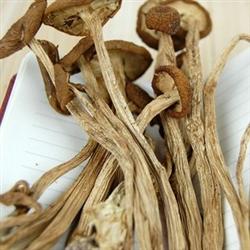
Corn intercropping with tea tree mushroom: planting methods and technical key points
How to intercrop tea tree mushroom with corn? Please refer to the following methods for corn intercropping with tea tree mushroom: 1. Choose a plot with flat land, sheltered from the wind and facing the sun, with convenient water sources, suitable for intercropping in a corn field. 2. Cultivation season. Meet the requirements for tea tree mushroom mycelium growth temperature of 10°C-35°C, optimum temperature 22°C-27°C; fruiting...
-
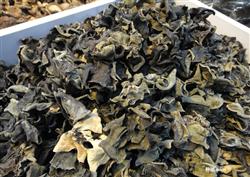
How to grow black fungus (wood ear mushroom) by intercropping? Key technical points explained
How to store wood ear mushrooms properly? Please advise: the optimal storage temperature for wood ear mushrooms is 0°C, relative humidity: above 95%RH. Wood ear mushrooms can be sold fresh or dried. Dried ones store better, but fresh ones have a more delicious flavor, so the choice depends on personal preference. Fresh ones are harder to store; after harvest, store them at low temperature immediately, which can still maintain a...
-
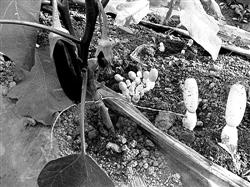
Key Cultivation Techniques for Intercropping Cucumbers with Shaggy Mane Mushrooms
Shaggy mane mushroom, also known as Coprinus comatus, is a typical mesophilic variety. When the soil temperature is below 8°C, it cannot produce mushrooms normally; when the soil temperature is above 30°C, the mycelial vitality declines, the parasitic fungus Psathyrella appears in large numbers, and the shaggy mane crop is nearly wiped out. By cooling in summer and heating in winter, shaggy mane mushrooms can be produced year-round, but in summer...
-
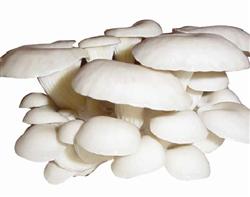
Key Cultivation Techniques for Intercropping Oyster Mushrooms with Cotton
Oyster mushrooms can be cultivated all year round, but those grown in the high-temperature season yield the greatest profit. Reasons: First, summer temperatures are high, making cultivation technically difficult, and pests and diseases occur easily, often leading to cultivation failure. Second, the total area under oyster mushroom cultivation in summer decreases, and total output is low, causing a shortage of fresh oyster mushrooms on the market and driving prices up. Base...
-
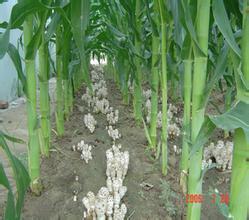
Key Technical Points for Intercropping Shaggy Mane Mushrooms in Pepper Fields
Intercropping shaggy mane mushrooms (Coprinus comatus) in pepper fields is a good way to cultivate them in a semi-wild manner. It can save the expense of building mushroom houses, does not take up extra space, and can greatly increase the economic benefit per unit of land area. Generally, after the peppers are planted, trenches are dug in the middle of the pepper rows, material is laid, and mushroom spawn is scattered. For the convenience of managing and harvesting the mushrooms...
-
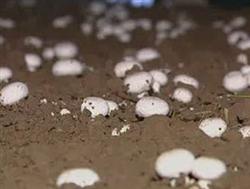
Solar Greenhouse Cultivation Technique for Intercropping Cucumber with Agaricus bisporus
I. Composting Technique. For 100 sq m, you need 1500 kg of wheat straw, 1250 kg of cow manure, 40 kg of phosphate fertilizer, 40 kg of gypsum, and 50 kg of lime with a pH of 7.5-8. 1. Pre-wetting the wheat straw: Take the wheat straw according to the formula, soak it in water in batches, and once the wheat straw has evenly absorbed water, pile it in layers on one side of the composting yard. 2. Wheat straw...
-
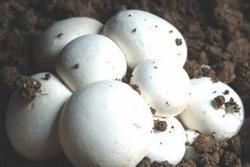
Key Management Techniques for Intercropping Cucumber with Button Mushrooms
Strictly control the temperature inside the shed. During fruiting, the daytime air temperature inside the shed should be kept at 20°C-30°C, and at night above 10°C. On cloudy days when light is insufficient and the shed temperature is low, use electric lights at night to appropriately supplement light and raise the temperature, installing one 100-watt bulb every 6 m. Because button mushrooms are cultivated on the ground and are mainly affected by ground temperature, the shed...
条件筛选