When Do Cows Ruminate? A Detailed Explanation of Rumination Time Patterns
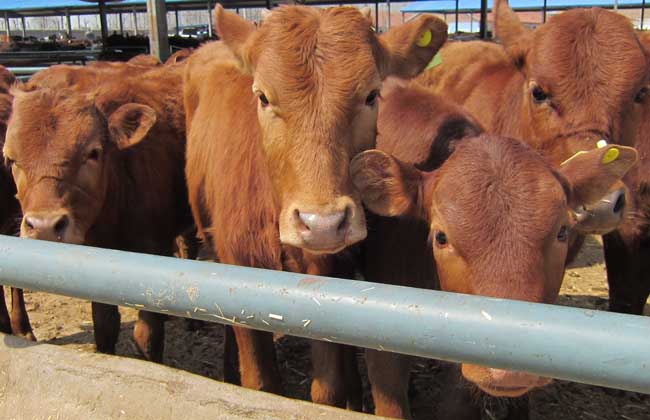
Rumination refers to the process in which certain animals return semi-digested food from the stomach to the mouth for re-chewing some time after eating. When a cow finishes eating forage or lies down to rest, people will see the cow's mouth constantly chewing the food into a bolus and swallowing it again, each time taking about 1 to 2 minutes, and roughly 6 to 8 hours per day are needed for rumination. This can make large amounts of forage finer and softer and allow it to pass quickly through the rumen to the later parts of the digestive tract, so that the cow can consume more forage.
The time of rumination in cows
Rumination in cows usually begins 30 to 60 minutes after feeding stops, and calves begin ruminating at about 21 to 30 days of age. Beef cattle ruminate at night, spending 7 to 8 hours per day on rumination; generally 70% in winter and 54% in summer, with 10 to 15 rumination periods per day. Each rumination period lasts 24 to 36 minutes for yellow cattle and 40 to 60 minutes for beef cattle. An ordinary cow chews one bolus an average of 48 times in the mouth, while a beef cow chews 30 to 60 times. When eating coarse tough straw or large amounts of withered yellow pasture in winter, the number of chews increases accordingly.
The process of rumination in cows
Cows generally eat in a hurry, especially coarse feed, and most of it is swallowed into the rumen without being fully chewed. After being soaked and softened in the rumen for a period of time, the food is regurgitated back into the mouth, re-chewed, mixed with saliva again, and swallowed back into the rumen. When a cow is ill, overly fatigued, or subjected to strong external stimuli, rumination behavior can be weakened or stop completely. Once rumination stops, food remains in the rumen, and because the gas produced by fermentation cannot be expelled, rumen bloat can result.
The stomach structure of cows
1. Rumen: The rumen is the largest, accounting for 80% of the total volume of the four stomachs. It contains large numbers of microorganisms growing and multiplying, and a large portion of the feed is digested here.
2. Reticulum: The reticulum accounts for 5% of the total volume of the four stomachs. Its function is like a sieve, retaining heavy objects swallowed with the feed such as nails and wire.
3. Omasum: The omasum accounts for 7% of the total volume of the four stomachs. Its main function is to absorb water from the feed and to squeeze and grind the feed.
4. Abomasum: The abomasum, also called the true stomach, accounts for 8% of the total volume of the four stomachs. Its function is the same as the stomach of monogastric animals; it can secrete digestive juices and digestive enzymes to digest feed that has not been digested in the rumen and the rumen microorganisms that enter the abomasum together with the rumen digesta.
Summary: In fact, rumination is one of the important digestive processes of cows and other ruminants. Through rumination, feed is chewed finely and mixed with saliva (a cow secretes 100 to 200 liters of saliva per day, and the saliva contains large amounts of salts and endogenous urea, etc.), which increases the decomposition surface for rumen microorganisms and keeps rumen pH stable between 6 and 7, creating good conditions for rumen fermentation, protein metabolism, and so on.