-

How should you select mushroom spawn for high yields when cultivating Agaricus bisporus in paddy fields?
Give priority to granular wheat grain spawn with good yield performance and strong stress resistance, followed by manure-straw bag spawn. To plant 1 mu of field mushrooms, about 400 bottles of wheat grain spawn are needed, with an investment of 800-900 yuan; or 800-1000 bags of manure-straw bag spawn, with an investment of about 1000 yuan. Farmers should be especially reminded that when buying spawn, they must go to a spawn farm with a good reputation.
-
Do not make these mistakes when growing button mushrooms (Agaricus bisporus) in paddy fields for high yields
In actual production, farmers often make certain mistakes that affect the profitability of cultivation. First, insufficient pre-wetting. Rice straw must be fully soaked before it can decompose well. Straw that has not been soaked sufficiently needs a large amount of water added during turning, and if the water cannot be replenished before the second turning, it will be very difficult to make up later, which seriously affects the growth of mushroom mycelium. Second, uneven turning. It should be done according to the principle of "raw material in the middle, cooked material on both sides; the middle goes to the two ends, the two ends go to the middle." Some growers, when turn
-
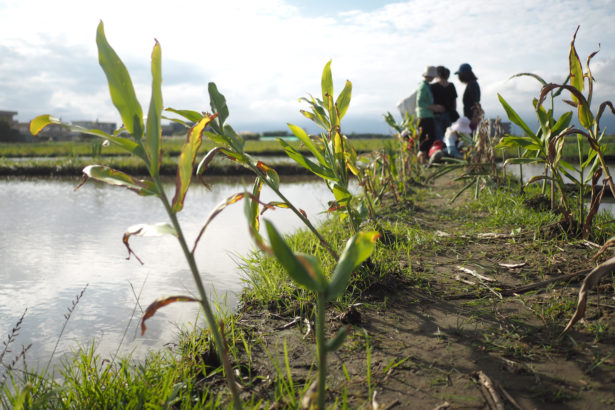
Paddy Fields Transformed into Migratory Bird Habitat: Forestry Bureau Promotes National Ecological Green Network
Forestry Bureau National Ecological Green Network - Turning Paddy Fields into Migratory Bird Habitat
-
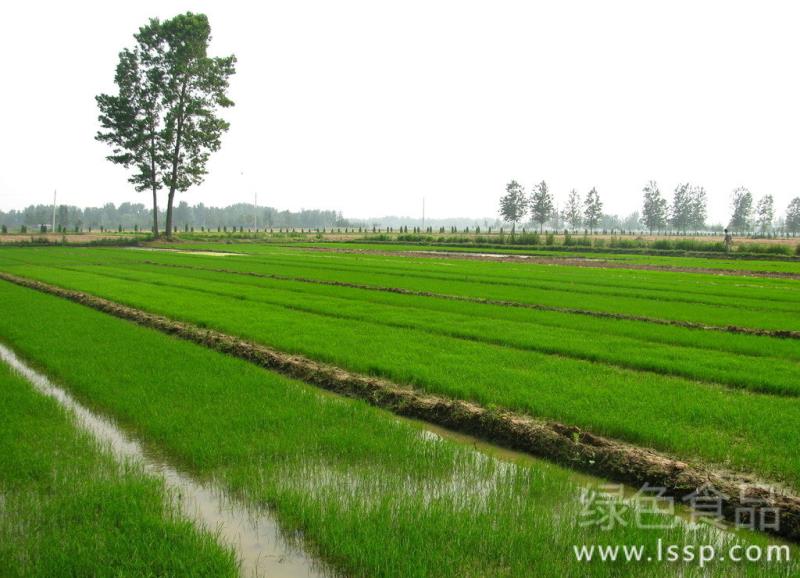
Detailed Explanation of Improvement Methods and Fertility-Building Measures for Saline-Alkali Paddy Fields
Improvement Methods and Fertility-Building Measures for Saline-Alkali Paddy Fields
-
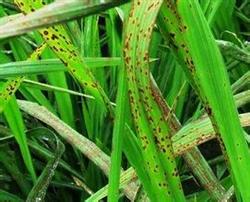
Identifying Zinc Deficiency Symptoms in Rice and Techniques for Skillfully Applying Zinc Fertilizer in Paddy Fields
Zinc is one of the essential trace elements for the growth and development of rice. Zinc deficiency in rice shows obvious symptoms. When rice is deficient in zinc, chlorotic yellow-white spots first appear in the midrib area of the lower leaves, with reddish-brown spots and irregular patches forming on them, which then gradually expand into reddish-brown streaks, turning reddish-brown and drying from the leaf tip downward, and from...
-
Detailed explanation of control techniques for sprangletop and barnyardgrass in paddy fields
Control techniques for sprangletop and barnyardgrass in rice
-
What are the key management techniques for growing winter melon in paddy fields?
How do you manage winter melon grown in paddy fields? What methods can increase yield? Growing winter melon in paddy fields can use the following three methods to increase yield: fertilizer and water management. During the stem and vine growth stage of winter melon, watering is not easy, so a combined "promote" and "control" management approach should be adopted. After watering, cultivate in time to conserve soil moisture and extend the watering interval...
-
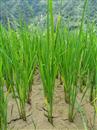
What is the correct method and purpose of draining paddy fields for rice?
How do you drain a paddy field for rice? What does it do? Please explain the field-draining method. Draining paddy fields is one of the main technical measures for increasing rice yields and promoting early ripening. 1. Main purposes of field draining. 1) Control ineffective tillering and consolidate effective tillering. When rice tillering has reached a certain number, that is, once there are enough seedlings, in our province, in terms of time, the effective tillering termination period is around the end of June. Early tillers can form panicles, while tillers after the termination period cannot form panicles or only form small panicles. In production, by draining the field, the young tiller buds at higher positions cannot get water and fertilizer and stop growing, reducing nutrient consumption, so that the main stem and large tillers receive more nutrient supply, laying a foundation for strong stems and large panicles.
-

Why is it emphasized that paddy fields should be given more organic fertilizer?
When rice paddies are planted year after year, large amounts of the three major elements nitrogen, phosphorus and potassium, and a certain amount of calcium, magnesium, sulfur, iron and other elements, must continually be taken from the soil every year, and small amounts of trace elements such as chlorine, zinc, manganese, boron, copper and molybdenum must also be absorbed. In addition, the silicon absorbed by rice is about 10 times that of chlorine. A large amount of various nutrients...
-
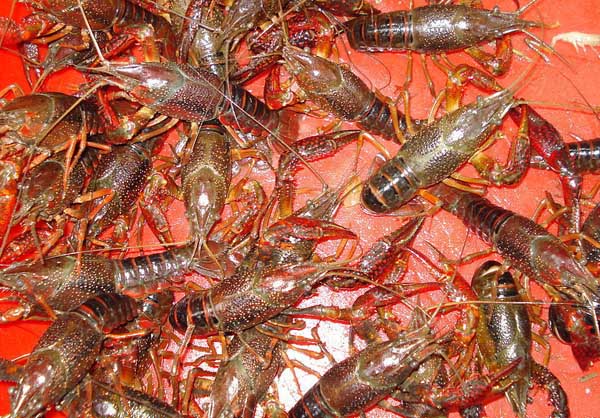
Detailed Explanation of Key Technical Points for Crayfish Farming in Lotus Root Paddy Fields
Crayfish Farming Technology in Lotus Root Paddy Fields
条件筛选