Detailed Explanation of Improvement Methods and Fertility-Building Measures for Saline-Alkali Paddy Fields
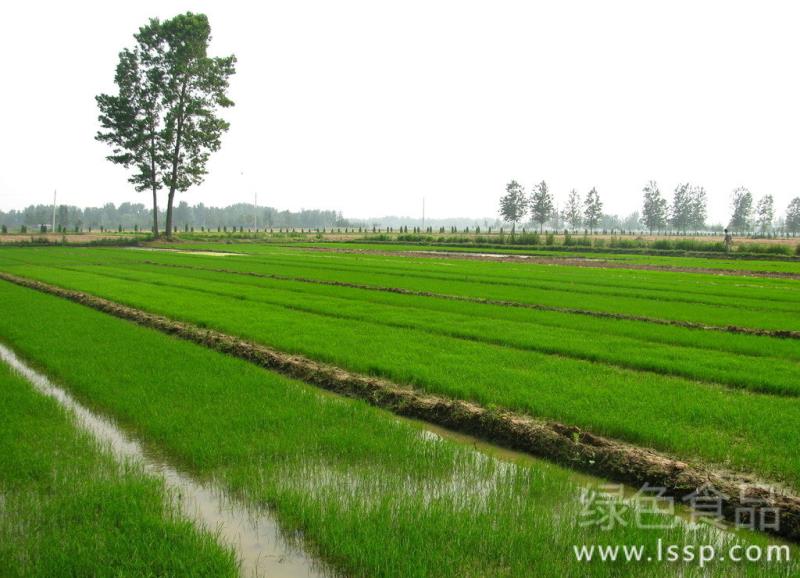
Paddy Fields
Because of their special physical and chemical properties, such as high pH and poor permeability, saline-alkali soils cause unstable rice yields and reduced quality. Therefore, improvement and fertility building must be carried out in a planned way, and the two must be done simultaneously. This not only improves the soil's physical and chemical properties, raises soil temperature, and promotes the transformation of nutrients within the soil, but also effectively increases fertility, creating a cultivated layer that is deep, mature, and rich in nutrients, turning soil unsuitable for cultivation into soil that can be cultivated, and gradually developing it into fertile soil and rich black soil.
I. A Sound Irrigation and Drainage System Is the Key to Fertility Building and Improvement
For growing rice on saline-alkali land, the most critical farmland construction is a good water source and a sound irrigation and drainage canal system, which is also the most critical measure for improvement and fertility building. It must be possible to both drain and irrigate, with drainage and irrigation working freely, and there should be more drainage ditches, and deeper ones, so as to enhance the permeability of field moisture and effectively reduce salts. If there is only irrigation without drainage, secondary salinization of the soil is often worsened, especially in newly opened plots that are too clayey; in severe cases, they cannot be planted at all. Avoid replacing drainage with seepage and replacing exchange with seepage; only by making drainage the main approach can the goal of improvement and fertility building be achieved. It can be said that without a good water source and irrigation and drainage measures, good production cannot be achieved.
II. Application of Fertility-Building and Improvement Materials
1. Foreign soil: mainly adding sandy soil to overly clayey soil to improve the soil's texture and structure, so that the overly clayey soil has a certain amount of space, which is favorable for the exchange of water, air, and so on. This is a measure with a very obvious effect for improving saline-alkali land, and the effect is lasting. Generally, add 300-500 cubic meters of sandy soil per hectare, applied over about 3 years. For sandy soil, its own salinity and alkalinity are not very high, so sandy ridge soil can be brought in and organic fertilizer applied for improvement. When adding foreign soil, it must be combined with deep plowing so that it is evenly distributed in the cultivated layer.
2. Application of organic materials: it is best to apply them during autumn plowing. This is an important measure that both improves and builds fertility. It can improve soil structure, regulate soil porosity, and also activate the soil so that the nutrients stored in it are effectively released, while at the same time increasing the nutrient supply in the soil. This is a measure we commonly use to cultivate high-yield fields. The use of organic matter is very widespread; all kinds of manure and grass fertilizer (mainly rice straw, rice stubble) can be used. Manure should be applied at 20-30 cubic meters per hectare each year; grass fertilizer should be applied about once every 3 years, plowed deep into the soil layer, about 5,000 kilograms per hectare each time. Returning rice straw to the field is done in autumn; after freezing and thawing in winter and spring, it easily breaks apart and is easily decomposed and used by microorganisms. Cut it into small pieces of about 10 cm and plow them into the cultivated layer. Apply nitrogen fertilizer at 1% of the straw amount, and appropriately add a certain amount of biological microbial agent, which can both overcome the nitrogen competition during straw decomposition and facilitate increased yield. At the heading stage, the amount of nitrogen fertilizer should be appropriately reduced——this period is precisely when the straw is releasing and immobilizing nitrogen. Returning straw to the field once every two to three years is relatively reasonable. For many rice growers, however, large amounts of chemical fertilizers are often used, engaging in exploitative production, and not enough organic fertilizer is added. This easily causes degradation of paddy fields and is not conducive to cultivating high-yield fields, that is, it is not conducive to long-term production.
3. Application of chemical improvement materials: mainly refers to the use of gypsum and sulfuric acid. Gypsum is used mainly to use its calcium ions to replace sodium ions in the soil, so as to achieve improvement; sulfuric acid uses its hydrogen ions to replace sodium ions, and while improving the soil it also increases soil acidity. Gypsum is generally applied at 5,000 kilograms per hectare, and sulfuric acid generally at 2,500 kilograms per hectare. They should be applied in several split applications, combined with irrigation and drainage and plowing. If technical measures for irrigation, drainage, and plowing are not attended to, the effect will not be very good and will not last. The effective period of chemical improvement is generally relatively long, but it is not once and for all, and there are also certain difficulties. First, economic: the amount of funds required is large. Second, mechanical: it takes labor and time, and operation is difficult. This is a purely improvement measure and is not used much. In production, sulfuric acid is often used more during the key periods of seedling raising and the main field.
III. Rational Tillage
1. Principles: ensure that the soil plowed up can mature before harrowing and that the applied fertility-building and improvement materials can be mixed evenly. Autumn plowing should be used as much as possible, as it is favorable for sun-drying the clods, killing weeds, and washing out alkali. Through alternating freezing and thawing, the soil maturation time is extended, the soil becomes loose and porous, and salts rise to the soil surface and are washed out through drainage. Deep plowing should be carried out gradually, gradually breaking the soil alkalization layer and increasing soil permeability. If rotary tillage is used, it can also be done in spring. In the early stage of production, plowing should be carried out year after year; in the later stage, it can be done at intervals of about 3 years, gradually implementing a rotation of plowing, rotary tillage, and stubble pressing and harrowing, which saves water and labor hours, among other things.
2. Autumn plowing depth:
(1) For old paddy fields with good drainage and relatively high fertility, a plowing depth of 15—18 cm is generally appropriate, because the root system of generally high-yield rice is mainly distributed within the 0—15 cm soil layer, accounting for more than about 90% of the total root mass, and a plowing depth of 15—18 cm can fully meet the root development requirements of high-yield rice. If plowed too shallow, the rice root system is shallowly distributed, drought damage is likely to occur if irrigation is not timely, and under high-fertility conditions, disease and lodging are likely. If plowed too deep, because paddy soil is fertile on top and poor below, fresh on top and salty below, mature on top and raw below, turning the saline-alkali, barren, and raw soil below to the surface will inevitably affect that year's production; in mild cases, seedling recovery is poor, and in severe cases, seedlings become stiff or die.
(2) For sandy-alkali land, dryland-to-paddy land, and poorly drained low-lying fields, appropriate shallow plowing should be carried out, generally 12—15 cm. This is because the soil of sandy-alkali land and dryland-to-paddy land is fine, broken, and loose; if plowed too deep, it is not easy to air-dry and mature, and water and fertilizer leakage is also likely. In low-lying fields, because the soil remains in a reduced state for a long time, soil nutrients are not easily decomposed and released, and salt and alkali easily accumulate. Appropriate shallow plowing can air-dry and sun-dry the surface soil thoroughly, which is favorable for aeration and oxygen supply, releasing soil fertility, and washing away salt and alkali.
(3) For heavily saline-alkali land and newly opened wasteland, shallow plowing is necessary, generally with a plowing depth of 10—12 cm. This is because shallow plowing can air-dry and sun-dry the surface soil thoroughly, which is favorable for fully removing salt and alkali, first creating a desalinated soil layer of about 10 cm to ensure normal seedling recovery after transplanting, and then, by strengthening irrigation management, continuously leaching and desalinating the soil layer, which can also ensure rice growth and development in the middle and late stages. If plowed too deep, the salt and alkali in the cultivated layer cannot be fully leached, and after transplanting it is very difficult to keep seedlings alive. Therefore, shallow plowing is the key to keeping seedlings alive and ensuring harvest and increased yield for rice on newly opened wasteland and heavily saline-alkali land.
3. Plowing and harrowing quality: within the same field, the plowing depth should be uniform and consistent, with no soil moisture ditches and no high ridges, and the field surface should be level after plowing. The plowed furrows should connect closely, and turning and covering the furrows should be good. After plowing, do not harrow in all cases, so as to facilitate sun-drying the clods and prevent salt and alkali from being trapped in saline-alkali land. In spring, after dry leveling, soak the field and wash out alkali (generally, water reaching 2/3 of the clod pieces is enough, which helps save water), harrow the field and apply base fertilizer, and it must be dragged level. This is the foundation of main field management. For sandy land, it is best to first prepare the land dry and level it dry, and then release water; in this way the land is relatively soft and rice can be transplanted directly.
IV. Scientific Use of Chemical Fertilizers
Most of the chemical fertilizers applied are stored in the soil each year. This not only can provide for the needs of the current season's rice, but is also an important fertility-building measure.
(1) Chemical fertilizers and organic fertilizers should be used in combination: this is an important measure for regulating rice nutrition and improving soil fertility. Using the two in combination takes into account both quick effectiveness and long-term effects, can both increase the current season's crop yield and prevent soil compaction caused by large amounts of chemical fertilizer, achieving a combination of use and nourishment.
(2) Attention should be paid to the selection of fertilizers applied: chlorine-containing fertilizers such as potassium chloride cannot be used, especially in heavily saline-alkali land, so as to avoid an increase in harmful ions. Use acidic or neutral fertilizers as much as possible, such as ammonium sulfate, superphosphate, urea, potassium sulfate, and so on. For compound (mixed) fertilizers, generally those that do not contain alkaline substances or chloride ions are all acceptable.
(3) Nitrogen, phosphorus, and potassium should be used in combination: pay attention to balanced fertilization, and do not focus only on nitrogen while neglecting phosphorus and potassium. Appropriately increasing the application of phosphorus and potassium can improve quality and enhance resistance. It can both increase the current season's yield and improve the comprehensive utilization rate of fertilizers, reduce fertilizer loss, make soil fertility balanced, and facilitate balanced absorption of nutrients. During the improvement process, the amount of chemical fertilizer used should be somewhat larger. After many years of cultivation can achieve stable yield, the amount can be gradually reduced.
(4) Attention should be paid to fertilization methods: base fertilizer should not be too large or applied too early, to prevent volatilization loss. It is best to apply the well-mixed chemical fertilizer after water harrowing and leveling the field, so that as the mud settles it achieves whole-layer fertilization, realizing deep application and effectively preventing fertilizer loss. For topdressing, use the method of carrying fertilizer with water, that is, apply it immediately after draining old water and letting in new water. In this way, excess salts can be removed, preventing both alkali damage and fertilizer damage from affecting rice growth. After fertilization, use machinery or animals for intertillage so that the fertilizer fully enters the cultivated layer, and losses can be minimized.
Improving and building fertility in saline-alkali land is a long-term project and also a process of using comprehensive measures. A single measure alone cannot play a decisive role. Different measures should be selected according to different plots; in this way, they are targeted, and results can be quick and lasting.