-
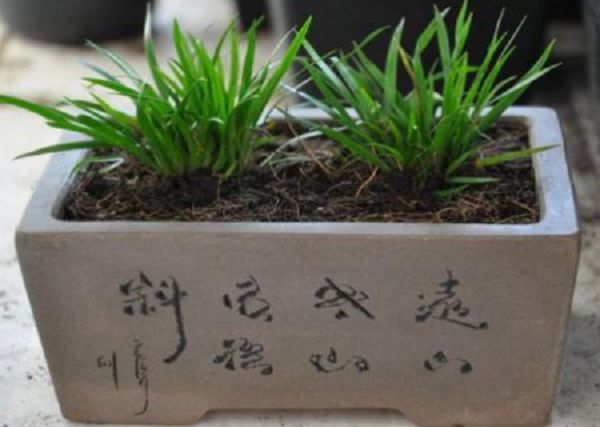
Can Acorus tatarinowii tolerate low temperatures? Detailed winter care methods
Can Acorus tatarinowii tolerate low temperatures?
-
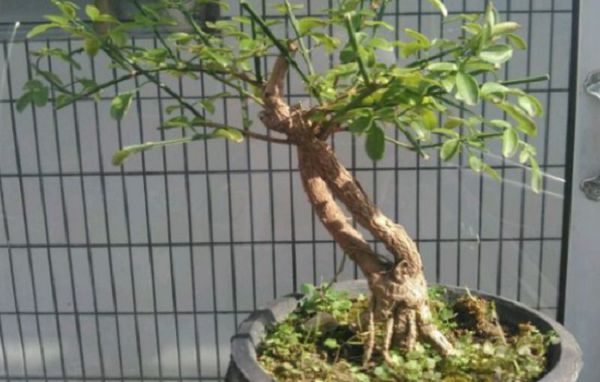
Winter jasmine is highly cold-tolerant, so why is yours struggling to survive the winter?
Everyone says winter jasmine is highly cold-tolerant, so why is yours struggling to survive the winter?
-
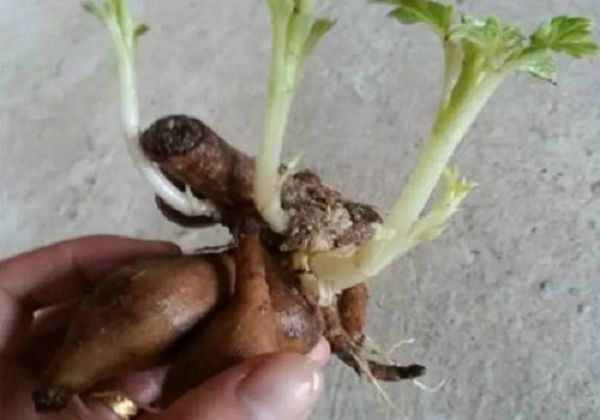
Dahlia just sprouting in winter: is it frost-tolerant? Winter cold protection and care methods
Are dahlias that have just sprouted in winter frost-tolerant?
-

Dianthus acicularis is an excellent drought-tolerant, water-saving groundcover plant
Most parts of northern China are resource-based severely water-scarce regions, with per capita water resources of less than 300 cubic meters, only 1/8 of the national average, and far below the international water-scarcity threshold of 1,000 cubic meters per capita. With the vigorous development of landscaping, water consumption for greening is growing ever larger, and this contradiction with the scarce water resources of northern China is becoming increasingly prominent. Dianthus acicularis has good drought tolerance and is an excellent water-saving plant material in landscaping. According to calculations, Dianthus acicularis consumes only 0.
-
What are the water-saving and drought-tolerant management and care methods for Hokkaido euonymus?
Hokkaido euonymus is an evergreen broadleaf small tree in the Celastraceae family, genus Euonymus. When Euonymus bungeanus is used as rootstock to graft Hokkaido euonymus, the tree has an upright posture and stays evergreen in all four seasons. After winter arrives, the mature fruit splits open to reveal the red aril, with green leaves and red fruit, giving extremely high ornamental value. It is a rare evergreen broadleaf tree in the cold regions of the north. It is not demanding about soil and can grow very well in sandy soil, sandy loam, loam and soil with a soil organic matter content above 0.8%. It adapts to soil with a pH value of 6 to 9 and a total salt content within 2‰. The high graft height is 1 to 1.8 m, and the low graft
-
Gleditsia triacanthos is a new and superior salt- and alkali-tolerant tree species for the Yangtze River Delta region
Gleditsia triacanthos (honey locust), of the Fabaceae family and the genus Gleditsia. A deciduous tree, its branches often bear thorns, its leaves are bright green and usually bipinnately compound, turning yellow in autumn, and its fruit is a large, often twisted pod. It prefers full sun, grows normally in saline-alkali soil, has strong adaptability to soil, can withstand low temperatures below -30°C, and is very cold-hardy. Its crown is large, making it a good shade tree.
-
Can African violets tolerate strong direct sunlight?
The native environment of the African violet is beneath large trees on high mountains, where the climate is stable and shady, and sunlight only reaches the leaves after being filtered through the foliage. Therefore, when growing African violets, you must take their own characteristics into account and must not treat them like ordinary flowering plants. Most flowering plants need more than 4 hours of direct sunlight each day in order to bloom. But the African violet is a rare exception: if you place it in a window with direct sunlight, the result is either yellowed, withered leaves or a blooming season with no flowers. Because the Af
-
Harlequin glorybower (Clerodendrum trichotomum) is salt- and alkali-tolerant and can grow in saline-alkali soil.
Harlequin glorybower, also known as stinking chun and paohuatong, is a landscape plant in the genus Clerodendrum, family Verbenaceae. It is native to East China, Central China and Northeast China, and has been introduced at horticultural centers in Beijing, Tianjin, Hebei, Shaanxi, North China and Yanqing. It mostly grows on hillsides, roadsides, stream banks and near villages. It is a deciduous shrub or small tree; young branches have short brown pubescence; leaves are simple and opposite, ovate, 5-16 cm long, apex acuminate, base mostly truncate, margin entire or wavy-toothed, nearly glabrous on both surfaces; petiole 2-8 cm; corymbose cymes borne at the top or in leaf axils; calyx purplish-red, five-lobed almost to the base.
-
How to Grow Tobacco So It Tolerates Drought? An Introduction to Cultivation Methods
How can tobacco be grown to tolerate drought? Tobacco has high water requirements during its growing period, and drought stress will significantly affect tobacco leaf yield and quality. China is a country short of water resources, with an uneven distribution of water resources in time and space. In recent years, some tobacco-growing areas in China have suffered severe drought year after year, and the frequency and scope of impact of drought disasters have expanded, while their duration and the losses suffered have increased, exerting a great impact on China's tobacco leaf production. Solving the drought problem tobacco faces during the growing season by building water conservancy facilities for irrigation has a good effect, but the cost is too high, it is difficult to achieve supporting irrigation for all tobacco fields in the short term, and in some tobacco-growing areas it is not advisable. Therefore, at present, adopting relevant agronomic measures to improve the water demand conditions for tobacco plant growth is still the main approach.
条件筛选