How to Grow Tobacco So It Tolerates Drought? An Introduction to Cultivation Methods
How can tobacco be grown to tolerate drought? Tobacco has high water requirements during its growing period, and drought stress will significantly affect tobacco leaf yield and quality. China is a country short of water resources, with an uneven distribution of water resources in time and space. In recent years, some tobacco-growing areas in China have suffered severe drought year after year, and the frequency and scope of impact of drought disasters have expanded, while their duration and the losses suffered have increased, exerting a great impact on China's tobacco leaf production. Solving the drought problem tobacco faces during the growing season by building water conservancy facilities for irrigation has a good effect, but the cost is too high, it is difficult to achieve supporting irrigation for all tobacco fields in the short term, and in some tobacco-growing areas it is not advisable. Therefore, at present, adopting relevant agronomic measures to improve the water demand conditions for tobacco plant growth is still the main approach.
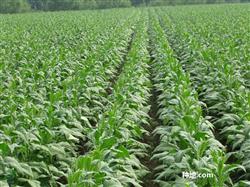
How can tobacco be grown to tolerate drought?
Tobacco has high water requirements during its growing period, and drought stress will significantly affect tobacco leaf yield and quality. China is a country short of water resources, with an uneven distribution of water resources in time and space. In recent years, some tobacco-growing areas in China have suffered severe drought year after year, and the frequency and scope of impact of drought disasters have expanded, while their duration and the losses suffered have increased, exerting a great impact on China's tobacco leaf production. Solving the drought problem tobacco faces during the growing season by building water conservancy facilities for irrigation has a good effect, but the cost is too high, it is difficult to achieve supporting irrigation for all tobacco fields in the short term, and in some tobacco-growing areas it is not advisable. Therefore, at present, adopting relevant agronomic measures to improve the water demand conditions for tobacco plant growth is still the main approach.
Focus on variety selection
Tobacco-growing areas suffering severe drought should focus on choosing varieties with strong drought resistance, such as Yunyan 87 and K346. It is worth noting that when choosing drought-resistant varieties, each area should make a comprehensive consideration based on its local ecological conditions and other factors.
Strengthen tobacco field soil management
Good soil has the effect of storing water and preserving soil moisture, and of keeping warmth and increasing fertility. However, in recent years, with the expansion of tobacco planting scale, more and more inorganic fertilizers are applied, and together with improper planting systems and methods, this has caused soil fertility in tobacco fields to decline, and the phenomenon of soil hardening is becoming more and more serious. Therefore, how to improve the current soil's capacity to store water and preserve moisture is an important part of developing drought-resistant cultivation techniques for tobacco.
Improve the soil. (1) Gradually increase the amount of organic fertilizer applied and reduce the use of inorganic fertilizer. At present, research on improving soil properties with organic fertilizer is increasing. Summarizing the research results, the effects of organic fertilizer in improving soil are mainly shown as follows: it increases the soil's aggregate structure and porosity, and reduces its bulk density. It improves the soil's water-holding performance while also enhancing its air permeability. In addition, it can increase the content of nutrients such as nitrogen, phosphorus and organic matter in the soil. (2) Plant suitable green manure varieties or economic green manure, and turn the green manure under at the right time. In recent years, some areas of Chongqing Municipality have vigorously promoted green manure planting and achieved very good results.
Optimize the tobacco field land preparation plan. Land preparation is an important measure for improving soil conditions. It can significantly improve soil physical properties and the structure of the plow layer, increase soil fertility and prevent soil-borne diseases and insect pests. The method of land preparation and the quality of its execution directly or indirectly affect the growth and development of tobacco and the yield and quality of tobacco leaves. Therefore, when preparing tobacco field land, the following should be done well:
(1) Grasp the plowing period well. The plowing period of tobacco fields is greatly affected by the climate characteristics of the main production areas, soil properties and the previous crop. Generally speaking, in dryland tobacco areas, the plowing period is generally after the previous crop is harvested, when stubble is destroyed and the land is plowed as early as possible. In addition, when determining the plowing period, the soil's workability should also be considered. Generally, tobacco fields with poor structure or high clay content, heavy texture and greater difficulty in cultivation should be plowed early, so that through freezing, thawing and alternating dry and wet conditions, the soil is promoted to form aggregates or become aggregated.
(2) Grasp the plowing depth well. It is generally believed that deep plowing is better than shallow plowing. According to research by the Institute of the Chinese Academy of Agricultural Sciences, appropriate deep plowing is beneficial to the growth of the tobacco root system. Under the same conditions, the distribution range and amount of tobacco roots increase with the increase in plowing depth, and the root system is well developed with strong root activity, thereby improving the tobacco root system's ability to absorb nutrients and water. Therefore, the plowing depth of general tobacco fields is 20-30 cm, and deep plowing should be carried out once every 2-3 years to break through the plow pan. In addition, in tobacco fields with lower fertility, the plowing depth can be appropriately increased; while in tobacco fields with higher fertility, it should not be too deep.
Achieve transplanting with strong seedlings
Strong seedlings refer to tobacco seedlings with good growth and development, normal metabolism, more synthesis and accumulation of organic matter, rich contents, coordinated carbon-to-nitrogen ratio, strong stress resistance and a high transplanting survival rate. On this basis, Henan Agricultural University proposed the characteristics of strong seedlings in flue-cured tobacco floating seedling cultivation: seedling age 60-70 days, well-developed root system with more than 300 roots, leaf number per plant reaching 7-9, stem height 8-16 cm, stem circumference 1.5-2.1 cm, root dry weight reaching more than 0.05 g, and aboveground dry weight reaching more than 0.46 g. By transplanting strong seedlings, the use of the water applied at transplanting by the tobacco seedlings can be improved. After transplanting, the soil moisture in the plow layer can be used early, enhancing the drought resistance of the tobacco plants, and to a certain extent this can reduce the adverse effects on tobacco plant growth and development caused by insufficient natural precipitation in the early stage of field growth in dryland tobacco areas.
Improve cultivation techniques
Tobacco cultivation techniques are determined according to the production of high-quality tobacco leaves with different quality characteristics and the yield and quality indicators. Their purpose is to coordinate the relationship between tobacco growth and development and environmental conditions, and the relationship between the population and the individual. Tobacco cultivation techniques cover a great deal of content, mainly including transplanting, water and fertilizer management, and cultivation regulation techniques. Tobacco cultivation techniques under drought conditions should also be improved on this basis.
1. Transplanting. First, according to the local precipitation pattern, determine the best transplanting period so that the tobacco water requirement pattern matches the precipitation pattern. In this way, precipitation can be effectively used and the drought period avoided. Second, use ridge planting at transplanting. Ridge planting has a thicker loose soil layer covering it and improves the soil's water, fertilizer, air and heat conditions, which is beneficial to both the tobacco root system and aboveground growth. Finally, at transplanting, choose healthy tobacco seedlings with well-developed roots, and adopt water transplanting, that is, the method of transplanting after watering.
2. Adopt mulching cultivation methods. There are mainly two mulching methods, plastic film mulching and straw mulching. Mulching cultivation plays a very important role in drought-resistant tobacco cultivation. Mulching cultivation can improve the temperature and moisture conditions of the soil and the near-surface layer, increase soil temperature, maintain soil moisture, improve soil properties, and improve soil nutrient supply and fertilizer use efficiency.
3. Improve fertilization techniques. (1) Base fertilizer as the main application. All organic fertilizer, phosphate fertilizer and potassium fertilizer are applied as base fertilizer, and 80%-90% of nitrogen fertilizer is applied as base fertilizer, with the rest applied as timely topdressing according to soil moisture conditions. (2) Apply base fertilizer in autumn. Combined with the last autumn plowing, apply the base fertilizer (including organic fertilizer and chemical fertilizer) into the field. A suitable fertilization depth is 20-25 cm. (3) Apply high-quality organic fertilizer. The application rate of farmyard manure should be more than 37,500 kg/hectare, and promote soil-free (or low-soil) manure and grass compost and straw bedding manure.
4. Timely intertillage and earthing up. Intertillage and earthing up can loosen the soil, store water and preserve moisture, regulate soil moisture, and promote the growth of the tobacco root system. In areas with dry climate and tobacco fields with poor irrigation conditions, in order to prevent and resist drought, the practices of early intertillage, fine intertillage and high earthing up should be adopted.
5. Appropriately use growth regulators. (1) Paclobutrazol. It can reduce the synthesis of endogenous hormones in the plant within a certain period, inhibit apical dominance of tobacco seedlings and cell elongation, promote massive root growth, and enhance leaf stomatal resistance and reduce the transpiration intensity of tobacco seedlings, significantly enhancing drought resistance. (2) Fulvic acid. Tobacco experiments have proved that under drought stress, FA can indeed increase leaf water potential and relative water content, reduce stomatal conductance and transpiration rate, decrease evapotranspiration, enhance root activity, and effectively reduce the damage from drought stress. This has a good effect on improving the drought resistance of tobacco plants. FA treatment improves the drought resistance of tobacco plants, with root irrigation treatment using 100 ml of FA being the most effective, followed by foliar spraying of 200 mm. In addition, there are some growth regulators that can enhance the drought resistance of tobacco plants, such as the growth retardants chlormequat and abscisic acid.
Click to get more tobacco cultivation techniques
Click to get more flower cultivation techniques