-
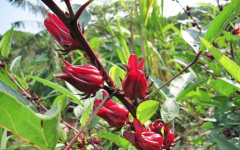
Can roselle be grown in the north? Planting time, methods, nutritional value and uses
How do you grow roselle, do you know? Would you like to learn about it? Let us take a look together! During the growing process, we must pay close attention to the common diseases and care of roselle! In the north, the time to plant roselle is around March to April, and full sun is best.
-
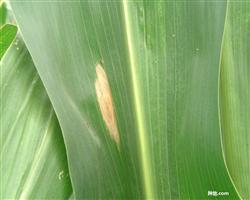
How can corn northern leaf blight be controlled effectively?
How is corn northern leaf blight treated? Please explain. Corn northern leaf blight has long been a major epidemic leaf disease threatening the safety of corn production in Shangluo. This disease often causes the most severe damage in summer-sown corn. Occurrence characteristics: First, there are significant differences in disease resistance among corn varieties. Surveys have shown that varieties such as Zhengda 12, Yuyu 22, Nongda 3138, and Anyu...
-
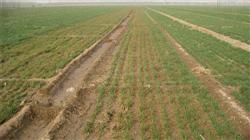
Spring Field Management Measures for Winter Wheat in Northern Xinjiang
Green-up Stage Management: After the beginning of spring (late March to early April), carry out spring harrowing in a timely manner, with a harrowing depth of 5 cm. Harrowing with a smoothing harrow or diagonal harrowing is preferable. Green-up fertilizer should be applied just before or at the early stage of wheat green-up, and it is advisable to apply more to weak seedlings, less or none to strong seedlings, and none to excessively vigorous seedlings. For wheat fields where the total number of stems per mu before winter is less than 400,000 and the wheat seedlings are growing weakly, late...
-
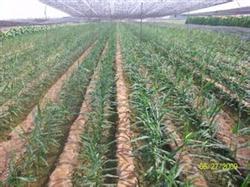
How to Grow Ginger in Northern China for High Yields? A Detailed Guide to Cultivation and Management Techniques
I. Pre-planting Preparation 1. Fine soil preparation and adequate basal fertilizer. It is advisable to choose a plot with fertile soil, good irrigation conditions, and no ginger blast disease, and to avoid continuous cropping as much as possible. On the basis of winter ploughing, carry out fine soil preparation early in spring, so that the soil is free of visible and hidden clods, loose on top and firm below. Increase the application of organic fertilizer, using high-quality chicken manure, manure from livestock pens free of diseased residues, cake fertilizer, and plant ash in combination; along with soil preparation, broadcast 4 cubic meters of high-quality decomposed chicken manure or 5000-10000 kg of high-quality pen manure as basal fertilizer. In high-fertility and high-water plots, open furrows at a row spacing of 60-65 cm ready for sowing, and apply 100 kg of soybean cake, 50 kg of ternary compound fertilizer, 50 kg of potassium sulfate, 2 kg of zinc fertilizer, and 1 kg of boron fertilizer in the furrows as seed fertilizer.
-
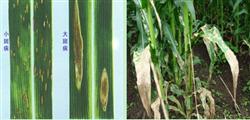
Control Techniques for Northern Corn Leaf Blight and Southern Corn Leaf Blight
Northern corn leaf blight and southern corn leaf blight mainly damage the leaves, and sometimes also infect the leaf sheaths and husks; southern corn leaf blight, in addition to damaging the above parts, can also damage the ear. In many regions these two diseases are collectively called "corn leaf blight." 1. Symptom identification: The typical symptom of northern corn leaf blight is that small lesions rapidly expand into large elongated spindle-shaped spots...
-
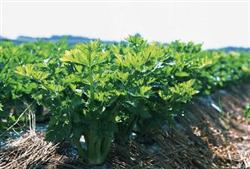
How to overwinter and protect spinach seedlings in the north? Key technical points explained in detail
Celery, also known as Western celery, foreign celery, or American celery, is planted in autumn in the Shuyang area. The average yield per mu is 3000-4000 kg, and high-yielding fields can reach 5000 kg per mu. Its high-yield autumn cultivation techniques are briefly described as follows: 1. Select good varieties for sowing. Choose varieties that bolt late, have strong stress resistance, are not prone to softening, and have thick, solid stalks...
-

Efficient Early-Spring Cultivation Techniques for 'Yuejiao No. 1' Pepper in Northern Guangdong
'Yuejiao No. 1' pepper is a first-generation hybrid pepper bred by the Vegetable Research Institute of the Guangdong Academy of Agricultural Sciences. It is early-maturing, with a plant height of 65cm and a plant spread of 60cm. The fruit is thick and horn-shaped, 16-17cm long and 4cm in diameter, with a single fruit weight of 50-100g. The skin is smooth and dark green, the flesh is thick, the taste is spicy, and it is crisp and tender with excellent quality. It is resistant to phytophthora blight, bacterial wilt, and viral diseases, and yields more than 4000kg per 667 sq m. 'Yuejiao No. 1' pepper has been successfully planted in early spring for 3 consecutive years in Shixing, Lianzhou, Lechang and other places in northern Guangdong, and has been promoted over a large area. 1 Sowing
-
Northeast "Strange Rice" succeeds in trial planting in Heilongjiang and begins to be promoted to farmers within the province
Sitting on a pile of plump rice sacks with a beaming smile, Jin Yushi, a farmer from Xiangfang District, Harbin, is very gratified by the bumper harvest of the 8 mu of "Northeast Strange Rice" he planted this year. This year, low temperatures and scant sunshine caused reduced yields in some rice-producing areas of Heilongjiang Province. However, some rice growers who applied new technologies and new varieties still steadily achieved high yields. Among them, rice farmers Jin Yushi, Zhang Zibin and others obtained a good harvest by accepting the suggestions and guidance of scientific and technical personnel, introducing "Northeast Strange Rice" and applying biological technologies such as "three agents and two fertilizers",
-
Detailed Explanation of Super-High-Yield Cultivation Techniques for Single-Season Rice in Northern China
(1) Use plastic film and special non-woven fabric to cover dry-raised rice seedlings, with the seeding rate controlled within 200 grams per sq m. (2) Transplanting spacing in the paddy field: 30 cm x 16.7 cm to 20.0 cm sparse planting, or (40 cm + 20 cm) x 16.7 cm wide-ridge double-row sparse planting. (3) Apply 60-70 kg of standard nitrogen per mu, 10 kg of diammonium phosphate, and 10 kg of potassium sulfate. (4) Intermittent water-saving irrigation in the paddy field alternating shallow water, wet, and dry conditions. (5
-
Detailed Explanation of Key Cultivation Techniques for Upland Rice in Spring in Both Northern and Southern Regions
I. Early-Stage Management Techniques for Early Rice Production in the South China Rice Region Currently, it is necessary to focus on drought resistance and protecting spring plowing, and to seize the opportunity for transplanting and planting. In the southern region, early rice should be transplanted around Qingming; in the central region, around Guyu; and in the northern region, before "May Day." The following technical measures should be mainly adopted: 1. Apply sufficient basal fertilizer and transplant sufficient seedlings, and apply tillering fertilizer early and heavily. On the basis of applying good seedling-departure fertilizer to the seedling field, apply 30 kg of ordinary superphosphate, 7.5 kg of potassium chloride, and 25 kg of ammonium bicarbonate per mu as basal fertilizer. Where conditions permit, apply 1000-1500 kg of high-quality farmyard manure per mu. Throw or transplant 21,000-25,000 hills per mu; for hybrid rice, two seedlings per hill (two grains), and for conventional rice, 4-6 seedlings per hill. 5-7 days after throwing or transplanting, apply 5-6 kg of urea per mu as tillering-promoting fertilizer; 12-15 days after throwing or transplanting, apply about 7.5 kg of urea and 7.5-10 kg of potassium chloride per mu, or 12.5-15 kg of compound fertilizer per mu as strong-tillering fertilizer.
条件筛选