-
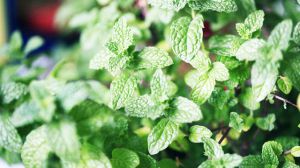
What is the difference between apple mint and mint?
Plant differences: apple mint has stems that are bluntly four-angled with stripes on them; mint stems are sharply four-angled with four grooves. Leaf differences: apple mint leaves are round or ovate with rounded teeth along the edges; mint leaves are oblong-lanceolate with pointed tips. Flower differences: apple mint has cylindrical spike inflorescences with white, purple or light blue flowers; mint has whorled verticillate inflorescences with white flowers.
-

What plant is catnip? This mint can even conquer a tiger
Many cat owners buy a kind of magic tool, namely catnip, and catnip is truly a cat-enticing magic tool. Because catnip and its scent make cats especially excited, and after stimulating a cat's senses, they start dancing around...
-
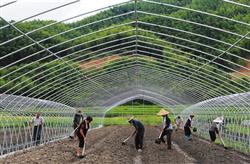
What are the precautions for growing mint?
What should be noted when growing mint? Please provide guidance. The following points should be noted when growing mint, for reference: 1. Field selection, land preparation and fertilization. For mint cultivation, choose a plot with fertile soil, flat terrain, good light and convenient transportation. Before sowing, plow deeply and apply 1500-200... jin of high-quality farmyard manure per mu.
-
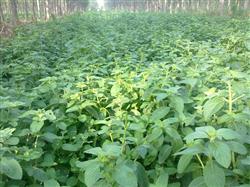
How do you manage mint in everyday growing?
How do you manage mint in everyday growing? Please explain the daily management methods. The daily management of mint growing mainly includes thinning and gap filling, hoeing and weeding, water and fertilizer management, and pinching, etc. The operation methods are described in detail below for reference: Thinning and gap filling. To obtain a high yield, a certain density of plants must be maintained in the field...
-
What kind of growing environment suits mint? Detailed planting conditions
What kind of environment is suitable for growing mint? What are the mint planting methods? Please explain. Mint, also known as Su mint, is a perennial herbaceous plant. Its stems and leaves are used as medicine, and it has effects such as dispelling wind, reducing heat, detoxifying, and promoting rash eruption. Mint contains volatile oil, whose main components are menthol and menthone, and it is the main raw material for extracting menthol crystals....
-
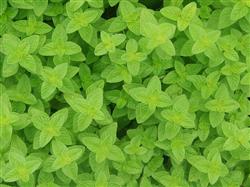
How to Grow Mint for High Yield? Detailed Growing Techniques
How to grow mint for high yield? A detailed introduction is given below. To grow mint, you can refer to the following methods: 1. Raising seedlings. (1) Rhizome propagation. Cultivate seed roots in late April or late August. In the field, select vigorous plants free of pests and diseases as mother plants, and plant them at a spacing of 20 x 10 cm. In early winter...
-
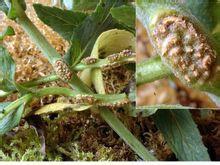
What to Do When Mint Gets Rust Disease? A Detailed Guide to Integrated Control Techniques
Mint is a medicinal plant renowned both in China and abroad, with the whole herb used as medicine. It is produced in Jiangsu. In recent years, with the adjustment of the rural planting structure and market demand, the planting area of mint in various parts of Jiangsu has expanded somewhat, but during its growth and development, it often suffers severe damage from rust disease, which not only causes serious yield reduction but also affects...
-
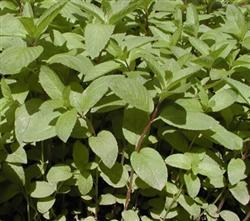
Detailed Explanation of Key Techniques for Summer Propagation and Breeding of Mint
1. Select good varieties. For summer propagation and breeding of mint, choose varieties with vigorous growth, strong disease resistance, high menthol content, and pure aroma; generally, Asia 39 and Fuyou No. 1 are selected. 2. Propagation time. It is generally carried out when the first crop of mint enters the bud stage. In the south, around June; in the north, around July. 3. Land preparation. Choose...
-
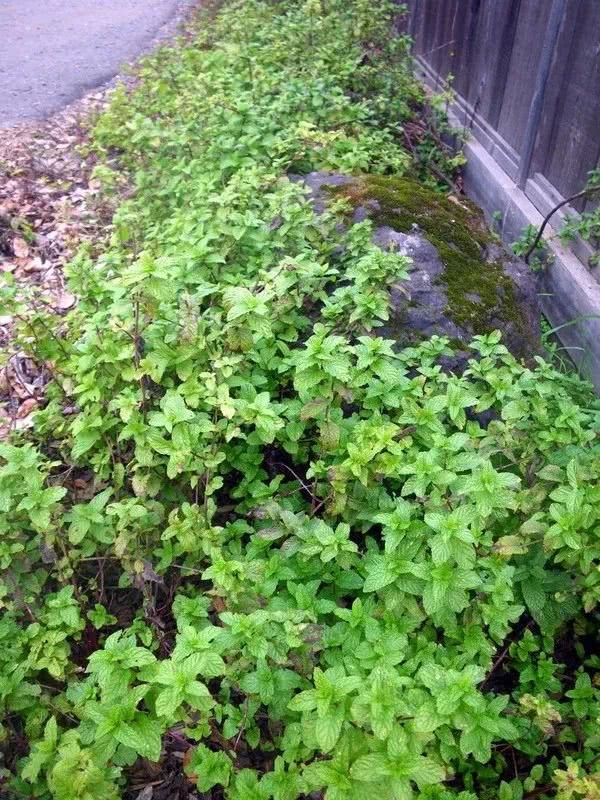
Don't plant mint directly in the ground; it can easily spread across the entire yard.
No matter how much you love growing mint, don't plant it in your yard, or you'll soon regret it. Mint has a very strong spreading ability and can quickly cover a large area. Below, let me show you the mint I planted by the roadside...
-
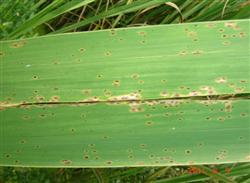
Jiaobai (wild rice stem) is prone to Helminthosporium leaf spot disease under high-temperature and high-humidity weather
Jiaobai Helminthosporium leaf spot is a fungal disease. In recent years, as the jiaobai planting area has continued to increase, the scope of occurrence of this disease has gradually expanded, and the severity has become increasingly worse. This disease can occur throughout the entire growth period of jiaobai. It mainly damages the leaves. In the early stage, small yellow-brown spots appear on the leaves, which later expand into brown spots the size of sesame seeds, with a few forming...
条件筛选