-
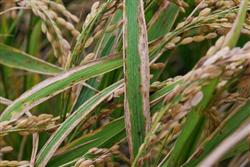
What are the control methods for the three major rice diseases?
How do you control the three major rice diseases? Please explain the control methods. The three major rice diseases can be controlled by referring to the following methods: 1. Rice blast (1) Leaf blast: dark green, nearly round or oval lesions, which later become slightly pointed at both ends; generally, when acute-type lesions appear or an infection center develops, especially in rice fields with high nitrogen fertilizer rates and tender, lush green growth, when the total number of leaf blast lesions occurring on 20 hills of rice during the entire growth period before heading reaches more than 400, spraying must be carried out, with an interval of 3 to 5 days, and continuous spraying 2 times.
-
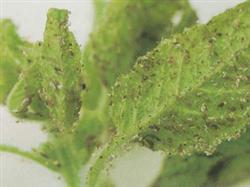
Control Methods for Major Sesame Pests and Diseases
How should the major sesame pests and diseases be controlled? Please give guidance. The major sesame pests and diseases include the following: 1. Sesame hawk moth: before the larvae reach the 3rd instar, when there are an average of 2 larvae per 100 leaves on the plants, pesticide should be applied for control. Commonly used pesticides: 2.5% trichlorfon powder or 5% carbaryl powder sprayed at 1.5-2.5 kg per mu; 90% crystalline trichlorfon or 80%...
-
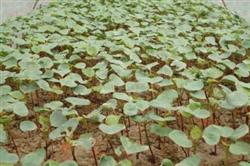
To grow strong cotton seedlings, the seedbed must be protected against five major threats
Common problems in cotton nutrient-cup seedbeds are mainly manifested as drought, waterlogging, disease, fertilizer burn, herbicide damage, and cold damage to seedlings, heat injury to seedlings, and spindly seedlings. The preventive measures are as follows: The moisture content of the cup soil should be moderate. The nutrient-cup seedbed should be located where both drainage and irrigation are convenient. The ideal moisture content of the cup soil is such that it forms a ball when squeezed by hand and breaks apart when dropped to the ground. ...
-
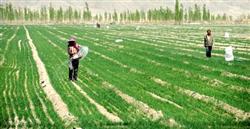
Spring management of wheat: focus on preventing and controlling the four major harms
How to manage the first spring irrigation and fertilization of wheat? The first spring irrigation and spring fertilization have a great impact on wheat yield. For example: if the wheat is too dense, too sparse, or lodging occurs in the later growth stage, it indicates that the timing of the first spring fertilization and irrigation was problematic. Another example: if the wheat stays green and ripens late, and the grains are shriveled and thin, that indicates your spring water and fertilizer use...
-
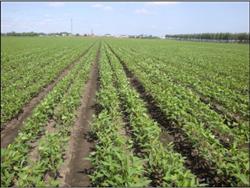
What are the control methods for the three major soybean diseases?
Soybean root rot: This disease can occur and cause damage throughout the entire growth period of soybean, with yield reductions ranging from 25% to 75% or more. The protein content of infected seeds is significantly reduced. The main symptoms are dark brown lesions appearing at the base of the stem and spreading upward to varying degrees to the lower lateral branches, causing the pith of the diseased stem to turn brown, the base of the petiole to constrict...
-
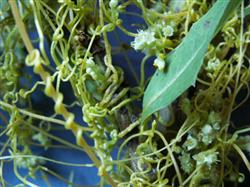
Control Methods for Three Major Soybean Diseases
What does soybean dodder look like? What should you do if soybean dodder appears? Dodder, also called yellow silk vine or tangled silk vine, is a malignant weed. It harms many crops, can cause total loss of soybean yield, and occurs commonly in various regions. (1) Morphology: The stem of soybean dodder is yellow, orange-yellow, or yellow-green, smooth and hairless,...
-

Detailed Explanation of the 4 Major Points of Ningmai 13 Cultivation Techniques
The Ningmai 13 wheat has a compact plant type and a neat appearance. Its yield structure is well coordinated in terms of panicles per mu, grains per panicle, and 1000-grain weight, with high grain density and grain weight, and uniform panicle layers. It is highly resistant to wheat spindle streak mosaic virus, moderately resistant to Fusarium head blight, and moderately susceptible to sheath blight, powdery mildew, and leaf rust. It has broad adaptability. As long as the appropriate sowing period is strictly observed and field management and pest and disease control are strengthened, freeze damage caused by warm winters can be prevented and yield can be increased. Since 2005, Tangzhuang Town, Gaoyou City, has planted Ningmai 13 wheat for 3 consecutive years, with yields per mu all exceeding 500 kg. Now
-

How are the market conditions for the four major staple grains in 2019
How are the market conditions for the four major staple grains in 2019
-
Detailed Explanation of the Five Major Characteristics of the Rice-Rapeseed Combined Planting Model
Rapeseed is an important oil crop in the Yangtze River Basin. Traditional rapeseed cultivation involves raising seedlings and transplanting them. Because raising seedlings and transplanting rapeseed in paddy fields requires large inputs of labor and materials, with low yields and low returns, and crops are easily lost when unsuitable weather occurs, this affects farmers' enthusiasm for planting rapeseed. Changing traditional seedling transplanting to no-till broadcast direct seeding with rice straw mulching simplifies the production process and achieves the goal of cost saving and efficiency improvement. Compared with traditional seedling transplanting, the rice-rapeseed combined model has the following characteristics: First, no-till broadcast direct-seeded rapeseed, per
-
Detailed Guide to Controlling Several Major Diseases of Alliums
The main diseases of alliums include downy mildew, rust, and purple blotch. In recent years, the occurrence and damage of these diseases have tended to worsen in various regions, and this is especially pronounced under protected cultivation, greatly affecting the yield and quality of alliums. Below is an introduction to the main symptoms, disease conditions, and control methods of these 3 diseases. 1. Downy mildew (1) Main symptoms. Downy mildew is an important disease of Welsh onion and bulb onion. In addition to damaging Welsh onion and bulb onion, it also damages garlic, Chinese chives, and others. Downy mildew mainly infects leaves and flower stalks,
条件筛选