-
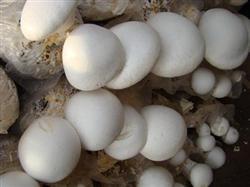
Analysis of Six Major Characteristics of Pest and Disease Occurrence in King Oyster Mushroom (Pleurotus eryngii var. nebrodensis)
1. The culture substrate carries multiple sources of pests and diseases. The hosts of the vast majority of pathogenic bacteria and harmful insects are organic matter. For example, rice straw, cottonseed hulls, and poultry and livestock manure themselves carry large amounts of fungal spores, mycelia, mites, and eggs of mosquitoes and flies. Before use, the culture substrate needs to be sterilized or fermented to eliminate or reduce...
-

Forecast of Major Diseases and Pests of Edible Fungi (2006)
The edible fungi industry has been ranked among the six major industries of agriculture in China, with an annual output of over 12 million t, becoming a distinctive and pillar industry in agricultural regions. With the acceleration of industrialization, the cultivation area of edible fungi nationwide has continued to increase by 15% annually, among which the number of medium-temperature and high-temperature varieties has grown, the types of diseases and pests have increased, and the degree of damage has worsened. Through multi-point disease and pest surveys and information collection across the country, the occurrence status of diseases and pests in major edible fungi production areas nationwide in 2005 was summarized, and on this basis, a forecast for 2006
-
A Full Analysis of Five Major Innovations in Home Mushroom Spawn Production
Innovation in spawn-production materials simplified. Traditionally and conventionally, potato, glucose, agar and the like are used as materials, mixed into PDA medium for inoculating mother spawn. The innovation is to use any one of wheat grains, grain kernels, corn kernels or tree branches as the material, supplemented by coating with a spawn coating agent to make a full-nutrition, high-nitrogen universal spawn medium. This medium can be used not only for inoculating mother spawn, but also for inoculating stock spawn and cultivation spawn, and the materials are easy to source, saving money and being practical. The material cost for one tube of mother spawn medium is only 3 fen; the material cost for one bottle of stock spawn or one bottle of cultivation spawn
-
Current Major Diseases of Northern Oyster Mushrooms and Their Control Techniques
1 Soft Rot Disease 1.1 Disease Symptoms The surface of the substrate or the mushroom bodies become covered with a layer of white cottony mycelial threads, fine and soft but growing very rapidly; the gradually infected mushroom bodies develop a light brown morbid condition spreading upward from the base of the stipe, and the mushroom bodies gradually soften and rot; about one week after infection, the mushroom bodies collapse on their own, or topple at the slightest touch, just like Chinese cabbage suffering from soft rot, but the soft-rotted mushroom bodies have no foul odor; mushroom bodies not yet soft-rotted grow extremely slowly, the caps gradually turn earthy yellow, lifeless and dull, clearly different from normal mushroom bodies; infected substrate no longer
-
Symptom Identification of Several Major Diseases of Oyster Mushrooms
(1) White rot: The pathogen is Mycogone perniciosa, which harms the fruiting bodies. After the mushroom bodies are contaminated, it causes rot and produces a putrid odor. (2) Brown spot disease: The pathogen is Verticillium fungicola. After its spores infect the fruiting bodies of oyster mushrooms, brown spots first form on the caps, gradually expand, and produce grayish-white depressions. After the mushroom bodies are damaged, they become deformed, and the stipes become swollen or curved, but they do not rot, and finally dry up and die. (3) Mucor soft rot: The pathogen is Mucor. It generally occurs when the fruiting bodies are fully mature
-
Six Major Mushroom Disease Prevention and Treatment Methods for Winter
Brown rot disease: When mushrooms are infected at a young stage, they cannot differentiate, and later form irregular grayish-white "lumpy heads," such as extremely thick caps resembling fists, or caps and stipes that are difficult to distinguish, with a layer of "white fuzz" growing on the surface. When the temperature is above 20°C, within 4-5 days the diseased mushrooms darken in color, then rot, exuding a brown, soy-sauce-like liquid, and rot and emit a foul odor; if the shed temperature is below 20°C, this process takes longer, requiring about 7 days or more. When fruiting bodies are infected at the mid-growth stage, brown lesions appear on the cap surface, the stipe becomes thick and swollen, and then the mushroom body
-
Eight Major Disease Prevention and Control Measures for the Green Development of Mushrooms
Establish the "big prevention and control" concept of integrated management. The occurrence, and even the epidemic or outbreak, of edible mushroom diseases all follows certain developmental patterns. Patterns are science, and no carelessness is tolerated. On the surface, diseases appear only at a certain production stage, but the occurrence of disease requires quite a few conditions. If any one condition cannot be met, the occurrence of disease may be reduced, lowered, or even impossible, or even if it occurs, it cannot cause harm. Therefore, one should not only prevent or treat at the stage where the disease occurs, but should start from the source
-
Eight Major Disease Prevention Measures and Key Technical Points for Mushroom Cultivation
In mushroom cultivation, to achieve high and stable yields, you must firmly master the following eight disease prevention measures. 1. Establish a concept of integrated control. The occurrence, and even the epidemic or development, of edible mushroom diseases follows its own patterns of development. On the surface, a disease may appear only at a certain stage of production, but the occurrence of disease requires quite a few conditions. Therefore, disease prevention should start from the source and continue until production is completely finished, and the intermediate steps must not be relaxed in the slightest, so as to thoroughly eliminate the channels through which diseases occur. 2. Selecting excellent virus-free spawn is the guarantee
-
An Analysis of the Five Major Advantages of Liquid Spawn Cultivation for Edible Mushrooms
Five Major Advantages of Liquid Spawn Cultivation for Edible Mushrooms
-
Detailed Explanation of Prevention and Control Techniques for Major Diseases of Edible Fungi
Talking About Prevention and Control Techniques for Major Diseases of Edible Fungi
条件筛选